


Following public outcry and calls from the legislatures, the West African Examination Council (WAEC) has reintroduced Civic Education and Computer Studies in the 2026 West African Senior Secondary Certificate Examination (WASSCE) curriculum.
However, rights groups say millions of Nigerian students in the examination class still face uncertainty as most subjects in the old curriculum remain unavailable, pushing candidates toward new subjects combinations they never studied from SSS 1.
The Education Rights Campaign (ERC) as well as parents, students and teachers’ groups expressed this concern on Thursday, through a statement it made available to DevReporting. They described the reintroduction of only two of the subjects in the old curriculum as a “stop-gap measure” by the West African Examination Council (WAEC).
According to the groups, in a statement jointly signed by ERC’s National Mobilisation Officer, Daramoye Michael, and the representative of Concerned Parents, Olanrewaju Akinola, the subjects students have studied and have become versatile with are no longer on the WAEC’s portal, forcing enrollment for the new subjects.
“We welcome the reinstatement of Civic Education and Computer Studies, but we condemn outrightly the piecemeal manner in which the issue of 2026 WASSCE subjects is being handled.
“The addition of these two subjects does not solve the larger problem as many students remain unable to register for the required minimum of eight subjects unless they select new subjects they have not studied since SSS 1.
“For instance, a business student currently studying Storekeeping and Insurance cannot register for those subjects because they are unavailable in WAEC’s portal, and arts and science students encounter the same obstacle with different trade subjects such as Dyeing and Bleaching, and Data Processing.”
Communication inconsistency
The ERC has also noted that WAEC has not been consistent in its communication with stakeholders, especially with school principals therefore, giving rise to confusion.
According to ERC, there is a need for clarity on the place of Digital Technologies as a new subject in the coming examination. The campaign urged WAEC to clarify and improve on its communication to boost public confidence in the secondary education system.
ALSO READ: ‘Ability in Disability’: Inside UNILAG’s sports fiesta for students with special needs
“We also note glaring inconsistencies in WAEC’s communications to school principals. For instance, A WAEC’s letter dated 21 November 2025 stated that Digital Technologies was a new subject and would not be examined until 2028 due to a lack of curriculum and syllabus. This directly contradicts WAEC’s own letter of 10 December 2025, which equates Digital Technologies with existing Computer Studies. Such contradictions erode confidence in our education system,” ERC stated.
More pressure on WAEC
WAEC continues to face mounting pressure from education stakeholders to revert to the old curriculum for the 2026 examination, in order to avail the current SS3 students to complete their syllabus and the new curriculum can start with subsequent sets.
The groups called for more interventions from the National Assembly and public to continue to wade in on the matter till the Ministry of Education and WAEC become accountable.
“It is clear that WAEC’s stop‑gap measure stems from an ego‑driven reluctance to fully revert to the old curriculum for the 2026 examinations. We therefore demand that the 2026 WASSCE be based on the complete set of subjects from the old curriculum, as this is the only way to ensure that no current SSS 3 student is forced to sit for a subject they have not studied since SSS 1.
“We further urge the National Assembly and public at large to sustain the intervention to hold both WAEC and the Ministry accountable, and protect the current SSS 3 students from an unjust, irrational decision that would force them to sit for subjects they have not studied since SSS 1.”
A curriculum overhaul and its fallout
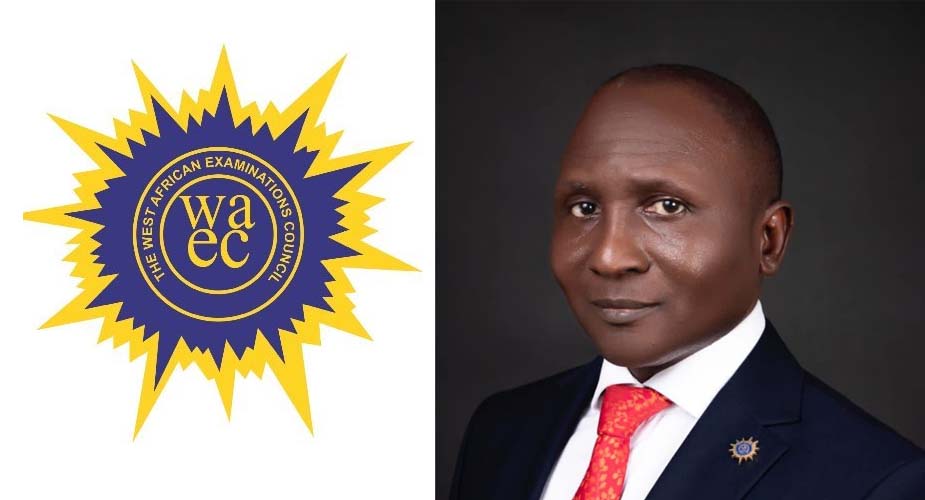
The Head of the National Office of WAEC Nigeria, Amos Dangut, in late November, announced an update to the subject combination for the coming examination, noting that two of five categories of subjects combination for students have been placed on hold till 2028, while the core, science and trade subjects remain.
According to Mr Dangut, the subjects to be offered by candidates were categorised into five distinct fields, namely: core subjects, science subjects, humanities subjects, business subjects, and trade subjects.
He noted that the core subjects, which can also be termed compulsory subjects, are now five: English Language, General Mathematics, Citizenship and Heritage Studies Education, Digital Technologies, and Vocational Trade Subjects.
As a result, Mr Dangut stated that candidates registering for WASSCE in 2026 and 2027 will only be required to sit for three compulsory subjects: English Language, General Mathematics, and one trade subject.
In addition to the three core compulsory subjects, candidates are to select five or six other subjects to make a minimum of eight and a maximum of nine subjects in total to satisfy the registration requirements for the examination.
Additionally, Mr Dangut said that trade subjects, which were previously 26 in number, have now been streamlined to six. He added that some subjects have been renamed, but their curriculum content and examination syllabi remain unchanged. He emphasised that students would be tested on the renamed subjects since their content and syllabi are intact.
ALSO READ: Detty December: UNILAG to re-stage Moremi Ajasoro play on campus
Following this development, the senate on Tuesday, 9 December summoned the Minister of Education, Tunji Alausa, and WAEC’s Head of National Office, querying the sudden changes, noting that mass failure may be unavoidable if the change is allowed to go on.
During the session, the Senate President, Godswill Akpabio, queried the need for the removal of the subjects at a time when the world is embracing digital development.
“Everything is going digital. Why remove computer studies?” he asked. “And civic education teaches our children their anthem and their obligations to the nation. We need to be sure this information is even correct.”
The matter was thereafter referred to the Senate Committee on Basic and Secondary Education, mandating it to investigate the new WAEC guidelines and report back to the chamber within two weeks.