


By Adejumo Kabir and Dr. Ola Bello
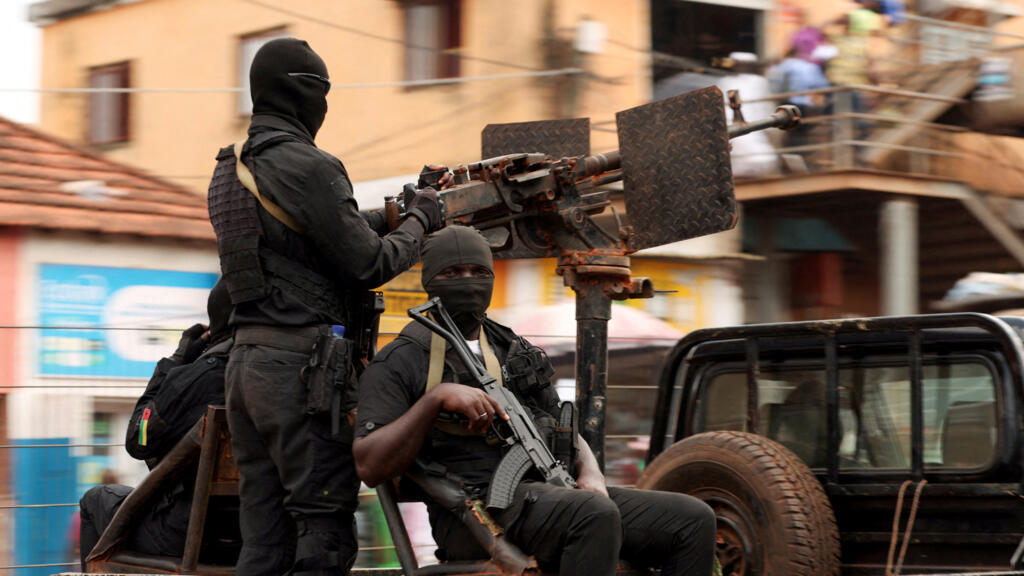
Guinea-Bissau’s military coup has triggered widespread regional condemnation, with the Economic Community of West African States (ECOWAS) suspending the country’s membership. However, this move may inadvertently strengthen the junta’s ties with trans-Atlantic drug networks, which could exploit the country’s instability for their benefit. The risk is that Guinea-Bissau becomes increasingly isolated, allowing these networks to finance and protect the junta, further entrenching its power.
For decades, Guinea-Bissau has occupied a precarious corner of West Africa’s political geography: a fragile state with a strategic coastline, a turbulent civil-military history, and a long, well-documented entanglement with the global cocaine economy. Now, with a military junta halting the release of election results and suspending democratic processes, the country faces serious risk that extends far beyond suspension of constitutional order.
Since the early 2000s, the country has served as a key transit point for cocaine shipments moving from South America to Europe. There have been past reports of seizures on remote islands and court records from Europe and the United States, including the imprisonment of former president’s son, Malam Bacai Sanha Jr, jailed for international drug trafficking last year.
READ ALSO: Guinea-Bissau Coup: Time for ECOWAS to Change its Geopolitical Playbook
“Malam Bacai Sanha Jr. wasn’t any ordinary international drug trafficker,” said Special Agent in Charge Douglas Williams of the FBI Houston Field Office. “He is the son of the former president of Guinea-Bissau and was trafficking drugs for a very specific reason – to fund a coup that would eventually lead him to the presidency of his native country where he planned to establish a drug regime. Fortunately, FBI Houston agents and our partners at the DEA thwarted his attempts, with the cooperation of our international partners. Crime has a global reach and impact, and so does the FBI.”
Also, the illicit trade has infiltrated the military at the highest levels with records of senior officers being implicated in facilitating or protecting foreign trafficking groups. While some have been arrested and are currently serving lengthy sentences for narcotics-related offences, many have continued to carry out the illegality unchecked.
While ECOWAS’ decision to suspend Guinea-Bissau conforms to the blocs’ norms, as it cannot afford to trivialise yet another military takeover, a junta left without legitimate revenue, foreign support, or external oversight will not collapse, it will adapt by turning to the only actors capable of injecting cash and may inadvertently produce the most significant resurgence of narco-influence in the region. In fact, traffickers do not need a stable democracy but a predictable environment where state actors can be bought or where the state simply lacks the means to interfere.
Implications for West Africa
The implications for West Africa are profound with far-reaching consequences. The crisis in Guinea-Bissau presents ECOWAS with a difficult but crucial choice. Narco-trafficking extends beyond borders to destabilise the region. The emergence of Guinea-Bissau as a major trafficking hub would also have devastating effects, including undermining governance and economies in neighboring countries, distorting formal economies and hindering development, complicating maritime security across the region, and exacerbating insecurity and terrorism in West Africa.
Treating Guinea-Bissau’s coup solely as a political crisis risks missing the larger geopolitical danger. Once criminal organisations embed themselves deeply during a period of diplomatic isolation, their influence becomes exponentially harder to roll back, regardless of the eventual political transition.
If West Africa’s leaders fail to grasp the criminal economic dimension of Guinea-Bissau’s crisis, they will misdiagnose the problem and thus miss the only window to prevent the next decade of narco-state consolidation. A junta cut loose from the region would be a gift to global narco-traffickers who, in the face of pressure, particularly from the United States, are searching for a new home.
READ ALSO: Lakurawa’s expanding shadow: Governance, coercion, and religious manipulation in Northwest Nigeria
Pressure without abandonment
ECOWAS is right to insist that election results be released and constitutional order restored. In fact, that principle must not be compromised. To achieve results, ECOWAS must maintain principled pressure and avoid isolating the state itself. Essential cooperation channels such as maritime security, customs monitoring, port inspections, and anti-money-laundering mechanisms must remain open. These technical interfaces do not empower a junta; they constrain its illicit options with the help of joint naval patrols, information-sharing, and coordinated interdiction operations around the Bijagós islands.
Secondly, ECOWAS support for Guinea-Bissau’s institutions and civil society is also crucial. This includes strengthening the country’s judicial system, law enforcement, and other key institutions, as well as empowering civil society organisations and promoting democratic values.
As efforts to address the root causes of instability and poverty are also essential, international partners should be ready to support credible prosecutions of officials who collaborate to forestall Africa’s democratic advancement.
………
Adejumo Kabir Adeniyi is a senior researcher at Good Governance Africa-Nigeria. He is an expert with many years of experience in community development work and governance accountability sector. Before joining GGA, Adejumo worked at Premium Times and HumAngle Media, two of Nigeria’s biggest newspapers specialising on conflict and accountability reporting.
………
Dr Ola Bello is the Executive Director for Good Governance Africa (GGA). He has extensive experience in mining governance and economic transformation. He has been a member of the Technical Working Group for the implementation of the African Mining Vision since 2011.

