



By Our Reporters
Widespread technical glitches, long-distance postings and disrupted sessions marred the 2026 Unified Tertiary Matriculation Examination (UTME) mock test, raising fresh concerns about the preparedness of the Joint Admissions and Matriculation Board (JAMB) ahead of the main examination scheduled to commence on 16 April.
While candidates across several states reported difficulties ranging from faulty systems to being unable to sit the test altogether, JAMB insists the issues are not unusual and have been adequately addressed.
The scale of disruptions has, however, intensified calls for urgent fixes before the main UTME. For many candidates and stakeholders, the mock exercise intended as a rehearsal has instead exposed systemic weaknesses that could undermine confidence in the main examination if left unresolved.
Thousands affected as centres fail, candidates miss exam
Out of the 224,597 candidates who registered for the optional mock examination, only 152,586 successfully sat the test, leaving about 72,011 unable to participate due to various challenges.
Following the exercise held on 28 March, JAMB delisted 20 out of 989 Computer-Based Test (CBT) centres over technical inadequacies.
“Following the examination, over 20 CBT centres that experienced technical challenges have been delisted,” JAMB spokesperson, Fabian Benjamin said in a statement announcing the release of results on 31 March.
He urged candidates to check their results by sending MOCKRESULT via SMS to 55019 or 66019 using their registered phone numbers.
Technical glitches, delays disrupt exercise
Across Ogun, Osun, Kwara, Rivers, Nasarawa and the Federal Capital Territory (FCT) among others, candidates reported persistent technical failures, delayed start times and, in some cases, complete cancellation of the examination.
Since the mock was held on Saturday, social media has been abuzz with reactions and complaints, with some calling for the outright closure and delisting of centres they consider inadequate to conduct the UTME.
An X user, Joke Adepeju, decried the poor technical infrastructure at a CBT centre in Akute, noting that laptops, mice and calculators were not in proper working condition.
She posted, “@JAMBHQ There was a technical/system issue at Tip Top school, Akute. It would not be fair for students to be subjected to the same issue of laptop turning on and off, bad mouse/system without working calculator, amongst other problems encountered during the mock, in the main examination again.”
Another candidate, Oluwatoyin, called for the delisting of a centre she identified as Daddy and Deroju Investment CBT centre, citing the bad road leading to the venue and poor facilities.
She wrote, “Sir, I was unable to solve most physics and chemistry questions. Bad systems, favouritism. We weren’t called in according to the number on the mock slip due to favouritism; others had to battle with the remaining systems.”
In another post, she added: “Daddy and Deroju Investment JAMB centre in Lagos State should be delisted!!!”
Divine Speed wrote: “One of the best students in my school reported that during the mock, her system got disconnected from the server twice and the official refused to attend to it. Only for them to fix it and she was logged out. If this happens in a mock, what will happen in the main exams?”
A candidate, Adeola Toriola, described his experience at a centre in Ogun State as frustrating and unproductive, noting that students were held for several hours without sitting the examination.
He posted, “This year’s mock exam at IJAGBA, beside Obasanjo Farm, Ota, had many technical glitches, and after everything, we ended up staying there from 6 a.m. to 2 p.m. without any of the students getting to write the mock exam.”
“What is going to be done about all the students who didn’t get to write?” he added, questioning the board’s contingency plans.
Similar concerns were raised by another user, Oluwole @Ayodelejoseph04, who called attention to delays at a centre in Ikotun, Lagos, where candidates reportedly waited for hours without progress.
“Is it the fault of JAMB or that of Al-Miyzan CBT Centre? As of 1:19 p.m., the mock exam had not yet started here,” he said.
In a follow-up message, he noted that the examination was eventually cancelled at the centre, leaving hundreds of candidates uncertain about their status.
“Eventually, the mock examination did not take place at Al-Miyzan CBT Centre on 28 March. Sir, what will be the fate of the hundreds of candidates scheduled to write this mock before the main exam?” he queried.
A commentator, Alex Onyia, warned against a repeat of previous lapses, stressing the implications for candidates’ academic futures.
“So many students didn’t write the mock exam today because of network glitches. Students were left stranded across several states. JAMB, please let 2025 not repeat in 2026. The destinies of Nigerian students are at stake.”
The recurring failures, particularly in an examination designed to build candidates’ confidence and readiness, have intensified calls for accountability and urgent reforms. Stakeholders say that the credibility of the main UTME could be undermined if the systemic issues observed during the mock exercise are not promptly addressed.
Distant postings leave candidates stranded
Beyond technical failures, many candidates across different states reported being assigned examination centres far from their places of residence, forcing them to undertake long distance travel at significant personal cost.
Victor Fayemi, a student from a tutorial centre in Ile Ife, Osun State, was assigned to Kwara State, a journey of about 224 kilometres.
While registering, Victor said he was told that centres in Ile-Ife were already filled for the mock examination and that available spaces were only in Kwara State. According to him, he asked the registration officer not to select any distant location, but later discovered that Kwara State had been chosen for him.
Recounting his ordeal, he said, “I know someone in Offa, so I had to stay there until the following morning before going to the UTME centre. I did not get a vehicle on time, and I spent a lot of money on transportation.”
Unfortunately, unaware of how far the examination centre was from where he spent the night, Victor arrived around 9:00 a.m. By then, JAMB officials informed him that the details of candidates who arrived early and completed thumbprinting had already been uploaded to the server.
“I was unable to write the mock exam. I just wasted my transportation money of almost ₦20,000 and my precious time,” he lamented.
Another candidate, Joshua Oyelowo also said he had to travel to Ilesha to sit his mock examination, a distance of about 30.6 kilometres. He said that during registration, he was informed that centres in Ile-Ife were already filled, prompting him to opt for Ilesha.
“The examination was at 6:30 a.m. on Saturday, and I left Ife that morning,” he said, noting that he had to move quickly to avoid missing the test. He further explained that after entering the hall, candidates were instructed to wait so the examination could begin simultaneously. However, the session was disrupted.
“When I started and had completed English, Government and CRS, and was on Literature-in-English with 30 minutes left, the Wi-Fi went off. Officials said the problem was linked to JAMB’s server and could not be immediately resolved. We were delayed in the hall afterwards. I got there by 6:30 a.m. and left by 3:00 p.m.,” he noted.
In Lagos, a student of Command Secondary School in the Iyana Ipaja area was assigned a centre in Benue State for the mock examination. Similarly, another student in Lagos was posted to a centre in Ibadan.
For Taoheed Adekunle who resides in Osogbo, Osun State, his assigned mock examination centre was in Saki, Oyo State, nearly 300 kilometres away.
According to him, “The journey from Osogbo to Saki, through Ogbomoso and adjoining rural routes, could take up to eight hours under favourable conditions. For an examination scheduled to begin at 8:00 a.m., it meant travelling a day earlier. “I have never embarked on such a journey alone.”
Beyond the distance, the financial implications posed an even greater challenge. Taoheed estimated that transportation alone would cost about ₦24,000 for a return trip. When accommodation, feeding and other expenses were added, the total exceeded ₦40,000.
His father, a retired civil servant, and his mother, a petty trader, said they had not anticipated such costs. “We thought the mock was just to familiarise the candidates with the CBT system. Nobody told us he might have to travel across two states for it.”
Faced with the situation, some candidates opted to forgo the mock examination altogether, citing cost and safety concerns while others, like Taoheed, remained determined to participate despite the challenges.
Concerns over value for money
The disruptions have also raised questions about value for money.
With over 224,000 candidates paying ₦1,500 each, the mock examination generated more than ₦336 million. However, the widespread technical issues and cancellations have led many to question the effectiveness of the exercise as a preparatory tool.
The mock exam is designed to familiarise candidates with the computer-based testing format, but many said the experience instead heightened anxiety about the main examination.
Glitches not an issue – JAMB
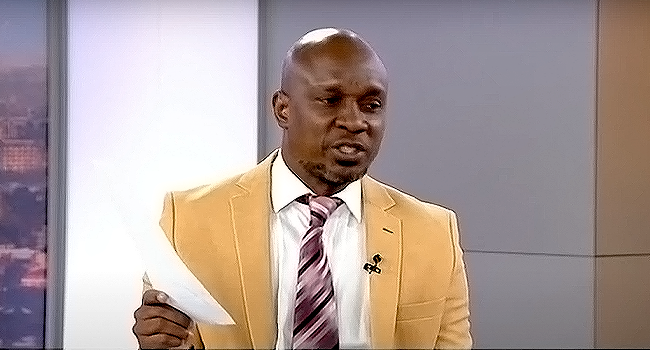
Responding to the concerns, JAMB maintained that technical glitches are inevitable and not a cause for alarm.
“There is no way that there will not be technical glitches. Even this phone we are using can go off and come back,” Mr Benjamin told DevReporting.
“So, it is not an issue for us; we have made necessary arrangements to ensure that whenever they come, they are addressed.”
He added that affected centres were promptly dealt with, noting that “maybe 20 centres” out of 989 experienced issues.
Board rejects claims of distant postings
JAMB also dismissed complaints about candidates being assigned to far locations.
According to Mr Benjamin, the board does not post candidates outside their chosen examination areas.
“The issue of JAMB assigning distant locations does not arise. No candidate who registered was posted beyond where they registered,” he said.
Responsibility for fees lies with centres
On concerns about the ₦1,500 mock examination fee, Mr Benjamin said the funds are paid directly to CBT centres, not JAMB.
“You should ask the CBT centres how they use the money, not JAMB,” he said.
“The ₦1,500 paid by each candidate goes to the CBT centre where they are to sit their exam.”
Warning ahead of main UTME
As the main UTME approaches, JAMB has warned candidates against engaging in fraudulent practices, particularly schemes promising score inflation.
“Any candidate found to have engaged in such activities will have their registration cancelled,” Mr Benjamin said, adding that results could also be withdrawn after the examination if infractions are discovered.
He confirmed that the main UTME will commence on Thursday, 16 April.

