


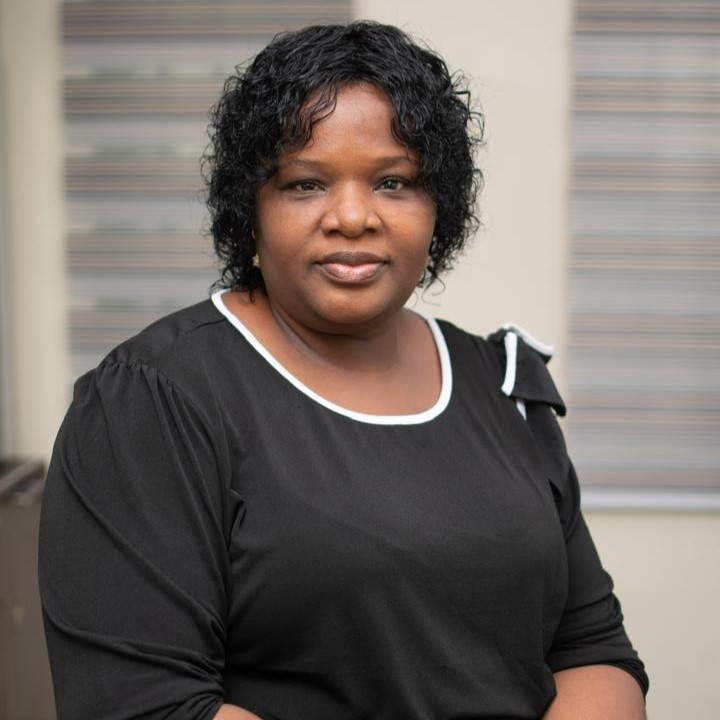

Following this year’s Nurses’ Week, observed globally from 6 to 12 May, DevReporting celebrates Principal Nursing Officer Olusolape Olanrewaju of the State Hospital, Abeokuta, Ogun State, for redefining maternal healthcare through an uncommon blend of compassion, music, humour and health education. In this interview with CHRISTIANA ALABI-AKANDE, she speaks about her childhood, passion for nursing, life in the labour room, surviving occupational risks, and how empathy-driven healthcare can help improve maternal and child health outcomes.
DR: Beyond the personality many people know on social media, who is Nurse Olusolape?
Olusolape: I was born over 40 years ago in a place called Ijoko-Ota in Ogun State, where my parents resided. My father lived in Lagos, but we were brought up in Ogun State. It was after secondary education that I developed a passion for nursing. My father wanted me to be a medical doctor, but because I actually knew what I wanted, I opted for nursing.
I sat the University Matriculation Examination (UME) more than twice. I roamed the streets for about five years after leaving secondary school before I was eventually admitted to the Ogun State School of Nursing, where I spent three years. I then proceeded to have my midwifery at the School of Midwifery, in Abeokuta, Ogun State. Afterwards, I proceeded to Obafemi Awolowo University for my Bachelor’s degree, and I have started my Master’s programme now.
My childhood was very memorable. My parents’ passion for education made them do everything they could to ensure that I achieved my dream. I remember when I sat my Senior Secondary School Examination (SSCE), and I didn’t make it the first time, my dad said, “Oh, don’t worry, you will retake it.” When I retook my UME, my father would wake me up to read. He would put his own two legs inside the water with me so that I would not fall asleep. Then there were no phones or social media. He was always available; when I was reading, he was reading, to the extent that when I had exams, he wouldn’t allow me to do anything else at home. He would say, “You need to be focused. This one time, you need to dedicate everything. Read and rest”, and so far, so good, that has really helped me because I have imbibed that habit to train my children.
DR: At what point did you come up with your unique style of health education? Was there any situation that triggered it?
Olusolape: Rome, they say, was not built in a day, and you cannot give what you don’t have. When you have a passion for something, and there is a will, there will always be a way. What you’re seeing today didn’t happen overnight. It is something that has been in me. It’s inherent in me. When I was growing up, even in my church, I was a very inquisitive person; I wanted to know, and I wanted to lead. In my school of nursing, I was the class governor, in my midwifery class, I was the class governor, and at the university, too.
So, I love things that have to do with leading and putting people through, and it gives me joy. When someone is in distress, I like to see what I can do. Coming to my scope of midwifery, I could have chosen another path, but I chose midwifery. Nobody pushed me into it. It is the passion in me that is actually pushing me. So, I was glad when I found myself working with the state government. This state hospital where I work has, especially, given me a very good ground to operate. They are just so good; my bosses, my colleagues, our apex nurse, and all, they see it in me, and they are always there to assist me, and they tell me to bring it on.
DR: You are known for singing and dancing during your antenatal session. How do you get your inspiration?
Olusolape: The songs just come when I am sleeping. They just come because they are in me. I spent over a decade in the labour room before I was moved to the antenatal section. I had been in the labour room taking delivery, which is what I love to do, so much that when I sleep, I dream of patients. The inspiration is divine, let me put it that way, because sometimes when I do some things, I know it is beyond me and what I read in books. Before I come out to say something, I would have read a lot, but sometimes it goes beyond that. It’s the hand of God, it is divine, and I know I have that gift, so I am just following it.
DR: How long have you been working in the State Hospital, Abeokuta and how has your experience been so far?
Olusolape: The experience has been a rollercoaster, filled with both difficult and rewarding moments. It was in the labour room that I once attended to a patient who tested positive for an infectious condition. Because she was not originally our patient, I did not know her status beforehand and could not immediately take all the necessary precautions. But because our mission is to save lives first, we attended to her without hesitation. After carrying out the necessary tests on her, we discovered she was positive. My colleagues and I had to undergo post-exposure prophylaxis (PEP), and that was the first time I had such an experience. We had to take injections and medications for about a week. I can never forget that moment because I was exposed while trying to save the life of a mother. But at the end of the day, I was happy because both the mother and child were saved. There were about four of us involved, and we all had to undergo the treatment. At the end of the day, it was worth it, and I have never regretted it. Some patients have an extremely low pain threshold. I have been hit, and bitten by patients on three different occasions. There was a time I was wearing gloves, and a patient’s teeth still pierced through them. Experiences like these happen, but the good moments outweigh the difficult ones. Despite all I have said, I cannot count how many gifts patients have promised me during labour. If they fulfilled all those promises, by now I should probably be competing with Aliko Dangote. They have promised me aeroplanes, cars, Lamborghinis and many other things. Those moments encourage us to keep doing more because this is what we genuinely love to do.
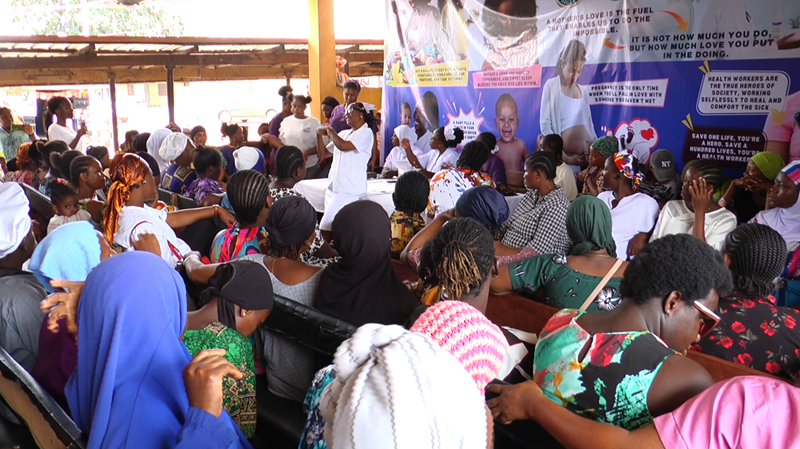
DR: In the past, many women were reluctant to visit public hospitals, especially for antenatal care. But today, you are being celebrated for changing that narrative. Patients, including those outside your hospital, speak highly of your sessions. How does this positive experience translate into improved health indices, particularly in maternal and child health outcomes?
Olusolape: This trend has continued for years, and we are working to change the narrative through genuine and measurable impacts. In all parastatals, we have what we call the individual differences. If you go to the bank or a police station today, you will not meet the same person all the time, and that does not make all of them bad. It’s the same picture with health care providers as well. Yes, I know that people are so scared of government hospitals; they say nurses are harsh. But the narrative is changing. But that does not take away the factor of individual differences. I am not the only one doing this; many nurses across the country are deploying similar strategies, especially for antenatal activities.
However, another major challenge we face is quackery because not everybody in white is a nurse. Quackery is really a problem we are trying to solve because nursing isn’t something you learn like a trade.
DR: So are you saying the style you have adopted has reduced maternal deaths and referral of complicated cases to your facility?
Olusolape: Yes, because the atmosphere alone is convivial enough to make pregnant women want to come. They also open up about whatever issues they may be having. It also takes them away from quackery and unregistered or unprofessional birth attendants. At least so far, so good, I can tell you that the outcome has been impressive. I am also a life-saving skills (LSS) trainer. We were trained to teach other upcoming nurses life-saving skills, and we are seeing the positive outcome.
Today, you’ll see grandmas and fathers-in-law coming to our clinic and asking questions. They will tell you, this is what we are used to, this is our stereotypical lifestyle. But you said it’s not good. Can you please tell us what’s right?’ Definitely, you should know what the outcome of that pregnancy will be.
DR: You openly address issues around sex, pregnancy, and breastfeeding, which many consider private and even taboo. You also disprove such practices as the use of powder on babies and taking herbal concoctions, among others. How would you describe the responses?
Olusolape: Thank you very much. I normally encourage that we embrace the positive side of technology and medicine. We are not naive, and we are culturally inclined as well. I’m a Yoruba woman, a proud one. We are not disregarding culture. We are just trying to reach a consensus between medicine and traditional beliefs. For instance, the sensitive aspect you spoke about. These are things that have affected our forefathers, because they believed issues like sex weren’t supposed to be discussed in public. Today, you will not believe it; my inbox is always filled with men coming out to thank us for discussing such issues. I’m talking about elderly men; I’m not talking about young men. They say ‘What can I do? My wife is not allowing me. I am dying, but now that you have spoken, you are our advocate’. So, some people, even those that are castigating me, still come behind, to my inbox.
They castigate online and then come to meet me offline. Yes, because we know what is happening. We are health practitioners; they come to us because it is not so easy for you to come to the hospital to open a file and sit with a nurse or a doctor to discuss these things. So when they see somebody that is saying it, oh, it’s just a liberation, that’s how this thing can be discussed. I can come out and say this is what I’m facing, I cannot continue to die in silence. So the positive aspect of that, I’ll say it’s 99.9 per cent.
When I started on social media, you see nurse Mekwe because I use Mekwe for sexual intercourse just to bring glamour, and bring it closer to the people. So, you see a grandpa hilariously saying that he has stopped child birth, should he go back to grandma just to experience what we are saying. So, we can see the responses. If the response is too harsh, you will see, and if the response is negative, you will see. The handwriting is everywhere. But the response has been positive, and we thank God for that.
DR: Kindly share some of the dos and don’ts in pregnancy.
Even before pregnancy, there is what we call preconception counselling. I would advise all couples to go for it. This is because, in ideal settings, pregnancy should be planned; it is not something that should happen without preparation. Now, assuming you are already pregnant, you need to book early for antenatal care. From about 12 weeks of pregnancy, you should register for antenatal care and have your first scan done at that stage. The reason is that, if there is any anomaly, it can be detected early, and we will also be able to establish what we call baseline data for that pregnancy. This includes important information about your health before and during pregnancy, which helps us provide optimal care. Therefore, early booking is very important. Take your first scan and ensure you eat fruits. Fruits and vegetables are very important. Rest is also important. If you want to avert contractions or an inevitable miscarriage, you must avoid stress. What you were doing before pregnancy can continue, but not in the same way. You cannot continue exactly as before; you need to slow down. Also, avoid self-medication. No alcohol, no tobacco, because when you take alcohol, there is what we call foetal alcohol syndrome. It can affect some parts of the baby’s brain. So, no alcohol, no tobacco, and no self-medication during pregnancy. If you have any ailment, go to the hospital. Don’t rush to Google. Don’t go online to search things like: “Can a pregnant woman take this?” or “Can a pregnant woman take that?” And let me address all the taboos our grandmothers have passed down to us; the list is endless.
Don’t eat plantain, it will cause ‘oka’; don’t take oranges; don’t eat eggs. All of these are taboos and misconceptions. You can drink cold water; it will not affect your baby. The cold water goes into the stomach, where food is digested. The baby is in the uterus. Take eggs, take all these foods, they are beneficial. Your baby needs enough nutrients. Plantain is not what causes ‘oka’; it is dehydration. When you deliver your baby and you do not breastfeed well, the anterior fontanelle (soft spot on the baby’s head) may appear sunken due to dehydration. That is what people refer to as ‘oka’. It is not plantain. When a baby is not properly fed on demand, similar issues may be noticed. Babies should be fed every two hours or on demand. When we understand this, many of these misconceptions and taboos will die a natural death. As I always say, I respect culture, and there are some practices we do not oppose, such as pins used on pregnant women’s clothes or certain cultural protections. We do not go against them if that is what people believe in. But we are talking about nutrition in pregnancy; do not deprive a pregnant woman of oranges. Let them eat eggs, drink cold water, and consume nutritious food, including vegetables. All of these will boost health. They must also take prenatal vitamins as prescribed by their doctor, preferably a gynaecologist.
DR: While many people hail you, have you also encountered criticism or opposition for challenging stereotypes and breaking barriers?
Olusolape: Yes, there have been, especially when I started speaking about concoctions. You would hear people say, “Oh, I am a slave to the whites. Was I not brought up with concoctions?” But there is something about me, I have never spoken rudely to anybody. Even if you insult me, I will simply say thank you. So when they saw my consistency, they eventually joined my live sessions, and now we are on the same page. Even the traditional birth attendants (TBAs) are on the same page with us. When I first started, it was not easy for them, but I expected that. They later suggested that I should modify my messages and tell the public that they can go to professional TBAs, not unprofessional ones. I said, I’m sorry. I don’t really understand that thin line. What I know is what I am preaching. If you know your own message, I am not against it; don’t be against mine. This is what I know, so I will continue to speak it, especially where there is evidence to support it. Let us reach a consensus. Many of them are in my inbox; we talk, and some even book appointments when we visit them. So I would say the issue is not really whether it works or not. The challenge is that it does not have proper dosage and standardisation. We are past that stage. One-on-one, there are TBAs who still book appointments with me.
I tell them, we are not against traditional medicine. We know some of these remedies are from herbs, but they must be properly standardised into doses and dosages. Can you do some research, define the dosage, and ensure it is not abused? So, we are not fighting anymore.
DR: In doing all of these, what keeps you going in a health system where many people complain of low pay and low morale? What is your biggest motivation?
Olusolape: My biggest sources of motivation are my parents and my children. I have said that what you want others to become, you must show by example; you don’t just say it. You talk less and act more. That is my life. I am not someone who wants to change everybody around me, but even if it is just one person close to me, I want to impact that person. And that is what I am doing. So, every other distraction around my work, such as low pay and lack of recognition, I don’t focus on them. There are accolades where I currently work, I must emphasise that. They are really encouraging me. But beyond that, I have not been here for just a day. It is the passion that keeps me going. When I speak about something, I also want to live it. So I don’t even feel stressed, because this is what I love doing. When you love something and you are passionate about it, the zeal will come, even beyond the money. When I created my platform, I called my children and said I wanted a bigger platform. I never even knew social media could generate income. So, when my page was not monetised, I did not know I could earn from it. I only wanted a platform where pregnant and expectant mothers could hear me at once. That was the idea behind coming on social media. I realised the patients I attend to physically are limited. So I asked, “What can I do?” My daughter suggested we open a page or platform where maybe 100 or 200 people could watch at the same time. I said, “Okay, that’s fine.” That was the idea behind it, and it remains so. It is driven by passion. This is what gives me joy. It gives me so much joy. So all those distractions do not really matter, because I know that money will definitely come.
DR: Irrespective of the passion, we know there are challenges. Tell us some of the challenges you face in doing what you love.
Olusolape: Yes, there are challenges because it is tiring. There are times I battle back pain and undergo physiotherapy because of the nature of the work I do. It is very stressful. So, the challenges include stress and financial pressure, because at times I go out of my way to use what little I have to support my patients. I have many patients who face financial constraints, and that sometimes affects me because I cannot do as much as I would like to do. Even though it is not expected of me to use my salary to treat patients, because how much is my salary? But I still find myself doing it at times. But those are the challenges. I often wish I had a platform, an NGO, or a support system where people could help identify patients with financial difficulties and assist them. That would give me so much joy. It would allow patients to come to the hospital without fear, knowing that at least part of their burden would be taken away. Not all mothers are lazy; some are simply unfortunate.
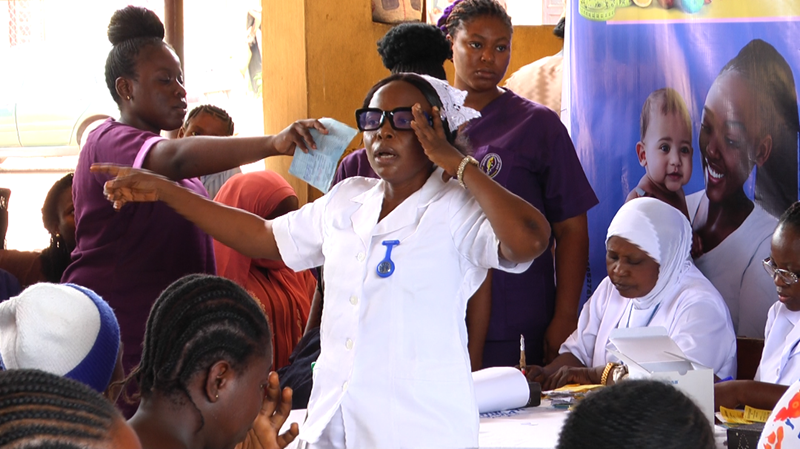
DR: Beyond the clinic walls, you have taken health education online using social media. What has been the effect of this? What reactions do you get from people who engage with your content?
Olusolape: When I started on social media, as I mentioned earlier, the first reaction I got was from my patients; they said I was exposing them. But some of my patients would also say, “Ma, we are not shy. Let them know.” Some even said they did not want their husbands to see them in the clinic. Now, many of them record themselves while in the clinic. They would say, “Ma, come.” They were the ones giving me the zeal; these pregnant women were the driving force that kept me going. So when you have that kind of support, every other opinion becomes a distraction; it does not really count. The positive response from my patients came first, and even before recordings are made, we obtain their consent verbally and in writing. They sign to indicate that they give consent for even recordings to be made, sometimes without even showing them clearly. But people do not always understand this.
However, we still educate them. The response overall has been very positive on social media. I would say negativity is about 2 per cent, while positivity is about 98 per cent. And for my colleagues, the support is obviously positive. They have given me a very soft landing from the beginning of this journey. They allow me to do what I love doing. They do not disturb me in any way. They understand that what I am doing contributes to improving maternal health outcomes, reducing maternal mortality and morbidity. They are always accessible and available for me. Even when it costs them resources, they still say, “No problem, we will do it for you.” That has been my experience. Today, I have so many followers in the diaspora. Many from the UK and Canada usually join my live sessions, and they support my initiative of gifting pregnant women. They are people I don’t know from anywhere.
DR: Many nurses like you have left the country in search of greener pastures. Why did you choose to remain in Nigeria?
Olusolape: Oh, wonderful question. Well, not all of us will “japa,” because if everyone leaves, who will remain? Many people ask me that question every day. “What are you still doing here? Are you not going? What is keeping you here?” And I always respond that not everyone can leave. If I go, who will attend to these patients? It is not the fault of those leaving and I am not blaming anyone. Everyone is looking for a better life and a soft landing. There are bills to pay, and people want improved living conditions. So, I understand why people leave. But the truth is, not everyone can go. Some of us have to stay. That is just the reality.
DR: If you have the ears of policymakers, what one or two changes would you recommend, especially to transform our health- maternal, and child health, in particular?
Olusolape: All right, the first one is, I am going to encourage training and retraining of health workers, which is very important because change is dynamic. Change happens everyday. Therefore, there should be retraining, because you cannot give what you don’t have. Secondly, women’s empowerment is very important. I see so many of my patients here. When they come, you will see that 100 per cent of what they do is from the husband. They don’t actually have the power of their own. To actually even assess healthcare service, if the husband travels, is a problem. Even with their expected date of delivery (EDD), they will still be at home because their husband travelled, and he’s not yet back. So, those two things- training and and women empowerment are very key.
Women should know about family planning. We still see mothers having eight or 10 children. As a woman, I should know family planning, I should know how many children I want to have, and my home and my children must not lack. All of these things come under women empowerment. When you empower a woman, you have empowered a nation.
DR: Do you have younger nurses you are training at the moment? Those who will take over from you. What is your call for them?
Olusolape: I told you that I’m an LSS trainer. I teach and train upcoming nurses. We are still doing it, we are not stopping. We will continue. We do encourage them. I don’t joke with my student nurses. We teach them, we impact them because what we have is what we give them. They are the ones coming behind; we cannot be everywhere. That’s the truth.
DR: So, what new thing should we expect on your page?
Olusolape: Expect more of our new songs. Yes, I want to open a page now, separately for waiting mothers because I’m having them and we don’t want to neglect them. We call them trying to conceive mothers (TTC).
So, that is what I am planning now, to create a page for them where we can actually walk that journey together before it is too late. Many of them do not have the right information; that is what I have observed. A lot of them have gone to the wrong places, and what is happening to them only requires simple management. So, that is what I am looking forward to next.