

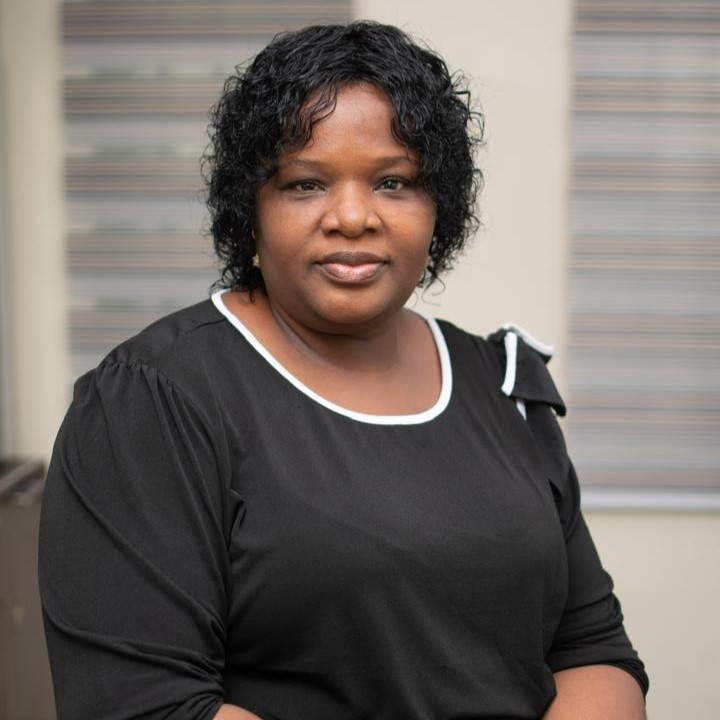

In March 2023, while playing with his wife, Julius Oluwatomi, a resident of Lagos State, Southwest Nigeria, noticed that her left breast felt unusually hard “like stone”, including the nipple. What began as a moment of playful banter between him and his wife, whom he fondly calls “Layomi” quickly turned into fear.
The discovery marked the start of a long and emotionally draining journey that tested their faith, finances and resilience. By 5.30 a.m. the following day, the couple were already at Ayinke House, Lagos State University Teaching Hospital to seek medical help. After an initial examination, they were referred to the Specialist Outpatient Department (SOPD) and given a follow-up appointment two weeks later. A series of tests followed, and they were to come back to the hospital after one month.
Before the scheduled appointment, Mr Oluwatomi noticed troubling changes. Wounds and pox-like sores had begun to appear on his wife’s nipple. By the time they eventually returned to the hospital, a young doctor asked detailed questions and confirmed their worst fears, Mrs Oluwatomi had breast cancer.
She was immediately referred to the Oncology Department. Though visibly shaken by the diagnosis, Mr Oluwatomi said he remained outwardly strong, constantly reassuring his wife that she would survive, even as fear gripped him privately.
“I kept telling her, ‘You will not die. You will come out of this successfully but inside me, I was very afraid because I had never experienced anything like this in my family. But I knew I had to be strong for her,” he told DevReporting.
It was during chemotherapy, he said, that he learnt an important lesson. “I realised that cancer is not something to hide. You need to speak out so that you can find help.”
The illness forced dramatic changes in their lives, as Mrs Oluwatomi, a teacher, could no longer go to work or engage in social activities. She lost her hair, nails, and strength as treatment progressed.
The couple were later referred to Broad Place Laboratory in Surulere for further investigations. “The first tests alone cost ₦140,550. One of the procedures involved inserting a chemical through her vagina. It was extremely uncomfortable. At some point, I was asked to stay with her; at another, to step out.”
When the results were ready, they met a senior oncologist. “He checked the eight test results and said, ‘Thank God it hasn’t spread to the liver or blood.’ It was hormone-receptor positive. He explained everything and told us that seeking help early had saved her, otherwise it would have spread to the right breast and other organs,” he explained to DevReporting.
Chemotherapy followed and Mrs Oluwatomi underwent 10 sessions, costing over ₦2 million.Her nails, tongue, toes, teeth, and her entire body turned black.
In fact, Mr Oluwatomi who at that time was still mastering the act of event planning, had to take a loan from a microfinance bank to augment the support he got from family members, the proprietor of the school where his wife taught, and a few church members who heard their story.
His wife’s diet also became highly restricted, consisting mainly of foods such as locust beans, soursop, boiled pineapple, raw okra, pumpkin leaves and waterleaf among others. After chemotherapy, she was referred to another hospital in Igando for surgery.
“In just one week, we spent over ₦1.3 million. During surgery, her entire left breast was removed,” he explained amid tears. “I went into the theatre and prayed for her. When she was moved to the recovery room with oxygen after the surgery, I was asked to continuously call her by the names she was used to. I kept calling her and less than an hour later, she responded and said, ‘Ade mi.’ To God’s glory, my wife survived.”
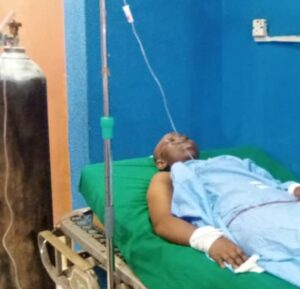
Mrs Oluwatomi remained in hospital for another week before being discharged. Her recovery was swift. Thereafter, she went through radio-therapy, which cost about ₦1.4 million. Today, she is doing well.
“A friend offered to help us travel abroad for further treatment, even offering to cover the flight and accommodation, but we couldn’t afford the treatment costs,” he added, noting that while he is still owing more than ₦1.7 million debt, he is excited that his wife survived.
When survival is not guaranteed
Though Mrs Oluwatomi survived breast cancer after a gruelling journey, not every family is as fortunate. For the founder of the Timilehin Leukemia Foundation, Janet Oyedele, cancer left an indelible scar. Her experience was marked not by survival, but by loss.
In December 2009, her only son, Timilehin, began to complain of persistent pain in his left leg and suffered repeated bouts of malaria. Concerned, his parents took him to the Lagos State University Teaching Hospital (LASUTH), where he was initially diagnosed with anaemia.
On 4 January 2010, with his body parameters critically low, Timilehin received his first blood transfusion. Although his condition stabilised briefly, he soon relapsed, prompting further medical investigations. After a series of tests, doctors confirmed that Timilehin had leukaemia.
Leukemia is a cancer of the blood, characterised by the rapid growth of abnormal blood cells. The uncontrolled growth takes place in the bone marrow, where most of your body’s blood is made. Unlike other cancers, leukemia doesn’t generally form a mass (tumor) that shows up in imaging tests, such as X-rays or CT scans.
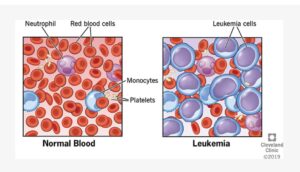
Childhood leukaemia occurs when the bone marrow produces immature and dysfunctional white blood cells that do not respond to normal growth-control signals. Common symptoms include: bone and joint pain, abdominal pain, vomiting, skin rashes and unintended weight loss.
Following his diagnosis and chemotherapy at the Obafemi Awolowo University Teaching Hospital, Ile-Ife, doctors advised Mrs Oyedele that her son urgently required a bone marrow transplant abroad. By then, the family had exhausted all available funds on tests and treatment.
As the emotional and financial strain deepened, the burden became overwhelming. According to Mrs Oyedele, her husband eventually withdrew, leaving her to care for their gravely ill child alone.
Undeterred, she pressed on. Acting on medical advice, she sought financial assistance and eventually managed to take Timilehin overseas, where he was admitted for a month. The treatment was successful, and mother and son returned home with renewed hope.
However, that hope was short-lived as Timilehin suffered a sudden relapse, leading to another round of treatment. This time, he did not survive.
In the early hours of 25 December 2014, at about 3.30 a.m., Timilehin lay in his mother’s arms and whispered, “Keep up the good work. God will take care of you. Thank you for taking care of me,” before quietly passing away.
Watching a loved one battle cancer and ultimately lose that battle is a devastating experience. The word “cancer” alone evokes fear, affecting not only those diagnosed but also their caregivers, who often lose a part of themselves while witnessing prolonged pain and uncertainty.
Rather than allowing her son’s death to consign her to lasting despair, Mrs Oyedele channelled her grief into action by establishing the Timilehin Leukemia Foundation, dedicated to supporting children battling blood cancer.
World Cancer Day
The experiences of the Oluwatomis and the Oyedeles are far from isolated. Across the world, millions of families are navigating similar journeys, a reality that World Cancer Day, observed every 4 February, seeks to confront.
The World Cancer Day seeks to raise awareness, promote prevention and mobilise collective action against the global cancer burden. The 2025–2027 campaign, ‘United by Unique’, places people at the centre of care, emphasising equity, compassion and sustained commitment.
According to the Union for International Cancer Control (UICC), cancer occurs when changes in normal cells lead to uncontrolled growth, often forming tumours, a process that applies to all cancers except leukaemia. If left untreated, tumours can grow and spread into the surrounding normal tissue, or to other parts of the body via the bloodstream and lymphatic systems, and can affect the digestive, nervous and circulatory systems or release hormones that may affect body function.
Scary data
The latest data released by the World Health Organisation (WHO)’s cancer agency, the International Agency for Research on Cancer (IARC), show the global burden of cancer. Based on the data available in countries in 2022, the IARC noted that there were an estimated 20 million new cancer cases and 9.7 million deaths.
According to the agency, the estimated number of people who were alive within five years following a cancer diagnosis was 53.5 million; one in five people develop cancer in their lifetime, while approximately one in nine men and one in 12 women die from the disease.
Survey data published by the global WHO from 115 countries show that most nations still underfund priority cancer and palliative care services as part of their universal health coverage (UHC) commitments.
Findings from the survey on UHC and cancer shows that only 39 per cent of participating countries covered the basics of cancer management as part of their financed core health services for all citizens, ‘health benefit packages’ (HBP) while only 28 per cent of participating countries additionally covered care for people who require palliative care, including pain relief in general, and not just linked to cancer.
Major cancer types in 2022 – lung, breast and colorectal cancers
New estimates from IARC’s Global Cancer Observatory show that 10 cancer types collectively accounted for about two-thirds of all new cases and deaths globally in 2022. Data covers 185 countries and 36 cancers.
Lung cancer was the most commonly diagnosed cancer globally, with 2.5 million new cases, representing 12.4 per cent of all new cases. Female breast cancer ranked second with 2.3 million cases (11.6 per cent), followed by colorectal cancer with 1.9 million cases (9.6 per cent), prostate cancer with 1.5 million cases (7.3 per cent), and stomach cancer with 970,000 cases (4.9 per cent).
Also, lung cancer was the leading cause of cancer-related deaths, accounting for 1.8 million deaths, or 18.7 per cent of the global total. This was followed by colorectal cancer with 900,000 deaths (9.3 per cent), liver cancer with 760,000 deaths (7.8 per cent), breast cancer with 670,000 deaths (6.9 per cent), and stomach cancer with 660,000 deaths (6.8 per cent). The re-emergence of lung cancer as the most common cancer is likely linked to sustained tobacco use, particularly in Asia.
Marked differences were observed by sex in both cancer incidence and mortality. Among women, breast cancer was the most commonly diagnosed cancer and the leading cause of cancer death, while lung cancer ranked highest among men. Breast cancer was the most common cancer in women in 157 of the 185 countries analysed.
Among men, prostate and colorectal cancers were the second and third most commonly diagnosed cancers, while liver and colorectal cancers were the second and third leading causes of cancer death. For women, lung and colorectal cancers ranked second and third in both new cases and cancer-related deaths.
Cervical cancer ranked as the eighth most commonly diagnosed cancer globally and the ninth leading cause of cancer death, with 661,044 new cases and 348,186 deaths recorded. It remains the most common cancer among women in 25 countries, many of them in sub-Saharan Africa. Despite variations in incidence across regions, cervical cancer can be eliminated as a public health problem through the scaling up of the WHO Cervical Cancer Elimination Initiative.
Projected surge in cancer burden by 2050
Global cancer incidence is projected to rise sharply by 2050, with more than 35 million new cases expected worldwide, a 77 per cent increase from the estimated 20 million cases recorded in 2022. This growing burden is being driven by population ageing and growth, alongside increased exposure to key risk factors linked to socioeconomic development.
Tobacco use, alcohol consumption and obesity are identified as major contributors to the rising incidence of cancer, while air pollution remains a significant environmental risk factor.
In absolute terms, countries with high Human Development Index (HDI) levels are expected to record the largest increase in new cancer cases, with an additional 4.8 million cases projected by 2050 compared with 2022 estimates. However, the proportional increase is expected to be most severe in low HDI countries, where incidence is projected to rise by 142 per cent, and in medium HDI countries, with a 99 per cent increase. Cancer-related mortality in these regions is also forecast to nearly double by 2050.
Commenting on the uneven impact of this projected increase, the head of the cancer surveillance branch at IARC, Freddie Bray noted that the global rise in cancer cases would not be felt equally across countries with different levels of development; warning that countries with the least resources would bear the greatest burden.
Similarly, the head of the Union for International Cancer Control (UICC), Cary Adams, highlighted persistent inequalities in cancer outcomes, despite advances in early detection, treatment and care.
He stressed that disparities remain not only between high- and low-income regions, but also within countries themselves, adding that access to quality cancer care should not be determined by where a person lives. According to him, while tools exist to help governments prioritise cancer care and ensure affordable, high-quality services for all, addressing the challenge ultimately requires strong political will, not just financial resources.
Emerging innovation
Amid the statistics and global commitments, stories of innovation are quietly emerging, reshaping the future of cancer treatment. One of such stories begins not in a hospital ward, but in a biomaterials laboratory at the University of Cincinnati, USA, where a Nigerian scientist, Rasheed Adigun, is reimagining how chemotherapy reaches tumours.
For decades, the fight against cancer has centred on discovering new molecules, new genetic targets, and more powerful drugs. Mr Adigun belongs to a new generation of scientists who believe that the future is not dependent on creating new drugs but changing the materials that carry those drugs, the silent scaffolds that decide whether a molecule reaches its mark or misses it.
At the Simms Lab of Functional Biomaterials, Mr Adigun is developing a hyaluronic acid–lipid hydrogel nanocomposite, a cutting-edge material designed to deliver anticancer drugs directly to tumours with remarkable precision.
His goal, he said, is to ensure that life-saving drugs go exactly where they are needed without collateral damage to other parts or organs in the body.
Injected directly into the tumour site, the hydrogel releases the drug locally, sparing healthy tissues from the devastating chemotherapy. Mr Adigun’s system can carry drugs of any molecular weight or solubility, and because it can be injected directly at the tumor site, it minimises systemic exposure and toxicity, meaning that it delivers the punch of chemotherapy precisely where it’s needed and nowhere else.
The scientist explained that for decades, drugs like doxorubicin have been pillars of cancer therapy, but noted that while the drugs are potent enough to kill aggressive tumor cells, they also bring with them a devastating list of side effects ranging from heart damage and hair loss to immune suppression and tissue necrosis.
Their toxicity, he said, is not due to malice in design, but to biology itself, as the molecules, once in the bloodstream, do not discriminate but move freely, attacking both healthy and malignant cells. He further explained that their poor solubility often makes it difficult to deliver them effectively. “It’s a cruel irony- medicine powerful enough to cure can also cause profound harm.”
“The implications are profound. Localised delivery not only spares healthy tissues from the ravages of chemotherapy but also allows for higher effective doses at the tumor site. It reduces side effects like cardiomyopathy, a major risk with doxorubicin, and could make treatment safer, more tolerable, and ultimately more effective. The hydrogel itself degrades harmlessly in the body after releasing its cargo, leaving behind no residue and no trail of damage,” he reiterated.