


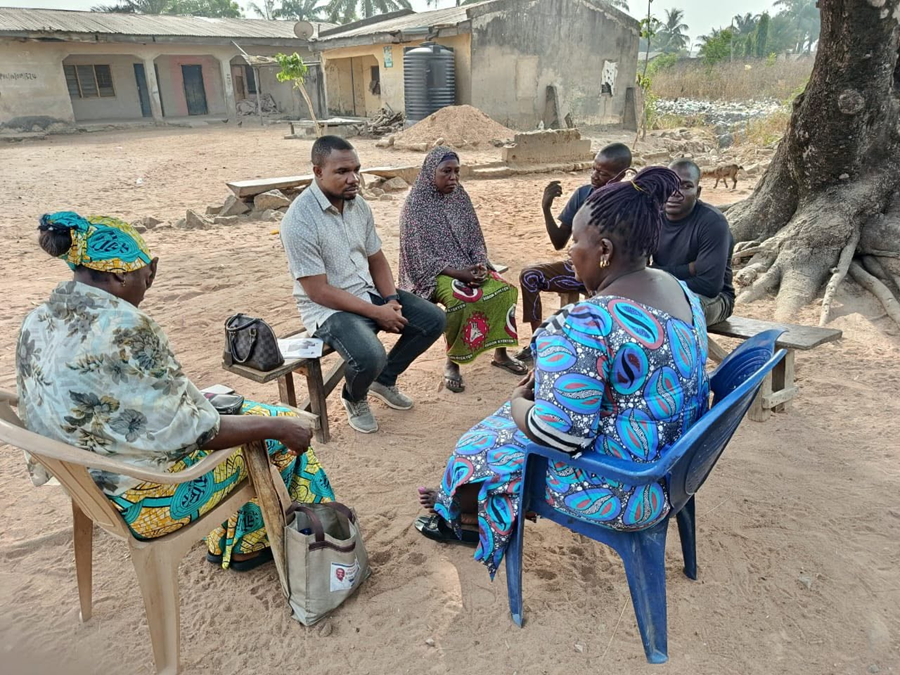
While violence has left deep psychological scars across Benue communities, an innovative community-led counselling model is helping survivors heal. By training trusted local volunteers as lay counsellors, the initiative is restoring hope, rebuilding resilience and offering a blueprint for expanding mental health support in conflict-affected communities.
By Phillip Anjorin
A choir of four women and two young men practised a melodic harmony inside the open structure of a wall-less church. It was evening in Adaka, a community in Benue State’s Gwer West Local Government Area (LGA), where the sun slowly dipped below the horizon.
The choir continued even as the revving sounds of three motorcycles drifted into the cooling air around 6.28 p.m. Asema Benjamin, a farmer residing in the community, said the sound of those motorcycles would have been a cue for residents to flee impending violence if it were some years ago.
“For five years, I didn’t go to my farm that’s not so far away,” he said. “When my wife heard that my friend who still goes regularly was attacked recently, she was split between feeling sad and praising God on my behalf.”
He recalled that suspected armed herders regularly attack the community when they are most vulnerable. “Usually, their attack comes by 4 a.m., when farmers are still sleeping. It became very tough for people to go back to the farm,” he said.
He revealed that community members have been restricted from accessing their farmlands that sit barely 500 metres from the community.
Mr Benjamin’s inability to access his farm pushed him closer to depression before a community member paid him a home visit in 2021. He described the engagement of the day and subsequent visits as his first-ever experience of a counselling session he never knew he needed.
When the community leaders recommended him to attend a training and offer the same support to others some months later, he had no doubts.
Adaka, like many parts of Benue State, had borne the agony of insecurity in recent years, locked in various protracted humanitarian crises that positioned the state as one of the most displaced regions in Nigeria.
Three civilian residents were killed when suspected armed herders invaded Adaka in December 2022. Two years later, the community was ambushed at night, and about 20 people were killed, including nine members of a single community on 16 April, 2024.
The National Bureau of Statistics (NBS) ranked Benue State second among Nigerian states with the highest number of internally displaced persons (IDPs) in 2023, behind Borno State.
Regarded as the nation’s food basket, Benue accounts for nearly 12 per cent of IDPs in the country. The volume of families forced to flee their homes peaked between 2022 and 2024, with data from the International Organisation for Migration (IOM) identifying over 500,000 internally displaced individuals in the state as a result of farmers-herders conflict.
A resident of Agan community in Makurdi LGA, Ibrahim Tijani, described what the situation now looks like in the community. “Anything from 4 p.m. now, everybody must leave their farms. No one spends up to 6 p.m. on their farm like before,” he said.
The change occurred after suspected armed herdsmen invaded Agan on 29 May, 2025, and the attack caused the death of three people. Mr Tijani still remembered details of the traumatic incident. “Two guys came after us, and they hit us even when we were running. Everybody was scared. In short, everybody evacuated the village for the meantime.”
Ignoring the mental fallout of the displacement often causes a psychological toll on the affected community members.
A clinical psychologist, Victoria Daaor, said such communities are generally mentally disturbed, and it creates a ripple effect.
“The mind makes the man. Whatever affects the mind affects our physical manifestation,” she said. “Parents who have unresolved trauma or are mentally challenged will pass it on to their children through the way they treat them, and the children will likely end up traumatising other people.”
The global mental health advisor at ProjectHOPE, Pamela Londono, criticised the concentration of psychological healthcare on psychiatric hospitals distant from rural, conflict-affected zones.
“As a result, people with common mental health conditions like anxiety or depression never receive care because it’s far and expensive. There are access gaps,” she said.
The World Health Organisation’s Mental Health Atlas 2020 revealed that governments globally spend just 2 percent of their health budget on mental health. In low- and middle-income countries like Nigeria, Ms Londono said the allocation barely reaches 1 per cent, which almost always flows to psychiatric hospitals and institutions instead of community care.
Bridging that gap motivated Ms Daaor to establish the Elohim Development Foundation (EDF) in 2005 to help halt the transmission of unresolved trauma within vulnerable communities.
“A lot of times when there’s a conflict, people are thinking of food supplies, drinks, clothes… the tangible things. Nobody thinks of the intangible, which we can feel, like the emotional trauma, the mental stress, and all that,” she said.
Healing from within
Instead of flying in medical practitioners from urban centres, the organisation implemented a “task-sharing” model that involved community members.
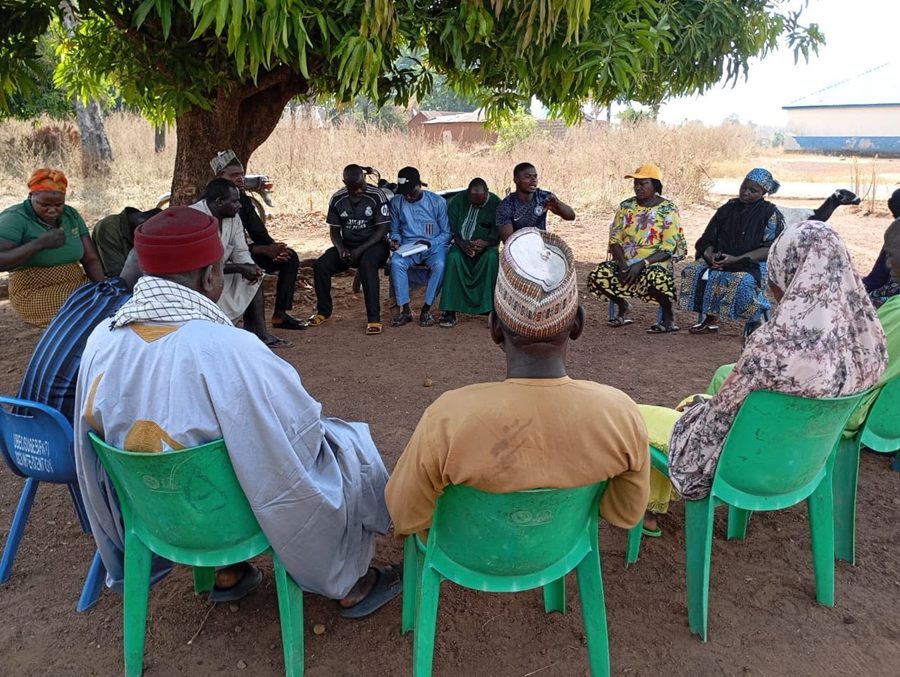
In any participating community, the foundation engaged with traditional rulers, religious leaders and community elders, who nominated 25 respected residents to serve on a volunteer basis as the Community Peace Committee (CPC). The selected residents then undergo specialised training from professional psychologists at Makurdi, the state capital.
The 25-member committee is separated into four dedicated teams. The media group spearheads awareness outreach and educates the community on mental health, while the Early Warning, Early Response (EWER) team monitors their neighbourhood for brewing local tensions to report to security agencies before eruption.
The Reflective Structured Dialogue Group is a trained group of local mediators who resolve local disputes before they become a full-blown crisis. The lay counsellors are the psychological first responders who visit homes of traumatised or grieving neighbours and offer psychosocial support to the victims.
The organisation conducts oversight to ensure safety boundaries are never breached, either physically or via WhatsApp. They also engage with the committee every month to review their activities and offer technical support.
The lay counsellor model started in 2019 under the Protecting Our Communities Initiative (POCI) through the Empowering Community Security (ECOS) project, with support from the Karuna Centre for Peacebuilding and the Neem Foundation. In Benue State alone, Ms Daaor revealed that the five-year initiative has spread to 14 communities.
Zamfara and Kaduna are the other northern states with varying numbers of conflict-ridden communities benefiting from the initiative.
But the organisation had been engaged at the frontline of grassroots emotional care before participating in the ECOS project, and had expanded the mission to Nasarawa and Abuja.
Formal grant cycles wound down, which brought the POCI project to an end in 2024, but the communities are not giving up yet. “The CPCs are still holding meetings, and they are intervening in minor conflicts even without the presence of the organisation in the communities at this time,” Ms Daaor said.
Neighbours helping neighbours
A lay counsellor in the Adaka community, Kyaluwua Martha, chose to volunteer for the training to channel her pain into action. She mentioned that being an indigenous voice who bore the same scars as the victims helped break through walls of grief that outsiders cannot touch.
For her, the reward of volunteering is witnessing the slow lift in the victim’s psychological burden. She said, “We do go there and talk (to the victim), advise the person, and at the end of the day, the person will be happy with the lay counsellor.”
The first time Fidelis Nyambee, a father of four residing in Apir community, Makurdi LGA, heard about the training, he wasn’t enthusiastic about being a community lay counsellor. “I said, let me just get to know what it was. If it’s not worth it, I’ll just pull out,” he said.
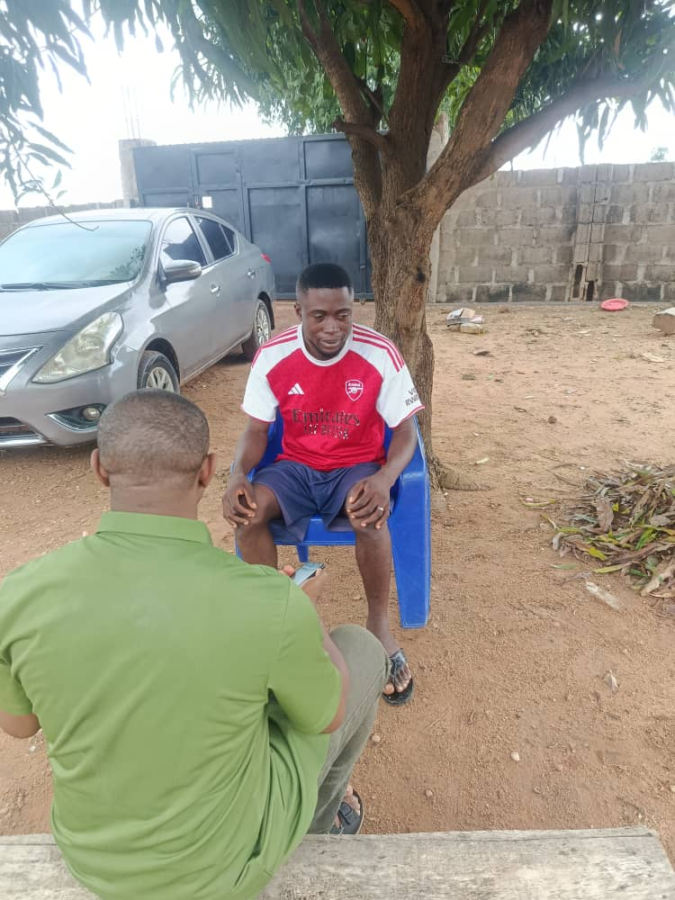
He ended up staying for the training, which lasted for three days. He mentioned that the sessions exposed him to the psychological realities of his community, and volunteering was an opportunity to give back. It was the motivation he needed.
However, he is not a replacement for certified therapy. He said, “What I give is a kind of first aid, not a detailed counselling session. I say this because at the end of the day, when I see a case so complex, I refer to those who are professionals more than me.”
A typical counselling session is held in an open environment between the lay counsellor and the beneficiary. Mr Nyambee attributed this strategy to two reasons. “It should not be in a secretive environment to avoid looking like it is a secret action. Also, you do it to protect yourself against any harm that may arise from the counselling session,” he said.
Counsellors don’t prescribe what the survivor should do or where they should go. The decision is left in the survivor’s hands, while the lay counsellors only suggest. But it can only work if the survivor is not in a state of self-denial.
He said, “We help you through your own self, after first acknowledging that you need this help. If you are not withdrawn, we suggest to you and make you see reasons why our approaches can help you come out of that state you are in.”
The approach worked on Maga Zacharia, a resident in Apir, who survived a recent attack from armed herders. “Before I got counselled, there was this fear in me. I always have this panic that I’m going to be attacked if I come outside,” he said.
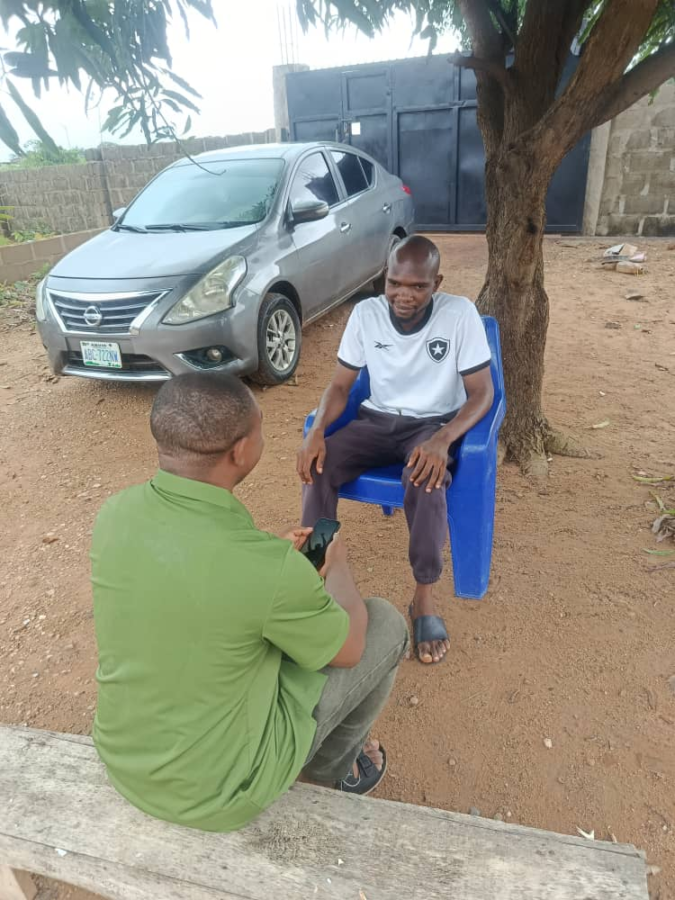
The psychosocial support he received from available lay counsellors in the community made him feel freer. “I know that I can come outside now. I now know that I am safe when I’m with people around. I feel safer,” he said.
Between 2020 and 2024, over 2,000 direct survivors were served by the organisation, which collaborated with more than 70 lay counsellors.
Challenges to scaling the model
Despite the model’s success and impact, lay counsellors and beneficiaries have identified several constraints hindering their operations.
Some lay counsellors revealed that the familiarity they had with many of the victims made it take a while for some victims to open up to them or even take their counselling seriously.
Imenger Stella, a lay counsellor at Agan community, revealed that consistent home visits and insights received from the training helped refine how they handle the dilemma. There are also times when the counsellors ask their colleagues to help handle the situation.
The physical road decay affecting vehicular travel, combined with the poor telecommunication services in parts of Benue, also hinders how counsellors transfer challenging cases to certified therapists.
Ms Daaor stated how financial limitations affect different spheres of the initiative’s sustainability. The economic effects on individual households, caused by inflation and land loss, had caused fatigue in some of the unpaid volunteers. It worsened with the POCI sub-grants’ expiration, which caused some of them to discontinue participation.
The limitations also impacted her core NGO staff, who are sometimes affected by the volatile donor-funding system. She self-funds the team from the proceeds of her private consultancy services. She even built a hall for rent in her compound and directs the proceeds to the organisation.
However, the organisation has received help at different moments from partnerships with stakeholders like the Nigeria Psychological Association and the Benue State government. Some beneficiaries have also shown zeal to support at different moments. “A chief had once brought kulikuli to the office to show appreciation. It’s small, but it matters a lot,” Ms Daaor said with a warm smile.
Blueprint for sustainability
Drawing from her experience as a mental health advisor across different conflict-ridden countries in low- and middle-income countries, Ms Londono identified psychosocial support as a pillar of public safety and long-term recovery. She stated that building an effective response requires moving away from traditional psychiatric models to establishing a sustainable, community-led framework.
Incorporating mental health indicators into national health data collections will provide concrete, baseline information to help policymakers map community needs. The national health system must first be able to track crisis survivors’ specific struggles.
Once the data expose the gaps, shifting the financial architecture to fund solutions is most logical. “Most specialist funding continues to flow towards psychiatric hospitals and institutions, rather than community care. The most sustainable financial strategy is not just creating new mental health systems, but making mental health part of every day of every health budget,” she said.
The funding can enable the system to bypass the need for parallel, expensive infrastructure, especially for conflict-ridden communities. Ms Londono recommended that policymakers should use the secured funds to integrate psychosocial support in primary care consultations offered in local health facilities. She said it helped successful countries maximise their current workforce and physical spaces.
Basing mental health care in rural communities helps address the invisible trauma in conflict zones, a critical measure for proactive prevention and long-term rehabilitation. She said, “It is important to protect the mental health of people who have been exposed to those adversities so they do not end up in other types of situations that would increase the risk of family violence, substance misuse, social school drop-off and recruitment into armed groups, which can end up being a risk factor for violence.”
“It’s not just training alone, but supporting them and providing the necessary systems for integration. Countries tend to celebrate the number of trained healthcare workers,” she said. “I think that what would be more important is to report on the actual number of people receiving mental health care after the healthcare workers are trained.”
She urged active collaboration between state actors and non-governmental organisations like EDF to sustain the community-led counselling model and keep it from being donor-reliant. Long-term scale-up depends on local governments permanently embedding clinical supervision within the domestic system.
She mentioned the Health Action for Psychiatric Problems In Nigeria including Epilepsy and SubstanceS (HAPPINESS) Intervention as encouraging evidence from Nigeria.
Referring to a study published by the Cambridge University Press about the intervention, she said, “What it demonstrates is that integrating the World Health Organisation’s Mental Health Gap Action Programme-Intervention Guide (mhGAP-IG) can reduce symptoms of depression while using telesupervision from specialists.
“Rather than relying solely on donor-funded projects, which is one key aspect of the financing mechanisms, how much are local governments investing in providing supervision and necessary support for those lay counsellors or healthcare workers?”
She hailed the community-led initiative, stating that it creates safe spaces for the society’s collective healing. “I think that it’s really important to understand that we need to work with what exists already instead of replacing them,” she said.
“The most successful interventions were those implemented through community healthcare workers, religious leaders, or youth leaders, rather than external experts that come and tell you what to do and how to do it.”
However, creating permanent, locally owned mental health and psychosocial support (MHPSS) hubs will guarantee their sustainability. The hubs will combine these trusted networks into one structured, capable and resilient programme.
She said, “These hubs shouldn’t function as NGO-driven projects, but as competent and permanent components offering mental health in the primary healthcare systems.”

