




Nigeria’s university system is once again on the edge of disruption as academic and non-academic unions have threatened actions over stalled agreements, persistent salary delays, and what they described as a continued breakdown in the management of the sector.
The warning came a few minutes after the non-academic staff of Nigerian universities announced the commencement of a nationwide strike action in response to the alleged failure of the government to complete the ongoing 2009 agreement renegotiation with the unions, among other demands.
Two major unions- Senior Staff Association of Nigerian Universities (SSANU) and the Non-Academic Staff Union of Educational and Associated Institutions (NASU), on Thursday issued a letter to their branches nationwide directing them to commence an indefinite strike action from 1 May.
At a virtual impact dialogue convened by the Education Writers’ Association of Nigeria (EWAN) on Thursday, leaders of SSANU and the Academic Staff Union of Universities (ASUU) expressed concern over the prolonged delay in the renegotiation of the 2009 agreement with the Nigerian government, describing it as a major source of recurring tension in the university system.
They submitted that the failure to conclude the process, alongside unresolved welfare and funding issues, continues to erode trust between both parties and undermine efforts at achieving lasting industrial harmony. ASUU specifically warned that the slow pace of negotiations, coupled with inconsistent implementation of existing agreements, has left the sector trapped in a cycle of agitation and short-term resolutions.
Beyond the renegotiation impasse, the union leaders also highlighted persistent salary delays, funding gaps, and what they described as increasing administrative interference in university governance as key issues affecting stability across campuses.
According to them, unless the government demonstrates a clear commitment to concluding outstanding agreements and addressing structural challenges in the system, the threat of renewed industrial action will remain unavoidable.
ASUU threatens fresh action over stalled agreements, salary delays

During the dialogue, the National President of ASUU, Chris Piwuna, a professor of medicine, warned that the federal government could face fresh industrial action if persistent salary delays and partial implementation of agreements continue.
Mr Piwuna said the union had raised concerns since January over inconsistent salary payments linked to the implementation of the latest agreement.
He explained that ASUU operates a strict National Executive Council (NEC) resolution mandating action once salaries are delayed beyond the third day of a new month.
“When the agreement was being implemented in January, we raised concerns about the delay. Anytime our salary goes beyond the third day of the new month, branches will notify the national body and embark on actions until salaries are paid,” Mr Piwuna said.
He added that the Federal Ministry of Education had attributed the delays to budgetary issues, an explanation he described as unsatisfactory, noting the extension of the 2025 budget cycle into 2026 as evidence of fiscal disorder.
“We have said this many times that we don’t know which budget we are operating in this country. The budget has been passed, and we expect that all aspects of our salaries should have been paid,” Mr Piwuna said, warning that ASUU’s NEC would reconvene within 10 days to review the situation.
“If this fragmented and inconsistent payment continues and we get to NEC within the next 10 days, Nigerians will hear from us, and everybody will know where we stand,” he said, noting that the union is monitoring developments closely and would respond comprehensively to unresolved issues.
University workers treated like labourers – SSANU President
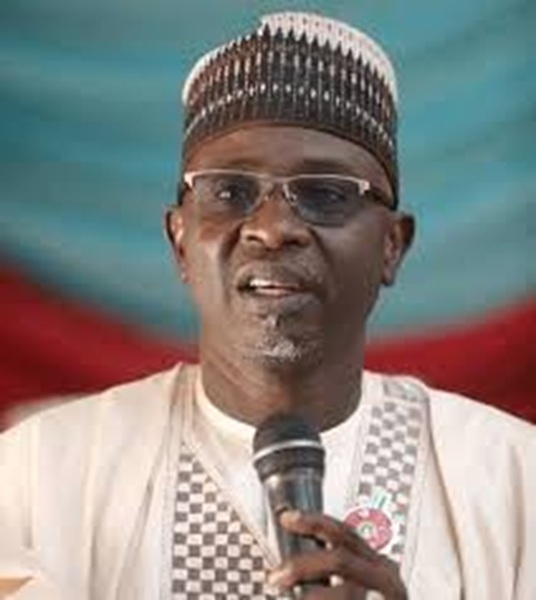
The President of SSANU, Mohammed Ibrahim, aligned with ASUU’s concerns, describing worsening welfare conditions across universities.
He said university workers were increasingly demoralised due to salary delays and unresolved agreements.
He said, “We are not in the best of times in our universities. Delays in salaries have become a cancer; morale is low, and workers now operate like labourers who just go to work.”
Mr Ibrahim warned that declining morale among staff directly affects productivity and the quality of output from the university system.
He said the government representatives led by the Minister of Education, Tunji Alausa, a medical practitioner, had met with his union on Wednesday, “but there was not enough evidence of commitment to implementing our demands to warrant the cancellation of our planned industrial action.”
He advised the government to accede to his union’s requests, noting that four months into the commencement of the purported implementation of the agreement signed with SSANU’s sister union- ASUU, there are no signs that SSANU/NASU agreement renegotiation would be completed soon.
Beyond Salary
Beyond salary delays, ASUU President identified several unresolved components of agreements with the government, including the non-establishment of a National Research Council and delays in setting up a stabilisation fund.
He also raised concerns over what he described as undue interference by some university governing councils. “It may interest Nigerians to know that some pro-chancellors have permanent offices in universities as if they are on pensionable appointments,” he lamented.
Mr Piwuna further criticised proposed policy directions by the Ministry of Education, including plans to eliminate certain academic courses, noting that the union would issue a “robust response”.
Piwuna links crisis to funding gaps, pushes UTAS payment system
The ASUU President traced the roots of the crisis to longstanding funding gaps and governance issues dating back decades.
He linked poor funding and weakened university autonomy to brain drain, recalling the waves of academic migration since the 1980s. “To address the push factors, we had to look at salary improvements and autonomy, but these issues persist,” he stressed.
While a new agreement was signed with the federal government in December 2025, Mr Piwuna stated that its implementation had been uneven, with key provisions yet to take effect.
Commenting on the strike action declared by the non-academic unions, he restated the union’s firm belief in the collective bargaining principle. According to him, industrial harmony in universities required the inclusion of all unions.
He described as “unfair and demoralising” for non-teaching staff to process salaries without clarity on their own agreements, urging continued advocacy by stakeholders.
“The government started at the table with these unions, we urge them to return to the table to end the negotiations. Embarking on a strike or not is entirely for SSANU and NASU to decide. We will not intervene,” Mr Piwuna said.
On payment systems, Mr Piwuna renewed ASUU’s call for the adoption of the University Transparency and Accountability Solution (UTAS) as an alternative to existing government payment platforms.
He explained that UTAS goes beyond payroll, incorporating human resource management functions designed to address systemic challenges in universities.
While universities currently operate under the Government Integrated Financial Management Information System, (GIFMIS), he said government officials continue to prioritise the Integrated Payroll and Personnel Information System (IPPIS).
He alleged that the delays in salary payments may be linked to ASUU’s exit from IPPIS. “When it comes to salary payment, their priority is IPPIS. Those of us on GIFMIS are not a priority. We believe it is a deliberate attempt to frustrate us for insisting that we are not going to be paid on IPPIS,” he alleged.
He therefore urged the government to revisit UTAS, noting that it was developed in response to earlier government challenges for homegrown solutions. “If the government genuinely wants innovation, they should go back and look at UTAS,” he said.
Unions push for payment platform merger
The National Vice President of SSANU, Abdulsobur Salaam, raised the long-running dispute over salary payment systems, calling for a merger between SSANU’s University’s Peculiar Personnel and Payroll System (U3PS) and ASUU’s UTAS.
He said both unions faced the same opposition from the federal government when they each tried to exit the IPPIS, and that working separately had weakened them.
“The same role that was played in ensuring that UTAS was not accepted was also the same role played with U3PS. We saw elements of divide and rule in all of that,” Mr Salaam said, calling on all four university unions to collaborate on a shared payment solution and fight what he described as a coordinated effort to keep them divided.
SSANU, NASU reject FG’s allowance package
SSANU and NASU also rejected a proposed allowance package from the federal government, describing it as an imposition outside agreed negotiation processes.
Mr Salaam explained that the unions consider any such package not negotiated through due process as an “award”, which lacks permanence and legitimacy.
“Anything that is an award can be withdrawn at any time and is given at the pleasure of those who offered it. What we will accept is what is agreed through a collective bargaining process. Introducing an allowance outside that process is unacceptable to us,” he said.
He added that the unions had given the government time to withdraw the package before resolving to take action.
Following the expiration of that ultimatum issued to the government, the unions declared an indefinite strike action, signalling what stakeholders described as a breakdown of trust in negotiations.
“The immediate cause of the strike was a salary award that the government imposed without negotiation, which undermined the purpose of an ongoing renegotiation exercise.
“The intent and purpose of the negotiation exercise has been defeated. You do not beat a child and expect that child not to cry. In industry, this is the only way we can cry,” he said.
Women leader demands equal treatment
The women leader of SSANU at Ahmadu Bello University (ABU), Zaria, Hadiza Muhammad, said the effect of the declared strike action would be felt by everyone connected to the university system.
“Unfortunately, we are going back to the era of strikes again in the university, and this time around, it’s going to be total and complete. The impact is going to be felt, which is rather unfortunate,” she said.
She identified the government’s failure to treat academic and non-teaching staff of universities with equal regard as the root of the problem, arguing that all roles within the university are linked.
“Everybody who is in the university system, whether academic or non-teaching staff, is equally important because all the jobs we are doing are correlated.”
Call for coordinated reform
Stakeholders at the dialogue stressed that without urgent, coordinated reforms addressing funding gaps, governance failures, and welfare concerns, sustained peace in Nigeria’s universities remains uncertain.
They warned that the growing alignment of university unions signals deeper structural tensions that, if unresolved, could trigger wider disruptions in the sector.
Why govt must prioritise education- EWAN
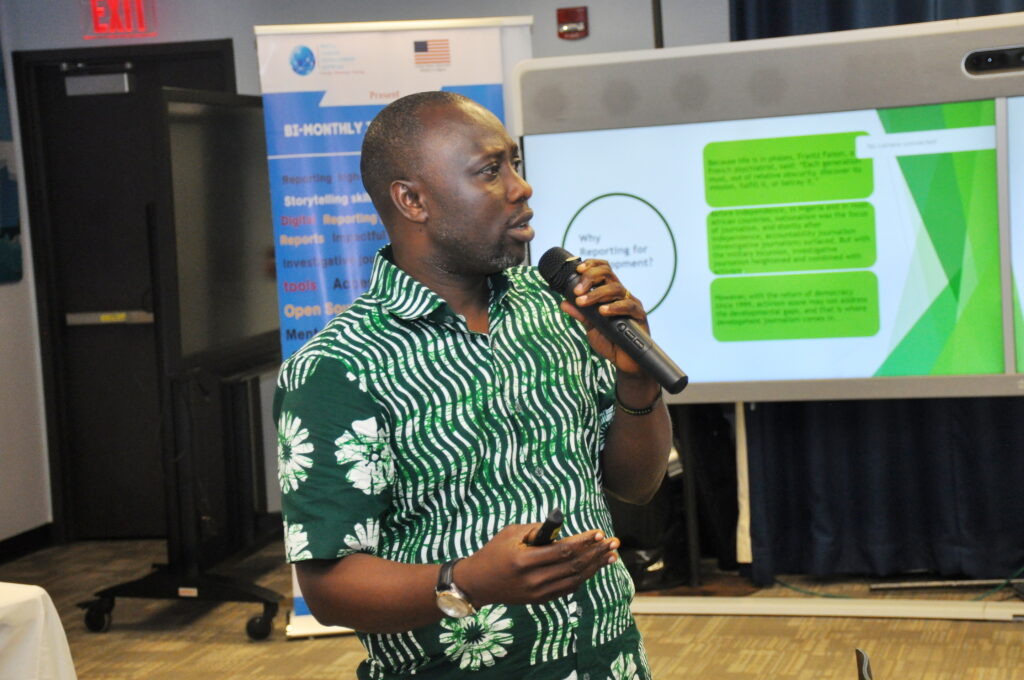
The convener of the dialogue said the forum became necessary considering the importance of education to national development.
Welcoming guests to the dialogue, which was moderated by the Publisher of Platforms Africa, Adeola Yusuf, the Chairman of EWAN, Mojeed Alabi, said the association believes that beyond reporting, the media must provide platforms for stakeholders to sit and discuss issues of national importance.
“We cannot fold our arms while the sector that holds so much for the development of the nation is unsettled. It is our responsibility to deploy our networks and voices to enhance a peaceful atmosphere within the nation’s education sector,” Mr Alabi said.
He called on the government to see the sector as a powerful weapon for socio-economic and political liberation.
