


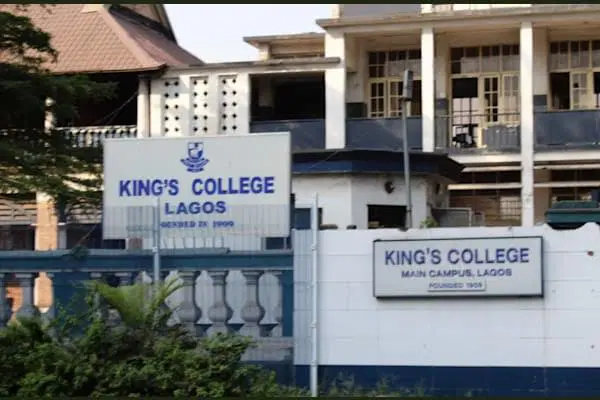
Amid the controversy over the concession of King’s College, Lagos, and the disruption of academic activities in several Federal Unity Colleges, the school’s old boys have rolled out the drums for Kingsweek 2026. While KCOBA celebrates the school’s heritage and future, parents, unions and education advocates continue to demand answers about the fate of one of Nigeria’s most prominent public schools.
The King’s College Old Boys’ Association (KCOBA) on Monday unveiled plans for Kingsweek 2026, the annual celebration of the Lagos school, as controversy over its concession to the association continues to unsettle parents, unions and the wider federal unity-school system.
The celebration, themed “Owning Our Future: Advancing the King’s College Lagos Legacy,” will run from 14 to 20 September. Its major events, the 117th Founder’s Day Lecture, a fundraising event and the annual dinner are billed for 19 September in Lagos. The announcement comes at a tense time for the 117-year-old school.
King’s College, Lagos, has stood for more than a century as a public school with a national story. Established on 20 September 1909 under an Act of the British Parliament, it began with just 10 students at its original site on Lagos Island.
But the decision over who will run it is stirring unease far beyond its gates, across classrooms, hostels and homes in Nigeria’s federal unity schools.
A recent letter from the Federal Ministry of Education said King’s College had been concessioned to KCOBA and that a transition committee would oversee the handover of its management within six months. The letter also stated that funding for the school from the Federation Account would stop after the transition period.
This move drew protests from unions, parents and education advocates, who fear it could become a model for withdrawing government from public secondary education. The dispute has also disrupted resumption at Federal Unity Colleges, as unions suspended academic activities until the concession is reversed.
As a result, students who should ordinarily have returned to school after the long holiday remain at home, while their peers in other schools have begun the new session.
Amid the controversy, the federal government insists that King’s College has not been sold or privatised. The Minister of Education, Tunji Alausa explained that ownership of the institution remains with the government, while KCOBA will finance, rehabilitate, modernise, operate and maintain the school under a Public-Private Partnership arrangement.
Background
On 4 September, the federal government issued a letter to the Principal of King’s College, stating that after the conclusion of “all necessary processes” and the signing of a concession agreement, the College had been concessioned to KCOBA.
It says the Ministry of Education had concluded arrangements for an immediate handover and the creation of a transition committee.
The committee, according to the letter, is to ensure a “seamless transition” of management to KCOBA within six months, adding that after the transition period, funding for the college from the Federation Account will stop.
It also directed the principal to provide the committee with a list of staff willing to remain in the employment of the Federal Civil Service Commission.
By 10 September, opposition to the concession had spilled into the wider unity-school system.
The Joint Congress of Unions in the Federal Ministry of Education in a communique issued to parents, guardians, school-based management committees (SBMC), Parent-Teacher Association (PTA), community leaders and the general public, announced the suspension of first-term resumption in all federal unity colleges nationwide until further notice.
The communiqué accused the education minister of failing to grant the unions an audience for one month despite repeated requests to discuss the matter.
“No resumption shall take place in any Federal Unity College across the Federation until this matter is satisfactorily resolved and the planned sale/concession of King’s College, Lagos, is reversed,” the unions said, calling on parents, teachers, school-based management committees, community leaders and organised labour to join the resistance.
The chairman of the Parent-Teacher Association (PTA) of Unity Colleges in the South-west, Ayopo Somefun, said parents feared that allowing the King’s College concession to stand could expose other unity schools to similar arrangements.
DevReporting found that academic activities did not resume in most Federal Unity Colleges. A parent whose children attend the Federal Technical College, Akwa, said she did not allow them to return to school after parents received a memo announcing the suspension of resumption.
Checks by our reporter confirmed that academic activities did not resume at FGC Jos, FGGC Bauchi, FGC Billiri, FGC Azare, FGC Ijanikin, FGC Kaduna, FTC Yaba, FGC Kano and FGGC Bakori, and FGC Akwa among others.
Despite explanations by the minister and a meeting with the Trade Union Congress (TUC) and the Association of Senior Civil Servants of Nigeria (ASCSN) on Monday, the protests continued.
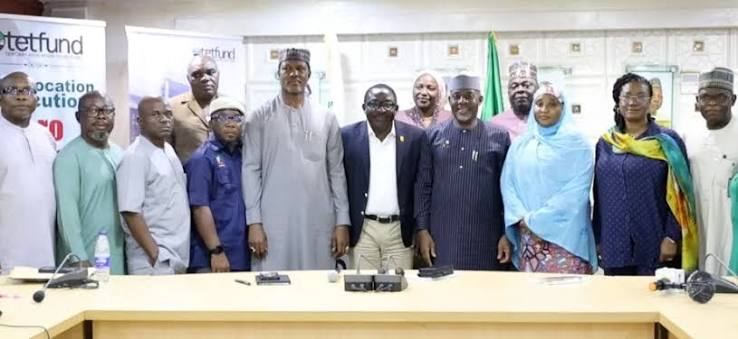
APCI calls for transparency, continued funding, wider consultation
While the African Principals Conference Initiative (APCI) appreciates and encourages philanthropic contributions, infrastructure endowments and mentorship support from alumni networks, it maintains that historical precedents show that limiting the administrative autonomy of professional educators can create friction and compromise academic standards.
The organisation called for an immediate halt to what it described as an opaque process, urging the federal government to publish the detailed terms of the proposed King’s College concession, including the agreement and operational framework.
In a statement signed by its Director-General, Ayodele Joseph, APCI appealed to the federal government to reconsider the planned cessation of budgetary provisions and ensure that public funding remains in place to guarantee institutional stability and accessibility.
It further urged the government to conduct broad-based and transparent consultations with professional education bodies, teachers’ associations and other key stakeholders before implementing any irreversible structural changes to the federal unity colleges.
Government suspends concession implementation
Following the continued protests and calls for a review of the concession, the Education Minister met with leaders of the ministry’s labour unions on Wednesday, after which the federal government suspended the implementation of the concession arrangement for two weeks.
At the meeting, a seven-man committee was set up to negotiate and review the Federal Government’s agreement with the college’s old students. It was also agreed that all industrial action over the concession would be suspended, while workers who participated in the protest would not be victimised.
However, the Education Minister maintained that there was no going back on the concession, insisting that the federal government had followed due process in arriving at the decision, which he said was aimed at improving the college’s overall management.
KCOBA speaks on concession
At a press briefing in Lagos, the chairman of the Kingsweek 2026 Planning Committee, Gbolahan Olayomi, said the concession offered an opportunity for KCOBA to deepen its institutional partnership with government and other stakeholders.
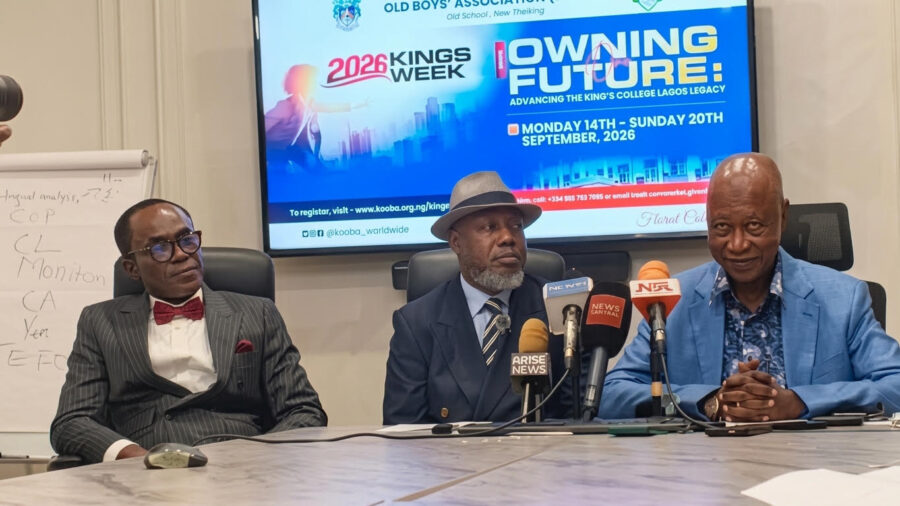
He said the arrangement was not a sale or privatisation of the college, but a framework for restoring and modernising the school while preserving its identity and heritage.
Mr Olayomi said KCOBA’s vision was to build a King’s College that is academically exceptional, technologically enabled, innovation-oriented and globally competitive, while retaining its traditions of character, discipline and leadership.
“The objective is to preserve what is worthy of preservation, change what must change, and build what the next generation requires.”
Mr Olayomi said KCOBA and different class sets had invested in infrastructure, digital learning, healthcare and sports at the school. According to him, one class set facilitated the digital-learning intervention, which he valued at about $200 million. Another set, he said, is upgrading the school’s medical facilities, while other interventions have supported student welfare and infrastructure.
KCOBA also said it had facilitated a sustainability and climate-action training programme for 100 students with the participation of global experts. It added that the Universal Basic Education Commission (UBEC) provided five interactive flat-panel displays to the college in the past year.
The association also said future programmes and infrastructure should accommodate members of the school community living with disabilities.
Unanswered questions
Despite the association’s emphasis on renewal and partnership, its president, Kashim Ibrahim-Imam, declined to answer specific questions about the immediate effect of the concession on the school’s operations.
He said KCOBA would address the matter at a later event and asked journalists to return with their questions.
Parents and unions have asked whether the school will remain affordable when federal funding stops; how staff, admissions and fees will be managed; and what public safeguards will govern an alumni association operating a federally owned school.
The government says the concession does not automatically increase school fees, although it does not provide for a permanent fee freeze. It has also said admissions will continue to follow unity-school principles of merit, fairness, transparency and national representation.
But the full agreement has not been publicly released, leaving stakeholders unable to independently assess its financial terms, accountability rules, staffing provisions, parent participation and protections for students from low-income families.
For KCOBA, Kingsweek offers an opportunity to celebrate King’s College and outline its plans for the future but parents, unions and other critics of the concession have continued to ask if the college could still be called a public school if government funding is withdrawn?
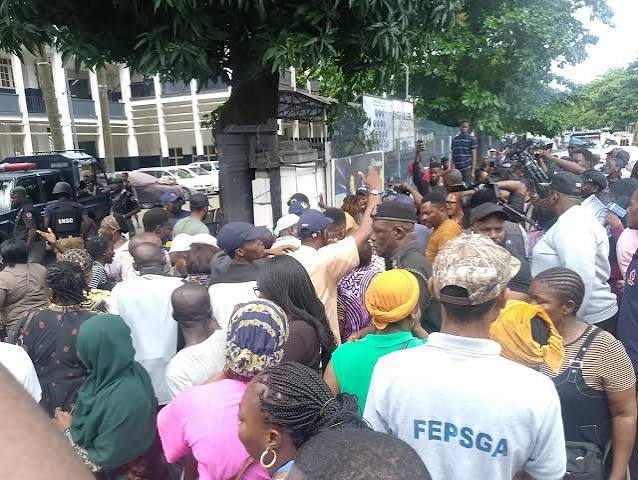
Union leaders demand
A teacher at King’s College who pleaded anonymity told DevReporting that staff members were concerned about the effect of the concession on their jobs, students and the future of the school.
He said teachers had been given forms to indicate whether they wished to remain with the Federal Government or work under KCOBA. Those who chose to remain in public service were reportedly asked to select three schools where they could be posted.
The teacher also expressed concern about school fees. According to him, boarders currently pay about N70,000, while day students pay about N35,000. The college, he said, has about 3,000 students across its two campuses. “If the college gets into the hands of these capitalists, the children of the masses won’t be able to afford education.”
He requested clarity on the future of the annex campus and how the concession would affect enrollment, staff and access for children from low-income families.
The union chairperson at FGC Ijanikin, Hundeyin Ayo questioned why the association could not channel its resources into scholarships, teacher support, student empowerment and infrastructure projects while leaving the school under public management.
“If the old boys have enough money to take over King’s College, why can’t they build their own school and name it King’s College Old Boys Secondary School?” she said. “They enjoyed free education and now want to deny others the same opportunity.”
She submits that the union feared that the concession could eventually make the school unaffordable for ordinary families, with fees rising beyond the reach of many Nigerians.
She, however, called for a roundtable involving the federal government, KCOBA, unions, parents and other stakeholders. “We say no to concession; we say no to injustice,” she said while she appealed to President Bola Tinubu to intervene.
Also, the union chairman at the Federal Technical College, Yaba, Olushola Omidiji said any major change to King’s College or other Federal Unity Colleges should be subjected to public review.
He called for broad consultations involving old students, workers, labour leaders, parents, past and present school administrators and other stakeholders. “The future of the children has to be put into consideration too,” he said.

