




Regarded as an orphan disease- Lupus, a chronic autoimmune disease that can affect many parts of the body, is dangerously wreaking havoc in Nigeria, without necessary interventions from the government. In this report, Aminat Miskilu, who has related with many Lupus patients, share the story of their pain, sorrow, and prayers
In 2022, Nollywood actress Kemi Afolabi brought lupus into Nigeria’s public consciousness when she revealed her diagnosis and had only five years to live. She disclosed that she had travelled to the United States for treatment at Johns Hopkins Hospital in Maryland.
Her story highlighted a critical reality that specialised care, advanced diagnostics, and consistent access to lupus medications remain largely out of reach for many Nigerians.
For hundreds of women living with lupus across the country, there is no option of medical travel or world-class care. Instead, they grapple daily with poor access to diagnostic centres, a shortage of specialists, high treatment costs, and the absence of standard facilities equipped to manage the lifelong autoimmune disease. For many, survival depends not only on medical care but on how long their finances, families, and bodies can endure.
Understanding lupus
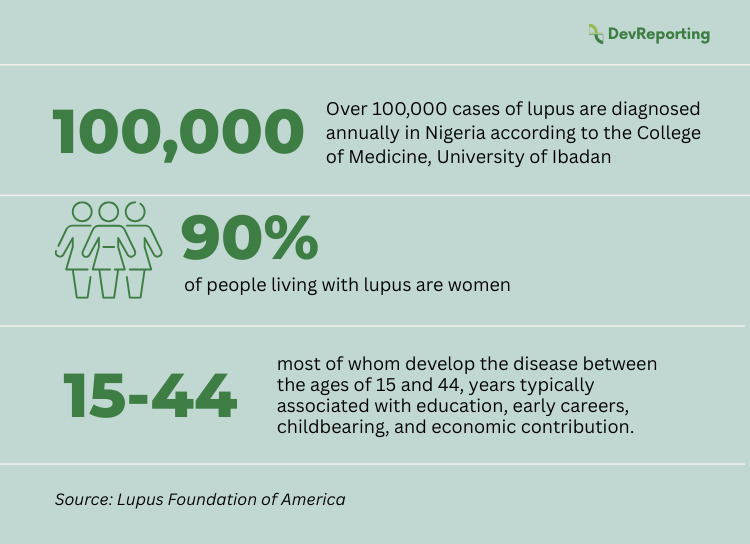
According to the College of Medicine, University of Ibadan, lupus is a disease in Nigeria with over 100,000 cases diagnosed per year.
The National Institute of Arthritis and Musculoskeletal and Skin Diseases, describes systemic lupus erythematosus (lupus), a type of lupus, as a chronic autoimmune disease that can affect many parts of the body.
It occurs when the immune system, which normally helps protect the body from infection and disease, attacks its own tissues, causing inflammation and, in some cases, permanent tissue damage. This damage can be widespread, affecting the skin, joints, heart, lungs, kidneys, circulating blood cells, and brain. Lupus leaves an indelible mark on those living with it.
A 2023 study by the International League of Associations for Rheumatology (ILAR) found that systemic lupus erythematosus (SLE) is not rare in Nigeria, contrary to earlier assumptions.
Further data from the Lupus Foundation of America show that 90 per cent of people living with lupus are women, most of whom develop the disease between the ages of 15 and 44, years typically associated with education, early careers, childbearing, and economic contribution.
‘Every day is a fight to stay alive’
Behind the statistics and policy gaps are women whose lives have been reshaped by the disease in deeply personal ways.

For Veronica Ikusika, a 34-year-old Nigerian woman who has lived with lupus for more than a decade, the journey has involved repeated misdiagnosis, organ damage, and a daily fight to stay alive.
Ms Ikusika told DevReporting that lupus has affected her heart, kidneys, and liver. She said some days her right hand and leg go numb, while on other days she struggles with severe migraines and loss of bladder control.
“At one point, I was coughing blood. The pain was so overwhelming that I reached for a sniper to end the agony, if not for the intervention of my family.”
Her journey with lupus, she said, has been marked by misdiagnosis, organ damage, repeated hospital admissions, job loss, stigma, and financial distress. Her story is not just about illness; it is about survival, resilience, and a fight she has been forced to continue for more than a decade.
Several women living with lupus who were interviewed said the non-communicable nature of the disease makes it harder for others to believe them or offer support, especially in the early stages when symptoms are less visible. Many only receive empathy when the disease progresses to severe skin damage or organ failure.
While non-communicable diseases (NCDs) account for 77 per cent of the 41 million global deaths recorded annually, according to the World Health Organisation (WHO), Nigeria’s health priorities remain heavily skewed towards communicable diseases. Within the already underfunded NCD category, autoimmune diseases such as lupus receive even less attention.
Advocacy groups describe lupus as an “invisible epidemic,” linking preventable deaths among women, men, and children to limited access to, and the high cost of treatments. They say many deaths result from late diagnosis, drug unavailability, and interruptions in care, among others.
According to the Lureg Support Foundation, which works closely with Lagos State University Teaching Hospital (LASUTH), lupus-related deaths occur regularly across the country. The Rheumatology Society of Nigeria has also raised concerns over deaths associated with lupus, noting the lack of a national database, which makes it difficult to accurately quantify mortality rates or the full burden of the disease.
A disease that drains lives, livelihoods
Findings by DevReporting show that managing lupus in Nigeria is financially devastating for most patients. Hospital prescriptions, pharmacy records, and payment receipts reviewed show that injectable medications, such as biologics and immunosuppressants, cost between ₦150,000 and ₦592,000 per dose.
According to Fauzat Sanusi, a lupus patient and founder of the Lureg Support Foundation, one of the newest treatments costs approximately ₦2 million per dose, which is far beyond the reach of many Nigerians.

Receipts and medical records from people living with lupus, including prescriptions from Lagos State University Teaching Hospital, Ikeja, and test results from Synlab and Clina-Lancet Laboratories, further highlight the reality of their struggles.
Findings from sufferers reveal that the estimated cost of laboratory tests required for diagnosis, including antinuclear antibody (ANA) and extractable nuclear antigen (ENA) tests, ranges between ₦250,000 and ₦500,000, depending on the laboratory and partnerships with overseas laboratories.
They noted that estimated costs of laboratory tests for follow-up appointments range between ₦30,000 and ₦150,000, while estimated monthly costs of lupus drugs range from ₦10,000 to ₦2 million, depending on disease severity and type. Some of the drugs are Alprazolam, Myfenax MMF, and Mycophenolate Mofetil (Myfenax), among others.
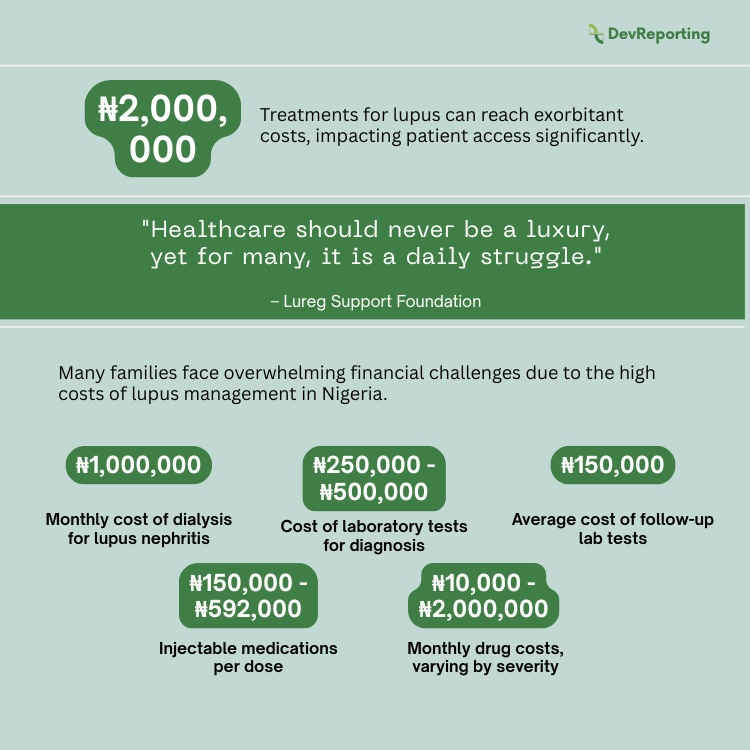
Patients with lupus nephritis who develop kidney complications require dialysis four times a week at ₦60,000 per session, totalling ₦240,000 weekly and nearly ₦1 million per month.
“These costs, which vary by disease severity, dosage frequency, and availability, are almost entirely paid out of the patient’s pocket because lupus is not adequately covered by insurance or government subsidy,” Mrs Sanusi said.
Paying to stay alive
Ms Ikusika earlier narrated that she was initially misdiagnosed with autoimmune haemolytic anaemia in 2014 before doctors confirmed lupus two years later. By then, multiple organs had been damaged. The disease, she said, paralysed her at some point, leaving her unable to walk, sit, or stand without help.
She further noted that she has been on blood pressure medication since lupus attacked her heart. When her liver failed, she said, she had to take an injection that cost ₦490,000 per dose twice.
“Now, the same injection costs over ₦1million per dose and is meant to be taken every six months, but because I cannot afford it, I have subscribed to an alternative medication to manage the condition.”
She told DevReporting that her monthly medications now cost between ₦150,000 and ₦165,000, depending on how active the lupus is. “When it becomes highly active, the dosage increases, and the cost rises. Routine tests cost between ₦58,000 and ₦69,000 and must be done every two to three months, or even every two weeks when lupus is active. Some special tests cost between ₦200,000 and ₦500,000.
“Most of my drugs are imported, especially from the UK, and many do not have NAFDAC numbers. Because they are scarce, there is a high risk of counterfeit versions, especially on Lagos Island, which can be very dangerous,” she noted.
Despite persistent health challenges, she completed her undergraduate studies at the National Open University of Nigeria (NOUN). However, employers have been unwilling to retain her due to her medical condition. She recounted that her five-year relationship with her fiancé also ended. She is currently unemployed and focused solely on managing her health.
A cost too heavy to bear
For 25-year-old Shukurat Isiaka, lupus has drained her family’s resources. “My father sold his car and everything. Now he is in the sick bed too,” she said. After four years of being wrongly treated for malaria, she was diagnosed with lupus in 2024.

“I spend about ₦100,000 monthly on drugs. The drugs don’t last the whole month, and I’m always borrowing money. I try to manage by borrowing from friends or through groups where people with lupus share information about where to find cheaper medication. Sometimes, it’s still not enough. It’s like living on the edge every day, thinking about how to get the next month’s supply. It’s exhausting,” she expressed.
Reeling out the support she needs, she stated, “Financial support is crucial. Lupus is not something you can manage without consistent medication. We need these drugs to be more affordable or for the government to step in and subsidise the cost. We need jobs or income that can help us sustain our health and pay for treatment without putting extra burden on our families and friends.
Morenikeji Adenuga, whose 19-year-old daughter, Sekinah, lives with lupus, said she knew her daughter’s condition was serious when she was admitted to a hospital and required a blood transfusion. According to her, that moment confirmed how critical the illness had become for her family.
Sharing her experience, Sekinah describes the physical pain and emotional strain of living with lupus. She said the illness has made it difficult to pursue her dreams or meet her parents’ expectations, although she has managed to return to Lagos State University (LASU) where she is schooling.
Still, the family struggles to afford her medication, which, according to her, costs more than ₦40,000 each month. At the time of speaking, she said she had run out of drugs and had to return home from school because her parents could no longer keep up with the cost.
Expert outlines lupus treatment challenges
A senior Lecturer and Consultant Rheumatologist at the Lagos State University College of Medicine (LASUCOM), Hakeem Olaosebikan, explained that most lupus drugs are not produced locally and are imported in small quantities due to low awareness, limited demand, and the high cost of registration and distribution.

He noted that some importers bypass the National Agency for Food and Drug Administration and Control (NAFDAC) registration processes due to high cost, while pharmacies remain reluctant to stock unregistered drugs because of the risk of sanctions. “These regulatory bottlenecks, combined with weak incentives for importers and manufacturers, ultimately limit drug availability and push costs beyond the reach of most patients.
“In European countries where these drugs originate from, regulatory authorities would have assessed them before they cross the border. So the drugs are already expensive, and having to go through NAFDAC screening will incur more costs, which patients cannot afford,” he said.
He said the drugs are usually available in tertiary hospitals such as University College Hospital (UCH), Ibadan; LASUTH, Lagos University Teaching Hospital (LUTH), or at big pharmacies that deal in specialised drugs. Groups of patients also sometimes engage in bulk purchases to reduce costs.
As a member of the Rheumatology Society of Nigeria, he said the number of lupus patients currently uploaded into the registry is over 5,000, noting that the figure could be an underestimation due to missed cases.
Mr Olaosebikan highlighted the challenges patients face, including poor or non-existent health insurance. As a result, he said, doctors help by not overwhelming patients with all the costs of drugs or tests. “Many samples are sent outside the country to partner laboratories in Germany, Turkey, and other countries, which explains the high cost of testing.
“We usually recommend alternative drugs or prioritise urgent ones to reduce the burden of cost on the patient. Many patients who stopped coming for treatment believed it was superstition or ‘attack by their village people,” he said, while he urged the government to strengthen the health system and support both healthcare workers and patients.
He also appealed to the government to invest in hospital infrastructure, including reliable power supply, diagnostic laboratories, blood banks, dialysis units, oxygen, and emergency care facilities to manage routine and emergency lupus cases. He stressed the need to develop local pharmaceutical manufacturing to reduce dependence on imported and counterfeit drugs and to expand laboratory capacity.
“The government should expand the National Health Insurance Scheme and mandate private insurers to cover autoimmune diseases, including lupus, ensuring patients can access medications and treatment without catastrophic out-of-pocket costs. Ultimately, an enabling environment for healthcare delivery is essential to improving survival and quality of life for people living with lupus.”
Reasons for late diagnosis
A physician in the Internal Medicine Department of Ahmadu Bello University, Zaria, Maryam Ahmed, said a lack of awareness of autoimmune diseases among caregivers and practitioners explains the delays in diagnosis and misdiagnosis.
A report by the National Institute of Health reveals that Nigeria has only 30 rheumatologists for its 200 million population, underscoring why many lupus patients experience delayed or incorrect diagnoses.
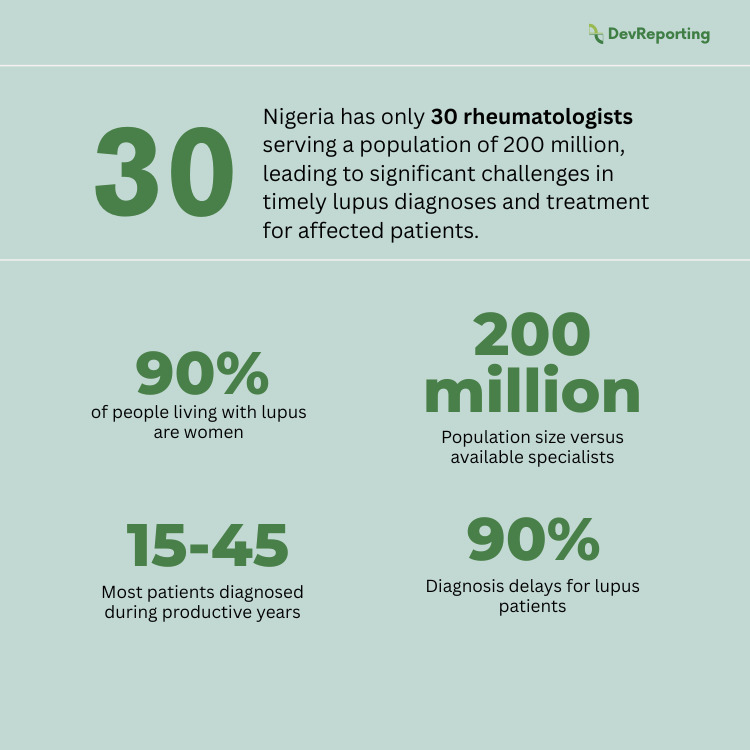
Ms Ahmed noted that lupus affects women far more than men, largely due to hormonal influences and genetic factors linked to the X chromosome. “Most patients are diagnosed between the ages of 15 and 45, meaning the disease impacts women during their most productive and reproductive years. This increases the social and economic burden on families and society.
“Rheumatological conditions like lupus are not prioritised in national health funding compared to diseases such as cancer or hypertension. As a result, lupus drugs are excluded from essential medicine lists, insurance coverage is limited, and pharmacies are discouraged from stocking them. This policy gap directly fuels high out-of-pocket spending by lupus patients. There is no comprehensive national lupus database, making it difficult to quantify the disease burden and advocate effectively for funding. Limited research funding and a lack of government-driven data collection also slow progress.”
She urged the government to prioritise lupus and other rheumatological diseases in health policy by including the drugs in the essential medicines list, expanding insurance coverage for medications and investigations, subsidising diagnostic tests, improving the availability of drugs and screening services, and reducing reliance on counterfeit and smuggled medicines.
Why pharmacies rarely stock lupus medications

A pharmacist, Bodunde Joseph also attributed the scarcity of lupus medications in most pharmacies to the economy, low demand, and regulatory barriers.
He explained that lupus drugs are not fast-moving products and that many pharmacies rarely receive prescriptions for them, especially in less busy locations. “In a fragile business environment, pharmacists are reluctant to tie down limited capital on medicines that may sit on shelves for months without being sold. Stocking such drugs could result in financial loss, which most small and medium-scale pharmacies cannot afford,” he said.
Beyond financial concerns, regulatory issues play a major role. Mr Joseph noted that some lupus medications are not registered with NAFDAC. “Pharmacies are legally prohibited from stocking unregistered medicines, as doing so can lead to sanctions or outright closure. Because private pharmacies do not have the same level of protection or backing as government hospitals, they are especially cautious and avoid stocking drugs that could expose them to regulatory penalties.”
NAFDAC responds
Responding to concerns raised by lupus patients over high drug prices and supply constraints, the Director-General of NAFDAC, Moji Adeyeye, a professor, said her agency does not routinely test lupus medicines on importation because they fall under the service drug category and are classified as treatments for orphan diseases, conditions considered uncommon in Nigeria.

She, however, clarified that such medicines can be legally imported, though only from countries with strong regulatory systems. According to Mrs Adeyeye, essential medicines used in the treatment of lupus, including hydroxychloroquine, prednisone, and methotrexate, are available in Nigeria through approved channels.
“Because we do not test service drugs when they come in, we restrict their importation to countries with very strong regulatory authorities,” she said, adding, “Approved source countries include the United States, Canada, parts of Europe, Australia, South Korea, and Singapore. We do not approve service drugs from India, China, and Turkey because Turkey has not yet attained WHO maturity level four.”
Mrs Adeyeye further explained that these restrictions are driven by safety concerns rather than competition, adding that Nigeria is currently at WHO maturity level three and is working towards achieving level four.
“Bringing medicines into the country is one thing; ensuring they are safe and effective is another,” she said. “Lupus is not a common disease, so medicines used for its treatment typically come through the service drug route, a regulatory pathway designed for rare or uncommon conditions. These medicines are imported in small quantities and can only be ordered through licensed pharmacists or pharmacy practitioners.”
NGO intervention
Mrs Sanusi, founder of the Lureg Support Foundation, said she established the platform after noticing a gap in advocacy for people living with lupus. Today, the foundation supports over 700 lupus warriors, including men, women, and children, whose parents rely on the network to access care for their children.
She said: “We are planning to expand our activities, including a project called Lureg Lens, which will involve home visits to share the stories of lupus warriors. Though funding constraints limit us, we are seeking partnerships, particularly with media organisations that can provide overage.
“Each October, we organise an annual lupus conference to draw government attention. Through this initiative, we have engaged the Lagos State Commissioner for Youth and Social Development, Mobolaji Ogunlende, and shared data on lupus warriors.”
Call for urgent government action
Advocates, including lupus warriors, rheumatology consultants, pharmacists, and support groups, have called for urgent government action. They argue that lupus must be recognised as a critical autoimmune and non-communicable disease, with deliberate policy support including inclusion of lupus drugs on essential medicines lists, subsidised medication costs, expanded insurance coverage, improved diagnostic infrastructure, and sustained public awareness campaigns.
Without these measures, access to care remains a matter of wealth, location or chance, leaving thousands of Nigerians, mostly women, to navigate a life-threatening condition without the support of the health system.

