



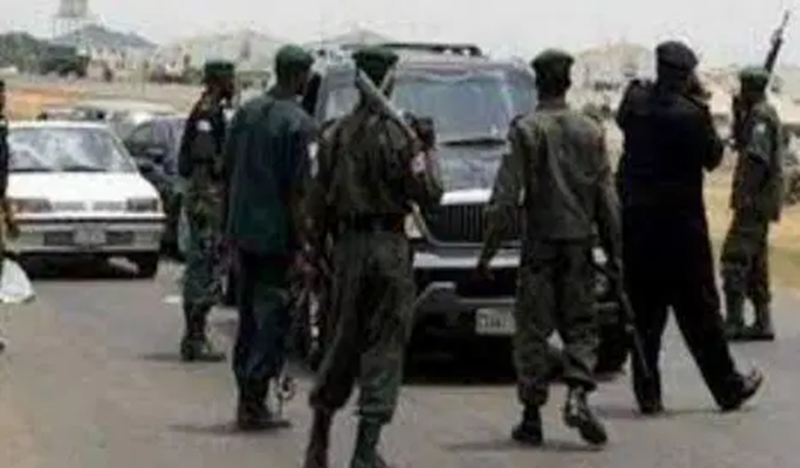
A non-partisan civic and socio-development platform, Oganihu has called for an immediate audit of security checkpoints across the five states in the region amid allegations of extortion, harassment and prolonged detention of citizens.
The group also called for accountability for security personnel accused of extortion, greater protection of citizens’ rights, and the implementation of recommendations of the Anambra Truth, Justice and Peace Commission.
Oganihu made the demands in a public statement issued on 30 August, following its meeting on 29 August, where it received a briefing from Emeka Umeagbalasi of the International Society for Civil Liberties and Rule of Law (Intersociety) on research and documentation of security checkpoints and alleged extortion across the Southeast.
The statement, jointly signed by Chijioke Uwasomba, a professor and co-chair; Uzodimma Nwogbe, secretary; and Okechukwu Nwanguma, advocacy coordinator, also raised concerns over the prolonged detention of people arrested in connection with separatist agitation and security operations in the region, including at Wawa Barracks in Niger State.
The group further urged the Anambra State Government to provide an update on the implementation of the Truth, Justice and Peace Commission’s recommendations and called for a renewed investigation into the 2002 murder of former Onitsha Branch Chairman of the Nigerian Bar Association (NBA), Barnabas Igwe, and his wife, Abigail.
Full statement
OGANIHU DEMANDS AN END TO CHECKPOINT EXTORTION AND IMPUNITY IN THE SOUTH-EAST, ACCOUNTABILITY FOR PROLONGED DETENTIONS AND IMPLEMENTATION OF ANAMBRA TRUTH COMMISSION REPORT
30 August 2026
Oganihu, following its meeting of 29 August 2026, expresses grave concern over the continuing deterioration of security, accountability and respect for citizens’ rights across the Southeast, particularly the proliferation and operation of security checkpoints, allegations of systematic extortion of motorists and commercial transporters, prolonged detention of citizens in security facilities, and the failure to implement important recommendations arising from official inquiries into violence and insecurity in the region.
The meeting received a detailed briefing from Mr. Emeka Umeagbalasi of the International Society for Civil Liberties and Rule of Law (Intersociety) on his organisation’s years of research and documentation concerning checkpoints and alleged extortion by security personnel operating across the South-East.
Checkpoints must protect citizens, not exploit them
Oganihu recognises the legitimate responsibility of security agencies to protect lives, prevent crime and maintain public safety, particularly in a region that has suffered kidnapping, armed attacks and other serious security challenges.
However, security necessity cannot justify extortion, harassment, degrading treatment or the conversion of highways into revenue-collection corridors.
Reports of checkpoint extortion in the Southeast are neither new nor confined to one organisation. Motorists, farmers, traders, transporters, civil society organisations and the media have repeatedly raised similar concerns. In July 2026, for example, commuters again complained publicly about police extortion and insecurity on Southeast roads.
Earlier reports documented complaints by farmers and food vendors that payments demanded at multiple checkpoints were increasing transportation costs and ultimately contributing to higher food prices. In April 2026, the Enugu State Police Command itself announced an investigation following allegations of extortion at checkpoints around Nsukka.
The House of Representatives had also expressed concern in October 2025 about unidentified and improperly dressed security personnel operating checkpoints in the Southeast and South-South.
These recurring reports point to a problem that cannot simply be dismissed as isolated misconduct.
Indeed, the Nigeria Police Force has previously directed that roadblocks should not be mounted without appropriate authorisation, while repeatedly declaring extortion and harassment by police personnel unacceptable. The present police leadership has similarly emphasised accountability, discipline, intelligence-driven policing and stronger supervision of field operations.
Oganihu therefore calls on the Inspector-General of Police and the heads of the Armed Forces and other security agencies operating in the Southeast to undertake an immediate audit of checkpoints across the five states, identifying their locations, operational necessity, authorisation and personnel responsible for them.
Checkpoints demonstrably required for security should operate professionally and transparently. Those serving no identifiable security purpose, or functioning primarily as points of extortion, should be dismantled.
Security personnel found demanding or receiving money from road users must be investigated and subjected to appropriate disciplinary and criminal processes.
The constitutional rights to dignity and freedom of movement do not cease to exist because citizens are travelling through a security checkpoint.
Southeast governments must demand accountability
Oganihu calls on the Governors of Abia, Anambra, Ebonyi, Enugu and Imo States to recognise that protecting citizens from abuse by security personnel is an important part of their responsibility as political leaders of their states.
Where state governments provide logistical or financial support to federal security agencies, such assistance must be transparent and tied to measurable standards of professionalism, human-rights compliance and accountability.
Public resources should never subsidise institutions or operations that humiliate or extort the same citizens whose taxes finance them.
Oganihu will therefore formally engage the five Southeast Governors and Houses of Assembly and urge them to exercise their constitutional and political oversight responsibilities.
We shall similarly petition the National Assembly, relevant security institutions and oversight bodies.
We also call upon Ohanaeze Ndigbo Worldwide, as the foremost socio-cultural organisation representing Ndigbo, to make ending checkpoint extortion and other abuses against citizens travelling across the Southeast a sustained regional advocacy priority. Ohanaeze itself publicly raised concerns about checkpoint extortion as far back as January 2024.
Oganihu will work with civil society organisations, professional bodies, transport organisations, community associations and other credible platforms to document abuses and pursue institutional and, where appropriate, judicial remedies, including strategic or representative litigation.
Wawa barracks and prolonged detention of Southeast citizens
Oganihu is equally alarmed by continuing reports concerning persons arrested in connection with separatist agitation or security operations in the Southeast and subsequently detained for prolonged periods, including at the military detention facility at Wawa Barracks in Niger State.
These concerns have been independently documented. Amnesty International’s 2025 report on abuses associated with the Southeast conflict recorded testimony concerning detainees arrested in the Southeast and transferred through DSS facilities to Wawa Barracks, including allegations of torture and poor detention conditions.
More recently, concerns have again been raised publicly about people reportedly detained there for years.
Oganihu’s position is straightforward: anyone reasonably suspected of committing a criminal offence should be investigated and prosecuted before a competent court. Those against whom there is insufficient evidence should be released.
Indefinite or secret detention cannot substitute for criminal prosecution.
Section 35 of the Constitution guarantees personal liberty and provides safeguards governing arrest and detention, while section 36 protects the right to fair hearing.
We therefore demand a transparent accounting of all persons currently detained at Wawa Barracks and other military or security detention facilities arising from security operations in the Southeast, including their identities, dates and places of arrest, detaining authorities, legal status and pending charges.
Families must be informed of the whereabouts and legal status of their relatives, detainees must have access to lawyers, and anyone against whom the State has evidence must be brought promptly before a competent court.
Implement the Anambra truth, justice and peace commission report
Oganihu also calls on the Anambra State Government to make demonstrable progress in implementing the recommendations of the Truth, Justice and Peace Commission established by Governor Charles Chukwuma Soludo.
The Commission examined the complex causes and patterns of agitation, violence and victimisation in Anambra and the wider Southeast. Among its recommendations were mechanisms for documenting missing and disappeared persons and the professionalisation and effective coordination of vigilante services.
Governor Soludo received the Commission’s final report in March 2024 and publicly pledged swift and full implementation.
More than two years later, Oganihu believes that the people of Anambra State and the wider Southeast deserve a clear public account of which recommendations have been implemented, which remain outstanding, and the timetable for completing them.
Barnabas and Abigail Igwe: Justice must not be abandoned
Oganihu is particularly concerned by the renewed controversy surrounding the brutal 2002 murder of the then Chairman of the Onitsha Branch of the Nigerian Bar Association, Barrister Barnabas Igwe, and his wife, Abigail.
Recent public reporting indicates that questions have been raised about the appointment of Mr. Ken Emeakayi as Special Adviser on Security to the Anambra State Governor in light of historical allegations concerning the Igwe murders. The Anambra State Government has rejected allegations against him. Reports have also attributed to the Truth, Justice and Peace Commission a recommendation that the unresolved murder case be reopened and that anyone implicated should face due process.
Oganihu does not pronounce guilt against any individual. That is the responsibility of a competent court after a lawful investigation and fair trial.
But allegations surrounding the assassination of a serving NBA branch chairman and his wife cannot be permanently buried by the passage of time, political convenience or public office.
We therefore call for the relevant law-enforcement authorities to revisit the investigation into the murders of Barnabas and Abigail Igwe and, where credible evidence exists against any person, irrespective of political affiliation or present position, ensure that such evidence is subjected to the judicial process.
No person should be condemned without due process; equally, no person should be placed beyond investigation because of political connections or public office.
Our next steps
Oganihu will pursue these matters through sustained civic and institutional engagement rather than episodic condemnation.
Accordingly, we shall engage the Southeast Governors and Houses of Assembly, the National Assembly, Ohanaeze Ndigbo, security agencies and relevant oversight institutions. We will also explore collaboration with credible civil society and professional organisations in documenting checkpoint abuses and pursuing appropriate legal remedies.
We call upon citizens who experience extortion or other abuses at checkpoints to document incidents safely wherever possible, including the location, date, time, agency involved and identifiable details of personnel, and to report such incidents through credible accountability channels.
The Southeast needs security. But genuine security cannot be built upon humiliation, extortion, arbitrary detention or impunity.
Security personnel deployed to the region must protect the people, not prey upon them. Governments must account for the security systems they finance. Those accused of crimes must be investigated and tried according to law. Those unlawfully detained must regain their freedom.
The rule of law must remain the foundation of security and governance in the Southeast and throughout Nigeria.
Signed:
Professor Chijioke Uwasomba, Co-chair
Uzodimma Nwogbe, Secretary
Okechukwu Nwanguma, Advocacy Coordinator