

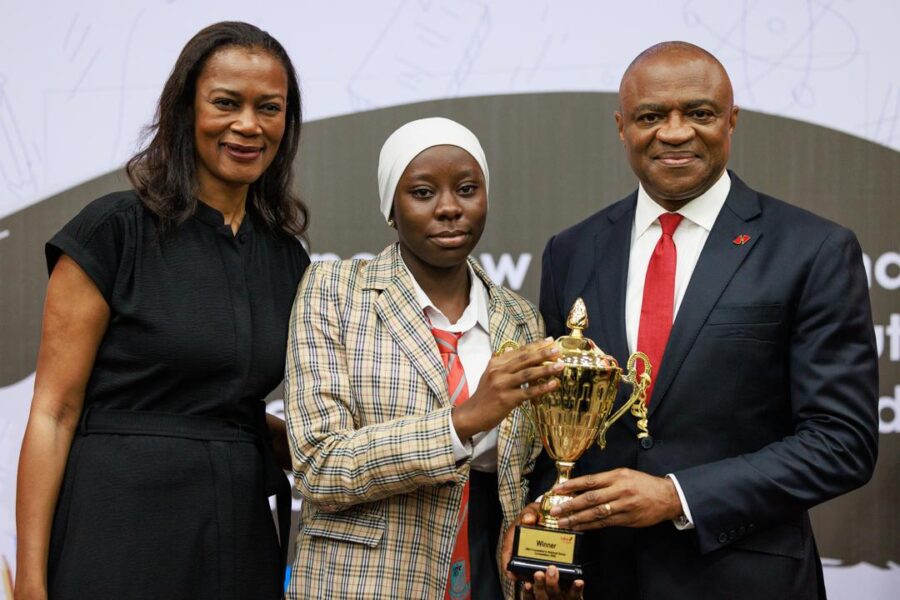
With only two finalists left in contention for the top prize, 15-year-old Khaira Bala was already in tears. At the grand finale of the 2026 United Bank for Africa (UBA) Foundation National Essay Competition in Lagos on 10 November, the announcement of the first runner-up settled the suspense as Khaira emerged the overall winner.
Her parents, who had accompanied her to the event at UBA House, Marina, Lagos, immediately rushed to the stage to embrace her. Khaira, an SS3 student of Metro International School, Kubwa, Abuja, had emerged champion among nearly 15,000 entries submitted by secondary school students across Nigeria. Her victory earned her a N15 million educational grant to pursue her university education at any institution of her choice in Africa.
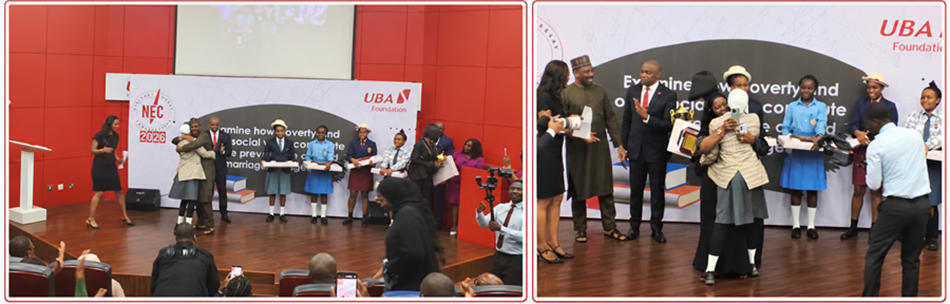
Her father, Shuaibu Bala, an engineer, said he was not entirely surprised by her success, having watched her consistently emerge as the best student in her school at the end of every academic session. However, he said the size of the grant was beyond what he had anticipated.
“She has never finished an academic year without receiving an award, right from nursery school. In my house, education comes first,” he said.
According to Khaira, she worked hard to prepare for the competition, often staying up late to research and write her essay. For her, the experience went beyond winning an award. She said the competition broadened her understanding of contemporary national issues and taught her the value of hard work, critical thinking and commitment.
She dedicated the award to her parents, acknowledging the sacrifices they had made towards her education. “I am so happy right now. My parents have sacrificed so much for my education, and this award belongs to them as much as it belongs to me.” She also thanked the UBA Foundation for providing young people with a platform to express their ideas.
Khaira was joined among the top five by four other female students. Udom Otobong, an SS2 student of Topfaith International Secondary School, Mkpat-Enin, Akwa Ibom State, emerged first runner-up and received a N10 million educational grant. Flourish Chimbunumoma, an SS3 student of the University of Port Harcourt Women Association (UPWA) International School, came third and received N7.5 million.
Godsfavour Udo, an SS3 student of Federal Government Girls’ College, Ikot Obio Itong, Akwa Ibom State, placed fourth and received N5 million, while Uchenna Anyanwu, an SS3 student of Coral Impacts International School, Abuja, came fifth, receiving N3.5 million.
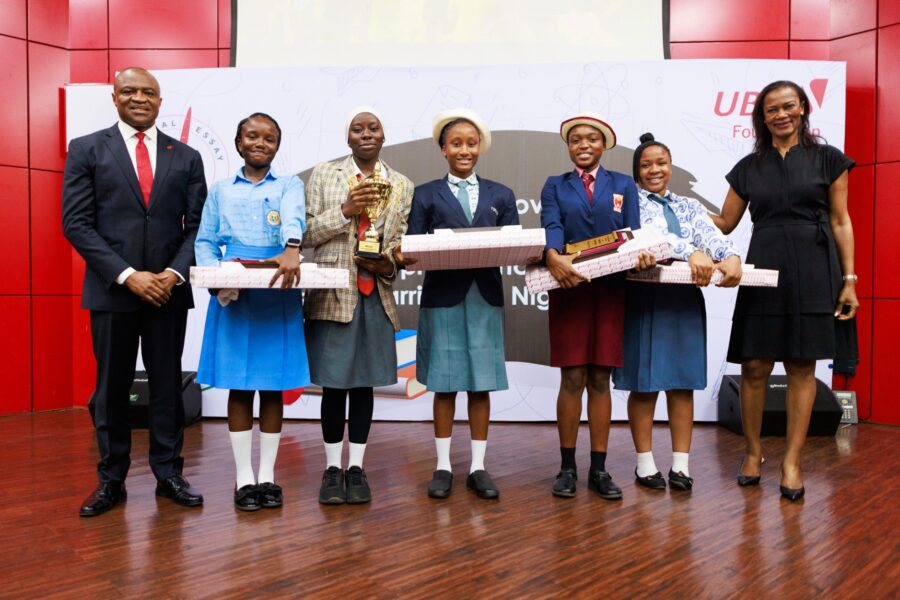
Together, the five awards amounted to N41 million, an increase from the N22.5 million awarded in the previous edition. The Foundation said it increased the prize money and expanded the number of winners from three to five to widen the competition’s reach and better reflect prevailing economic realities.
The national essay competition is a free-to-enter initiative of the UBA Foundation, the bank’s corporate social responsibility arm, and one of its major interventions in education. Designed to promote literacy and critical thinking among secondary school students, the competition attracted nearly 15,000 entries this year.
What the judges found in the essays
Beneath the applause, photographs and educational grants was another story that raised concerns about how Nigerian secondary school students read, write and think critically. The assessment of this year’s entries revealed concerns that extended far beyond the competition itself.
Four-member panel of professors of English including Samuel Onuigbo of the University of Nigeria, Nsukka; Ini Uko of the University of Uyo, Akwa Ibom State; Asabe Usman of Usmanu Danfodiyo University, Sokoto; and Emmanuel Omobowale of the University of Ibadan. assessed submissions for the 16th edition of the competition.
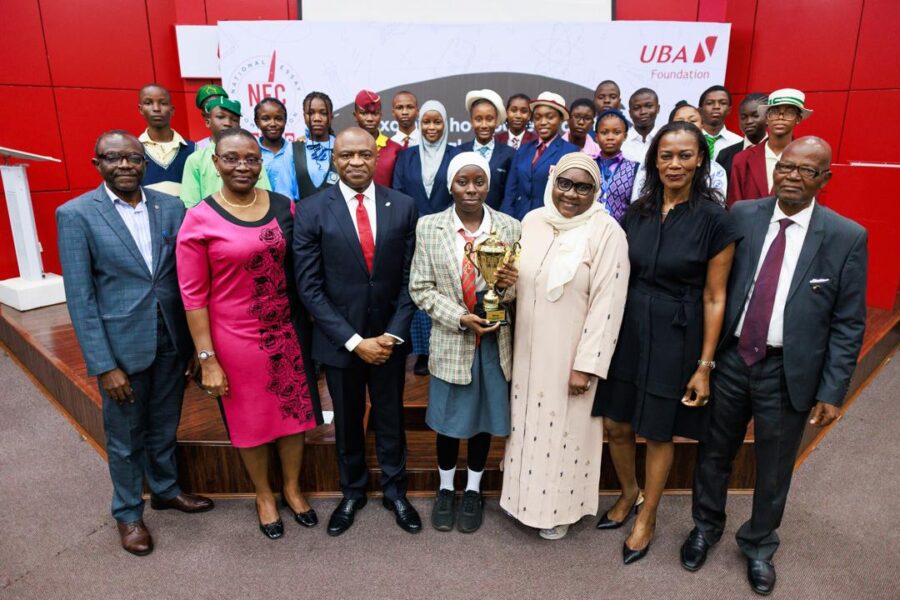
Participants were required to write on the topic: “No nation can develop without food security. How can Nigeria deal with this problem?” Following a rigorous screening process conducted by the professors, 20 finalists were selected from among 15,000 entries and they were invited to participate in a physical essay-writing exercise.
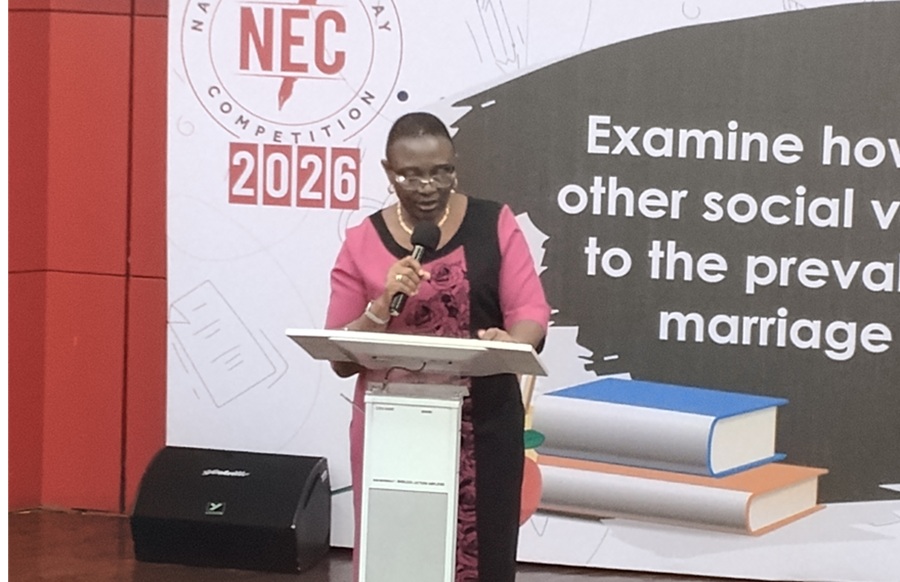
At the final stage, the 20 finalists were asked to “Examine how poverty and other social vices contribute to the prevalence of marriage in Nigeria.”
Presenting a report of their preliminary assessment at the grand finale, Ms Uko on behalf of the judges disclosed that an estimated 35 to 40 per cent of the essays displayed characteristics associated with artificial intelligence (AI)-generated content.
The essays, according to her, were identifiable by their overly polished American English, repetitive transitional phrases such as “In conclusion, it is pertinent to note” and “In today’s rapidly evolving world”, and expressions such as “Delve into”. Some also proposed generic solutions that lacked relevance to the Nigerian context, including “vertical farming in urban skyscrapers” and calls for the government to invest in blockchain for food traceability, with little consideration for the realities of smallholder farmers.
The assessment also found that several students submitted essays with identical introductions, definitions and conclusions. Some entries appeared to have been developed from common templates circulated through schools, tutorial centres or WhatsApp groups.
About five per cent of the submissions had titles that were unrelated to the approved topic. Some students submitted essays without titles, while others appeared to have reused titles from previous editions of the competition.
The judges also found duplicate submissions, with some students submitting the same essay more than once, sometimes under different names or schools.
Other entries were too short to properly address the questions. Some contained only 120 to 180 words, with little or no development of arguments. Hundreds of students also wrote their essays in the style of debate speeches, beginning with greetings to the chairman, judges, timekeeper and fellow students.
For the judges, these problems pointed to wider weaknesses in students’ writing and understanding of basic essay-writing instructions.
They warned that the situation could undermine the purpose of the competition by making it difficult to assess students’ actual abilities and putting those who made genuine efforts at a disadvantage.
When AI begins to do the thinking
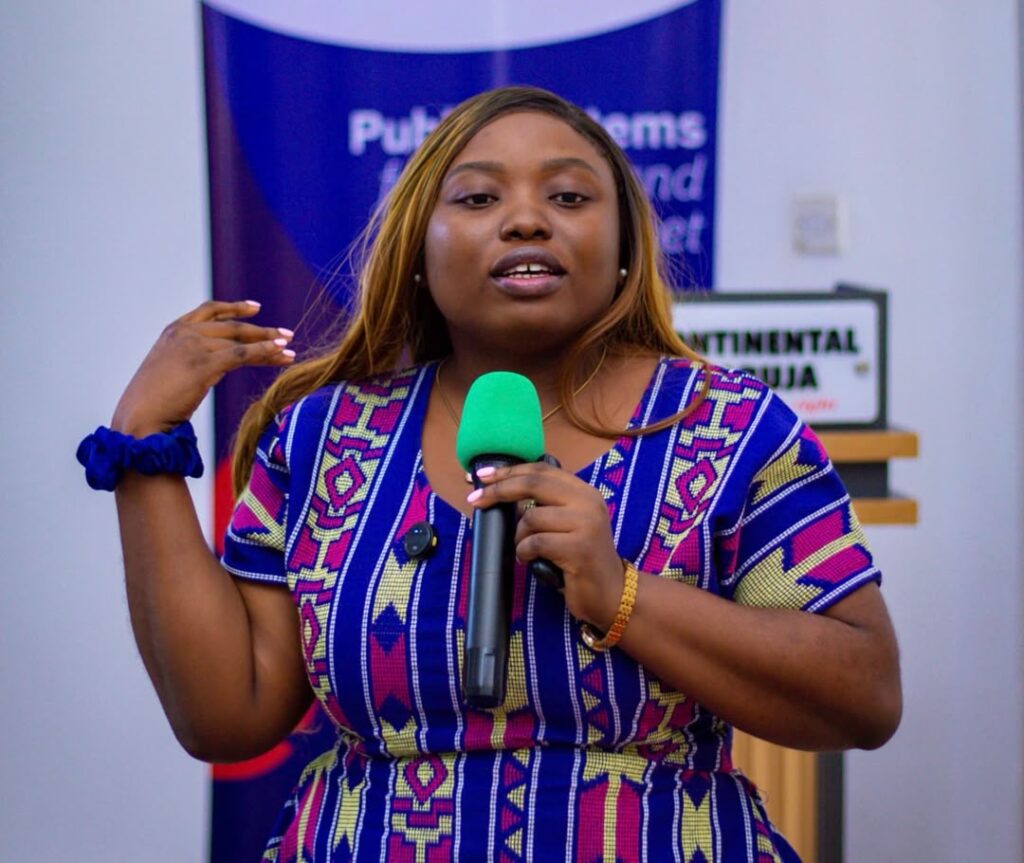
An AI literacy trainer, Titilope Fadare-Oparinde, said the growing dependence on artificial intelligence among students should concern parents, teachers and education authorities because it could affect how young people develop the ability to think independently.
According to her, students need to learn how to develop their own ideas, build arguments and find the right words to express themselves. These, she said, are skills that improve with practice, not by allowing a machine to do the work every time.
She compared critical thinking to a muscle that needs regular exercise to grow. “When you sit with a blank page, for instance, and you wrestle with your ideas, something is happening in your brain,” she said.
According to her, when students repeatedly turn to AI to produce their assignments, they miss the opportunity to go through the process of thinking, researching and developing their arguments.
She, however, does not believe that students should avoid AI completely. Rather, they should understand how to use it without becoming dependent on it.
Mrs Fadare-Oparinde said students should first understand the question they have been asked to answer, conduct their own research and develop their ideas before using AI to organise or improve their work.
For instance, a student who does not understand a topic could ask an AI tool to explain the key concepts in simple terms. After understanding the subject and deciding what to write, the student could then use the tool to help organise an outline.
That, she said, is different from simply entering an essay question into a chatbot, copying the response and submitting it as one’s own work.
She suggested that one way to assess a student’s understanding is to ask them to explain or defend their essay without the aid of AI.
Can the student discuss the subject in their own words? Can they explain the arguments they have presented and relate them to situations in their community? These, she said, are important ways to establish whether the student understands the work.
She also warned that excessive reliance on AI could make students’ writing sound alike, as they may end up using similar expressions, structures and arguments. This, she said, takes away the personal experiences and local details that make writing original.
The challenge of detecting AI-generated work
While the judges recommended the use of AI-detection tools in future editions of the competition, Mrs Fadare-Oparinde cautioned against relying on such tools as the final authority on whether a student used AI.
She explained that AI detectors do not know who or what produced a piece of writing. Rather, they examine patterns and predict how likely it is that the text was generated by AI.
This, she said, could create problems for students who write English as a second language and tend to use simpler words and more structured expressions.
Referring to research by Stanford researchers, she said some AI detectors had been found to misclassify writing by non-native English speakers as AI-generated.
She therefore advised competition organisers to treat detection scores as a starting point for further checks, rather than proof of misconduct.
“If you are using an AI detection tool, the score that you get from the tool should just serve as the starting point and should not serve as proof,” she said.
She recommended that human assessors review flagged submissions and give students an opportunity to explain their work. Organisers could also invite some shortlisted students to defend their essays orally, allowing judges to assess how well they understand the arguments they have presented.
She further called for clear rules on the use of AI in essay competitions, including what forms of assistance are permitted and what practices are prohibited. Such rules, she said, should be accompanied by an appeal process for students who believe they have been wrongly disqualified.
Her concern is that a student who genuinely wrote an essay independently should not lose an opportunity simply because a detection tool wrongly identifies the work as AI-generated.
Teachers and schools have a role to play
Beyond the students, Mrs Fadare-Oparinde said teachers must also improve their understanding of AI if they are to guide young people in its responsible use.
She said teachers need to become familiar with AI tools, test them with assignments and understand the kind of responses they produce. This would help them recognise generic answers and identify where students may need further guidance. “You can’t guide students on something you have not used,” she said.
She also advised teachers to rethink how they set assignments. Where a question can be answered simply by entering it into an AI chatbot, she said, it may be necessary to make the task more practical by asking students to relate the subject to their homes, schools and communities.
This would encourage them to draw on their own experiences and demonstrate their understanding, rather than depend entirely on information generated by a machine.
She also stressed the need to teach students how to verify information. AI tools can produce incorrect facts, statistics and sources, sometimes presenting them confidently. Students, therefore, need to learn to check information against credible sources before using it in their work.
Mrs Fadare-Oparinde pointed to a World Bank trial in Edo State, in which secondary school students used AI as a learning aid under the guidance of their teachers. She said the students reportedly learnt more than those who did not use the tool. She also referred to similar findings from Ghana and Sierra Leone.
For her, the important lesson from these examples is that AI can support learning when its use is properly guided and supervised.
Beyond the competition
The judges have also proposed measures to improve the quality of entries in future editions of the competition. These include clearer guidelines for students and schools, a virtual briefing for English teachers, checks to identify duplicate submissions and a minimum word-count requirement.
They also recommended the use of AI-detection and plagiarism-screening tools as part of the assessment process. However, such measures would need to be applied carefully, particularly in view of concerns about the reliability of AI detectors.
Though the Foundation organised a one-day writing bootcamp for the 20 finalists, with the judges serving as facilitators. The programme focused on essay structure, developing arguments, originality, the use of Nigerian examples and the importance of following instructions.
The judges described the bootcamp as an important part of the competition, giving the finalists an opportunity to learn directly from experienced academics and improve their writing.
Sustaining the investment in young writers
UBA Foundation’s Managing Director and Chief Executive Officer, Bola Atta, said the Foundation had committed more than N3 billion to the competition since it began in Nigeria. She explained that the increase in the prize money this year was intended to reflect prevailing economic realities and provide greater support for the winners.
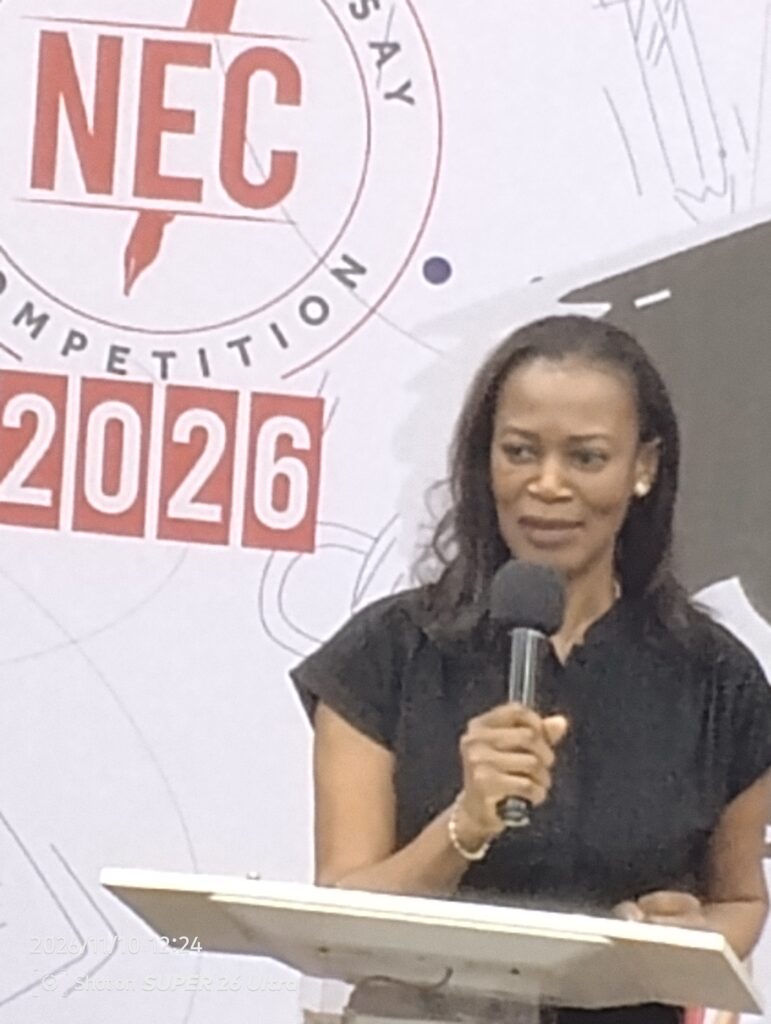
“This year, the five winners received a combined N41 million in educational grants, while the remaining 15 finalists received laptops and educational materials. We will keep ensuring that the reach is wider,” Ms Atta assured.
The UBA Group Managing Director and Chief Executive Officer, Oliver Alawuba, noted that the competition is part of the bank’s commitment to investing in young people and supporting education across Africa.
He commended the judges for the rigour of their assessment and urged policymakers to take the feedback seriously and use it to inform policy decisions. He also encouraged Nigerian students to remain committed to writing and developing their intellectual abilities. s
Mr Alawuba stated that the bank was considering expanding training opportunities for teachers to equip them with the skills to promote critical thinking among students. “We are looking at how we can expand training opportunities for teachers so that they can be equipped to help the students think critically,” he said.
He told the 20 finalists that they were all winners, urging them to see their selection as evidence of what hard work and curiosity could achieve.
“You were selected from more than 15,000 students, and you earned this place through your hard work, your curiosity and your determination. We do this because we believe in the future of this continent, and the best investment we can make in that future is in our youth.
He commended the Foundation for sustaining the competition over the past 16 years, noting that the initiative had helped promote reading culture and healthy competition among secondary school students in Nigeria and other African countries.