





Lagos’ growing housing crisis reflects deeper structural failures in governance, service delivery and urban policy, according to a new report by the African Cities Research Consortium (ACRC).
Presented on Thursday in Lagos, the report which is based on 18 months of research across nine city systems found that rapid urbanisation, weak service delivery and elite capture of urban resources are pushing the majority of residents, many of whom live and work in informal systems, further to the margins.
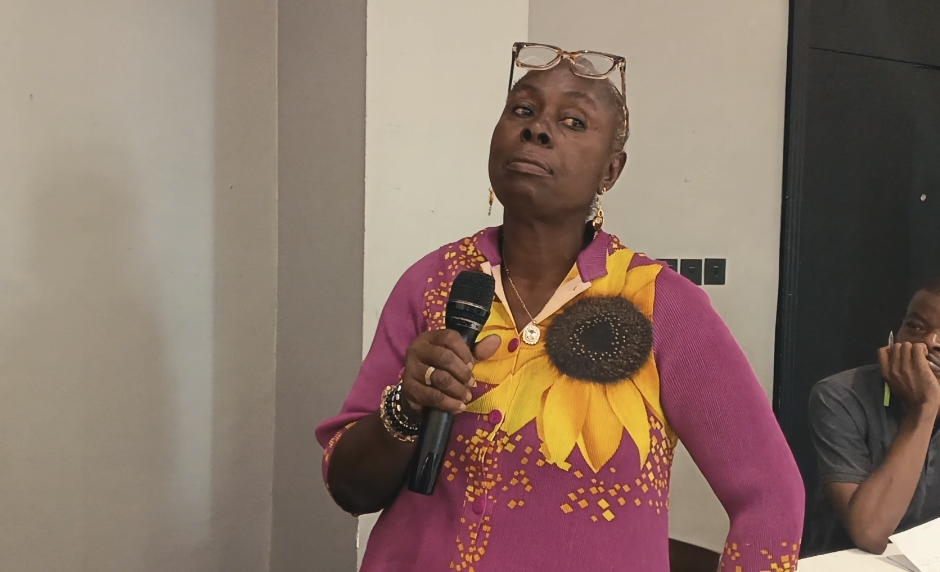
“We are sitting on a time bomb,” said Bimbo Osobe, President of the Nigeria Slum and Informal Settlement Federation, describing the scale and urgency of the crisis.
A strong state, a weak city
ACRC City Management Associate, Taibat Lawanson, a Leverhulme Professor of Urban Management at the University of Liverpool, presented the report’s key findings. She said Lagos is a city defined by a fundamental contradiction: a strong state by way of political power, and a weak state by way of service delivery.
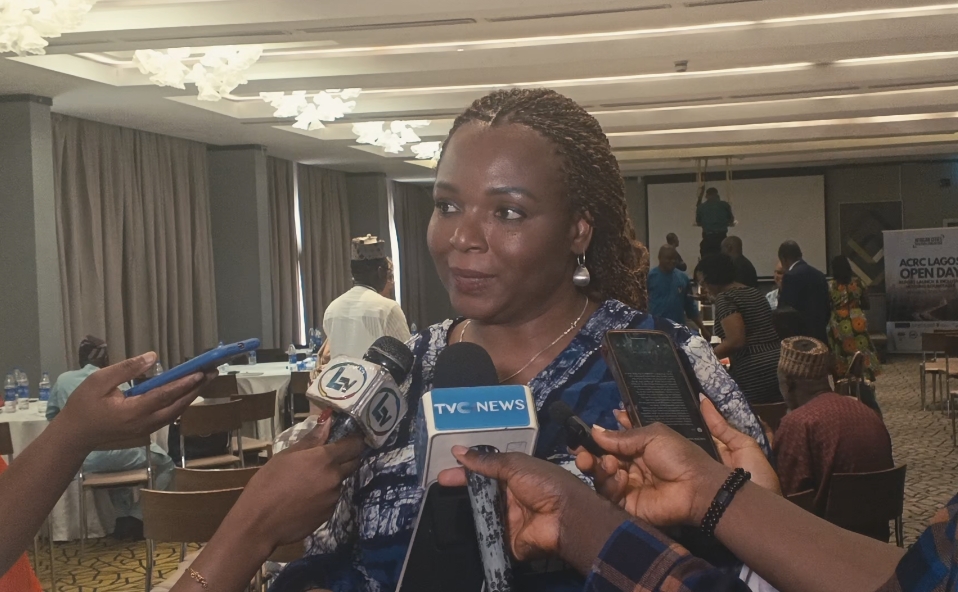
Despite Lagos’ economic vibrancy, the report shows that over 60 per cent of its residents live in informal settlements. More than 75 per cent of the working population operate within the informal economy. Yet government policy continues to treat informality as illegality.
Ms Lawanson noted the overlapping and competing layers of governance in Lagos, from the state government down through local councils, community development associations and traditional institutions, each asserting jurisdiction and often working at cross-purposes.
“Lagos is unfortunately the poster child for elite participation in politics and elite capture of urban resources,” she said.
Across all nine systems studied, access to energy emerged as a core threat undermining every aspect of city life. And on housing, the report found both a quantitative gap, meaning not enough units, and a qualitative crisis, where available housing is inadequate for the needs of ordinary residents of Lagos.
Rethinking urban development
A member of the ACRC Senior Management Team, Shuaib Lwasa, a professor of urban resilience and global development, framed the crisis within broader development approaches.
Mr Lwasa outlined three pathways: the first is business as usual: infrastructure, planning, and the expectation that foreign investment and industrialisation will create jobs. The second is incremental project-based activity, which he described as the gradual accumulation of small interventions. The third, and the one ACRC is pursuing, is doing things truly differently.
“The rate at which urbanisation is happening outpaces the cumulative and incremental type of urban development activities,” Mr Lwasa said.
Mr Lwasa argued that informal systems, from street-level financial services to home-based enterprises and waterfront trading, are not obstacles but functioning economic structures that sustain the majority. The policy gap, he noted, lies in failing to recognise and support these systems.
Housing and the politics of exclusion
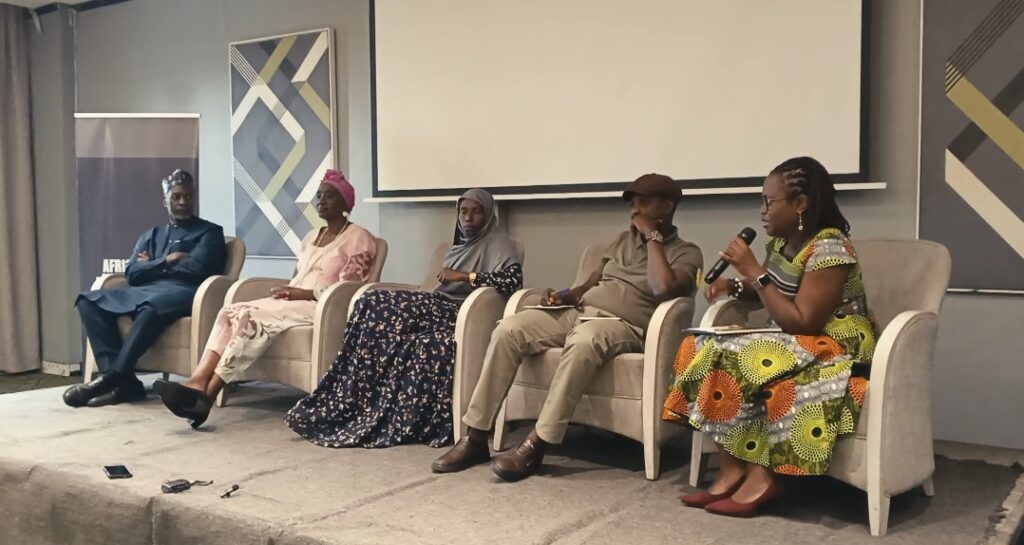
A panel session on inclusive housing revealed tensions between public interest and capitalism. The co-founder of Rethinking Cities, Deji Akinpelu, spoke about the influence of real estate interests in shaping policy outcomes.
“The real estate business is a very, very strong player in the Lagos political space. They dictate the tune. You are fighting capitalism, you are fighting big boys. That is what it is all about,” Mr Akinpelu said.
He linked repeated forced evictions in communities such as Otumara, Oworonshoki and Badia East to weak political will and prioritisation of profit over people.
“The land ownership landscape of Lagos is changing, and it is changing in one direction only: towards those who already hold power,” he said.
“When government officials claim that demolished communities harbour criminals, or that areas are unfit for habitation, they count on citizens to accept those justifications without scrutiny. You are the ones responding to them and saying, yes, that is true. The problem is actually us, the people,” he said.
A broken social contract
For Mr Lwasa and others on the panel, the housing crisis cannot be separated from a broader collapse of the social contract between African states and their citizens. Governments collect taxes and receive votes, yet consistently fail to deliver the basic services.
Water, sanitation, healthcare and public education are now increasingly privatised, with communities forced to pay twice: once through taxes and again for services the state no longer provides.
ACRC Action Research Lead for Water, Sanitation and Hygiene (WASH), Rasheed Shittu, recounted approaching a local government official to ask how a community budget had been prepared. Predictably, communities were not consulted.
The Baale of Ajegunle-Ikorodu, Lagos, Moyosola Oladunjoye, acknowledged that some development had recently reached his area. He commended the current local government chairman for the effort, but his message on cycles of neglect by the state was clear.
Lessons from Nairobi
The Executive Director and founding member of Akiba Mashinani Trust (AMT) in Kenya, Jane Weru, provided a comparative case from Kenya.
She described how Mukuru, a settlement of approximately 300,000 people living on around 600 acres of private land on the edge of Nairobi, faced mass eviction driven by politically connected landowners. AMT and its allies went to court and won injunctions, the communities kept resisting, rebuilt after demolitions and rebuilt again. Land was held through sheer collective persistence.
Then came the cholera crisis. The settlement had only 3,000 pit latrines serving 300,000 people. Waste was carted manually and dumped into waterways. Cholera was a constant. AMT brought this to the city government with a stark warning: Nairobi had just opened a direct flight route to New York, and the settlement sat next to the airport. The city heard the argument and declared Mukuru a special planning area, triggering a two-year planning process and eventually infrastructure investment. “The poor don’t want benevolence. They want partnership,” Mrs Weru said.
Women locked out of Lagos housing
The ACRC report further shows that female-headed households face significantly higher barriers to accessing both rental and purchase housing in Lagos. Landlords routinely refused to rent to single women or single mothers. Within government housing allocation schemes, access often depends on proximity to political power structures that exclude women almost entirely.
“Women are also, to a large extent, not able to go beyond the baseline of political participation,” Mrs Lawanson noted.
A member of a community resettlement group, Funmilayo Daniel, spoke to the difficulty of mobilising women for community action. Persuasion, she said, takes time as permission from household male members is often required. But once mobilised, she argued, women delivered. Her women-led water committee successfully improved water access in her community.
Ready to pay, nowhere to pay to
The ACRC research also found that low-income communities are willing, and already paying for services. They pay often more than their middle-class counterparts, through informal water vendors charging five times the piped water tariff, through generators absorbing a significant portion of household income, and through unofficial fees to area boys controlling access to roads.
Mr Oladunjoye confirmed this from the Ajegunle-Ikorodu experience. Residents had met repeatedly with the water corporation, prepared to pay between N10,000 and N15,000 monthly for reliable pipe-borne water. The corporation told them to wait for the phase-two rollout. Meanwhile, residents buy bowls of water at extortionate rates.
“We are ready to pay. If the government is ready to provide the services, we are ready to pay for it,” he said.
An ACRC researcher, Lindsay Sawyer, called for recognition of community-built systems, not as obstacles to be regulated away, but as foundations for partnership.
“You can’t ask people to do more. They are already doing the most they can. The question is how do you recognise and work with what has already been achieved, without disrupting the delicate systems people have built up over the years?” she asserted.
Action research already under way
Ms Lawanson confirmed that of the six key recommendations arising from the ACRC foundation phase research, four already have ongoing action research projects attached to them. These cover a streetlight systems pilot, a housing property tax initiative, a climate resilience project and a water, sanitation and hygiene (WASH) programme working directly with local government.

