




As rapidly growing African cities adopt safer ways to manage informal settlements without displacement, demolitions in the waterfront communities of Makoko and Oworonshoki, Lagos, have left thousands homeless.
The demolitions, carried out by the Lagos State Government, are reportedly targeted at structures built close to high-tension power lines, power stations and restricted waterfront corridors, triggering public outrage and humanitarian concerns.
While the government insists that its actions are necessary to prevent disasters, affected residents say the operations have deepened their vulnerability, leaving them without shelter, compensation, resettlement or clear relocation plans. This has reignited debate over whether safety in fast-growing cities must come at the cost of mass displacement.
The scale of the challenge is staggering. Across Africa, more than 56 per cent of the urban population live in informal settlements. According to the United Nations, 424 million people reside in urban centres in sub-Saharan Africa, while Sustainable Development Goals monitoring reports that 280 million of them live in informal settlements.
Yet evidence from other rapidly growing cities on the continent shows that governments facing similar safety and infrastructure risks have found alternatives. Negotiated setbacks, in-situ upgrading, and phased relocation, among others, have allowed communities to reduce risk without resorting to mass evictions.
How other cities reduced risk without mass demolitions
The challenges confronting Lagos are not unique, as other countries in Africa have overcome similar difficulties without demolitions. They instead adopted alternatives that prioritise safety while preserving livelihoods.
Nairobi in Kenya faced serious risks in Mukuru informal settlements, including flooding, open drainage and unsafe electricity connections.
More than 100,000 families live in Mukuru, a densely packed informal settlement in Nairobi’s city centre. Though people have lived there since the 1980s, housing conditions are extremely poor, and there are no formal water or sewerage connections.
But instead of demolishing the community, the government worked with residents to upgrade the area. Houses were reorganised, drainage and roads were built, and only homes in the most dangerous spots were moved short distances while most residents stayed within the community, keeping their jobs and social networks.
Similarly, in Cape Town, South Africa, many informal settlements were built on flood-prone land and near wetlands. Rather than mass evictions, authorities used a reblocking approach, rearranging homes to create safer layouts, firebreaks and access roads.
Basic services were also added, while only households at extreme risk were relocated nearby. This reduced fire and flood risks without displacing the entire communities.
Night-time demolitions, losses
Residents of Oworonshoki told DevReporting that demolition in the Ojuleru area began on 26 October 2025, when a task force reportedly arrived at night and started pulling down structures into the early hours of the morning.
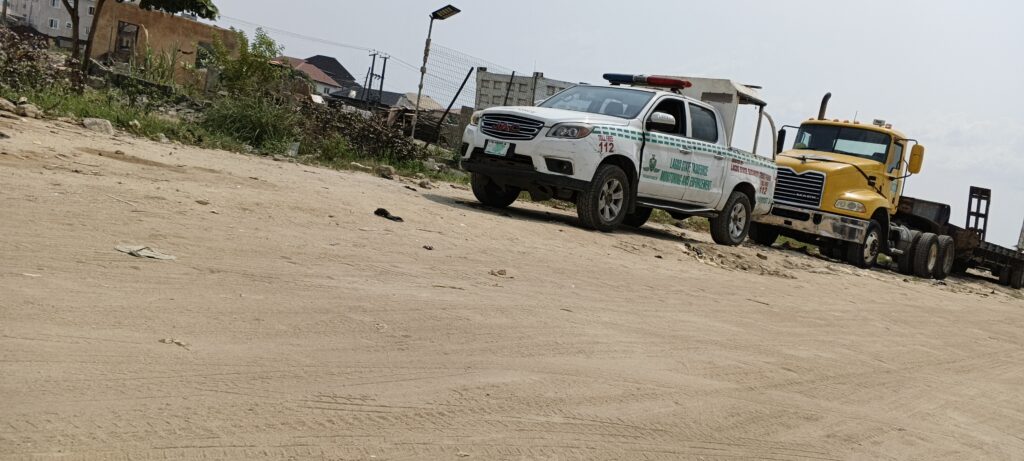
Despite protests and resistance, residents said homes and shops were demolished, destroying livelihoods built over decades.
The demolitions were allegedly accompanied by assault and arrest of residents who questioned the task force or attempted to obstruct the exercise.
When DevReporting visited Oworonshoki, renewed tension gripped the community as the task force returned to demolish buildings that had been spared during the initial operation. Eyewitnesses said a bulldozer, accompanied by police officers and task force vehicles, arrived without prior notice.
“They just came and told people to start evacuating. They gave us less than one hour,” a resident said.
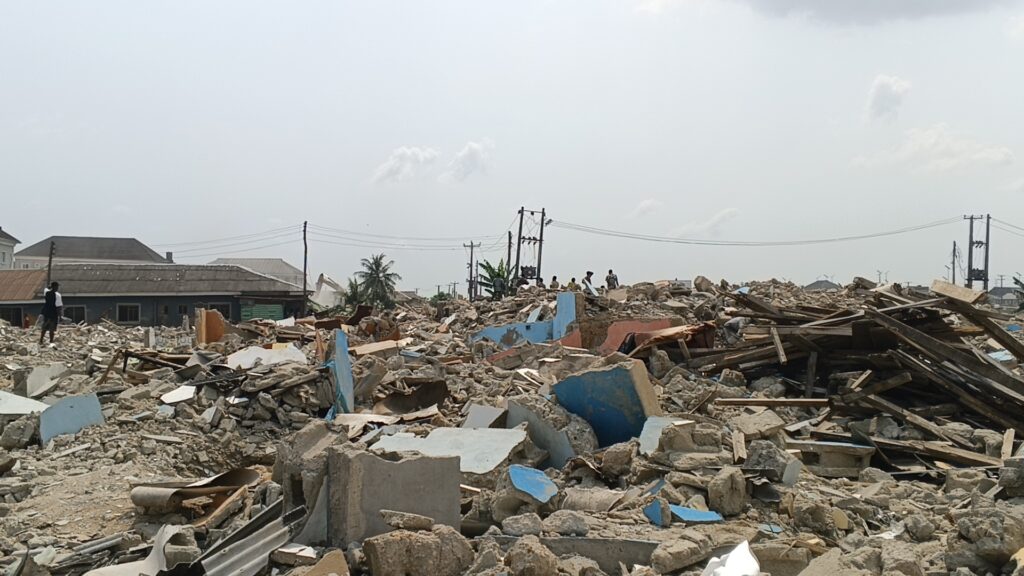
Residents and business owners were seen hurriedly evacuating their belongings and goods from the few buildings still standing. Food sellers and petty traders also set up makeshift stalls amid the rubble, determined to sustain their daily income.
Zainab Adedeji, a 100-level Guidance and Counselling student at Olabisi Onabanjo University, said her family home was demolished in October 2025, forcing her parents to relocate to Mowe, Ogun State.
“I just returned from school for a short break. When the task force came last year, they didn’t say they would demolish this remaining part. They only told us to clean the environment, and we have been here since then.”
She said some of her family belongings were kept in a shop space that had so far escaped demolition, but those buildings were marked again on Wednesday morning.
“My parents have moved to Mowe, but some of our property is still here,” she said, her voice breaking as residents rushed to salvage what they could from their houses.
When asked whether compensation or relocation had been offered, Ms Adedeji and other residents said they haven’t heard anything of such plans.
Makoko: Between power lines and population pressure
In Makoko, a densely populated fishing community built on stilts over the lagoon, which, according to residents, houses over 800,000 people, has expanded steadily towards the third mainland bridge and areas beneath high-tension power lines. This community has long been a flashpoint for forced evictions.
A top member of the community who does not want his name mentioned for security reasons, told DevReporting that discussions between Makoko leaders and the Lagos State government over setback distances from power lines began as far back as 2012, following a violent demolition that reportedly involved gunfire.
“It was concluded in court that the community would move 100 metres perpendicularly away from the power line. However, at that time, our population was very low. Over the years, population pressure and housing shortages pushed residents back into the restricted zones.
“People didn’t hear anything from the government for a long time, and they needed a place to live. So they started building again.”
According to the source, another demolition notice was issued in August 2025 after a meeting held at the Celestial Church of Christ in Makoko.
“They gave us three months’ notice and asked everybody to remove their houses 100 metres away from the power line. We pleaded to adjust it to 30 metres because there is no place to go, 100 metres is too much.”
While he noted that residents complied with the 30-metre setback, a subsequent legislative investigation rejected the compromise, insisting that people living between 30 and 100 metres remained at risk.
Another resident, Jeremiah Whosu, narrated that fears of demolition in the area dated back to 2005 during the administration of former Governor Babatunde Fashola, when an eviction notice that was later found to be unfounded circulated within the community. He said the plan was eventually shelved after attracting widespread public attention.
According to him, the years that followed saw significant changes within the community. Families grew, and economic activities expanded, prompting residents to gradually extend their homes and business spaces.
Mr Whosu noted that the government recently reopened discussions with community leaders, announcing plans to remove structures located close to the high-tension power line. Residents were told they would need to vacate buildings within the danger zone. This proposal met resistance, given the financial and emotional investment many had made in their homes and businesses.
He explained that initial government plans proposed a clearance of up to 100 metres from the power line, but after negotiations, community representatives secured an agreement reducing the setback to 30 metres. “Residents living within that range were subsequently asked to dismantle their structures, and demolitions began about two weeks ago, with broad compliance from the community.”
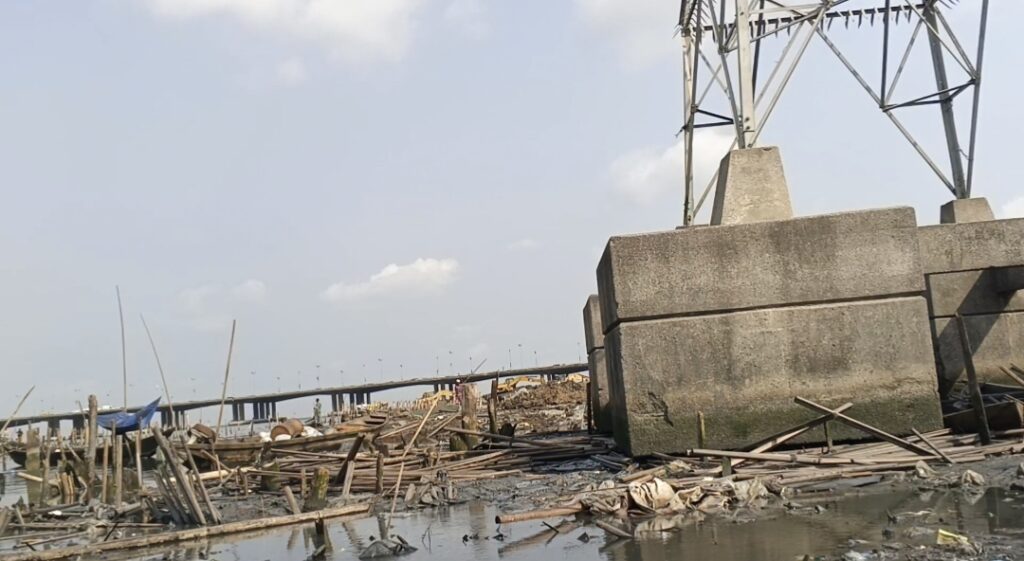
Tensions, however, resurfaced when houses beyond the previously agreed setback were pulled down, which prompted an emergency meeting between community leaders and the Permanent Secretary of the Office of Urban Development, Gbolahan Oki. At the meeting, Mr Oki reportedly reaffirmed that the 100-metre setback remained necessary to guarantee public safety.
Mr Whosu therefore appealed that while residents are making efforts to comply with the government directives, the clearance distance be reviewed to 50 metres. He warned that enforcing the full 100-metre setback would displace large numbers of families and severely disrupt livelihoods within the community.
Government defends Oworonshoki demolitions
In Oworonshoki, demolitions have been ongoing for about three months, particularly in the Ojuleru area. State authorities have repeatedly described parts of the community as unsafe and prone to criminal activity, while also citing the dangers of living in makeshift waterfront shanties.
Speaking on a television programme on Tuesday, the Commissioner for Waterfront Infrastructure Development, Dayo Bush-Alebiosu said the demolition exercises were not linked to waterfront development projects, contrary to public claims, but driven by safety and urban regeneration considerations. “I think it was carried out by urban development, I would say urban regeneration activities. They stated the nearness to the power line, and this is not something we should toy with at all.”

Mr Bush-Alebiosu acknowledged that people had been displaced but maintained that the state government intended to prevent loss of lives.
“The role of government is not to create problems but to solve them,” he said, noting that similar safety concerns had been raised at the Federal Executive Council about activities close to bridges and critical infrastructure.
CSOs condemn demolitions, as Ezekwesili writes Tinubu, Sanwo-Olu
Meanwhile, Civil Society Organisations (CSOs) have condemned the demolitions, alleging that the exercise has led to deaths, mass displacement and rights violations.
In a joint statement, the Centre for Children’s Health Education, Orientation and Protection (CEEHOPE) Nigeria, Health of Mother Earth Foundation (HOMEF), and Corporate Accountability and Public Participation Africa (CAPPA), accused the government of carrying out what they described as a brutal operation that has left two babies and an elderly woman dead, displaced thousands of residents and led to the arrest of a community leader calling for restraint and due process.
The groups said the demolitions showed disregard for the constitutional rights to life and well-being of marginalised residents, alleging that homes were set ablaze and tear gas deployed against residents, including women, children and the elderly. They identified two of the deceased as 70-year-old Albertine Ojadikluno and a five-day-old baby, Epiphany Kpenassou Adingban.
This is as Nigeria’s former Minister of Education, Obiageli Ezekwesili, has written an open memorandum to Nigeria’s President, Bola Tinubu, and Lagos State Governor, Babajide Sanwo-Olu, condemning the ongoing demolitions in Makoko as a “class cleansing” of one of Lagos’ poorest communities.
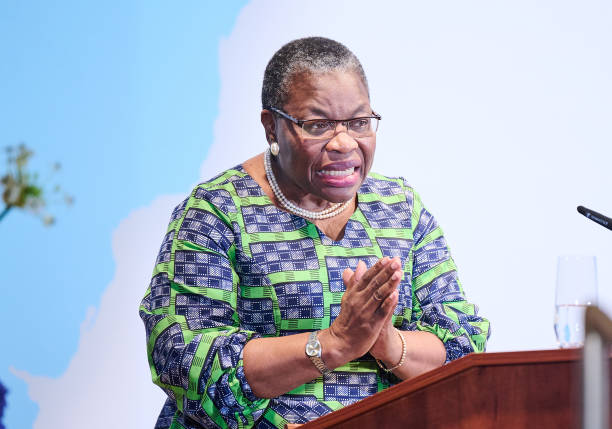
The former World Bank Vice President for the Africa region and founder of the School of Politics, Policy and Governance (SPPG), describes the exercise as a direct assault on constitutional citizenship, social justice, and the dignity of the poor.
Mrs Ezekwesili argues that what is happening in Makoko goes far beyond planning or safety enforcement, describing it as a symptom of a deeper governance crisis, “reflecting a class-based approach to urban development that marginalises the poor while privileging wealth and political influence.”
The memorandum calls for an immediate halt to all demolitions, urgent humanitarian intervention, full public accountability, and a shift toward inclusive, participatory urban development aligned with global best practices.
‘Lagos treating urban poor as expendable’
According to the HOMEF Director, Nnimmo Bassey, the demolitions are violent attacks on vulnerable communities, noting that the state is treating the urban poor as expendable. He said the arrest of community members and forced displacement of families underscored the growing helplessness of low-income residents, calling for an immediate halt to what he described as land-grabbing and displacement.
According to the groups, more than 3,000 houses have reportedly been destroyed, displacing over 10,000 people, while schools, clinics and places of worship were also affected. They said many displaced residents, including children, are now sleeping in boats, canoes, churches and open spaces, exposing them to serious health risks.
CAPPA’s Executive Director, Akinbode Oluwafemi, said the demolitions contradicted earlier assurances by state officials that the exercise would be limited to structures within 50 metres of power lines, a boundary later extended to 100 metres. He added that demolitions had spread to areas not under power lines, fuelling fears of a broader clearance of the Makoko community.
CEEHOPE Executive Director, Betty Abah, said Makoko’s experience reflected a wider pattern of forced evictions across Lagos, citing similar demolitions in Oko-Baba, Ayetoro, Otumara, Baba-Ijora, Oworonshoki and other communities. She noted that many of the exercises were carried out without adequate notice, consultation or resettlement plans, often in defiance of court processes.
The organisations described the demolitions as unconstitutional and in violation of Nigeria’s obligations under regional and international human rights frameworks. They called for an immediate halt to the demolitions, the release of arrested community members, an independent investigation into the alleged deaths and use of force, and adequate compensation and resettlement for affected residents.
More residents count losses
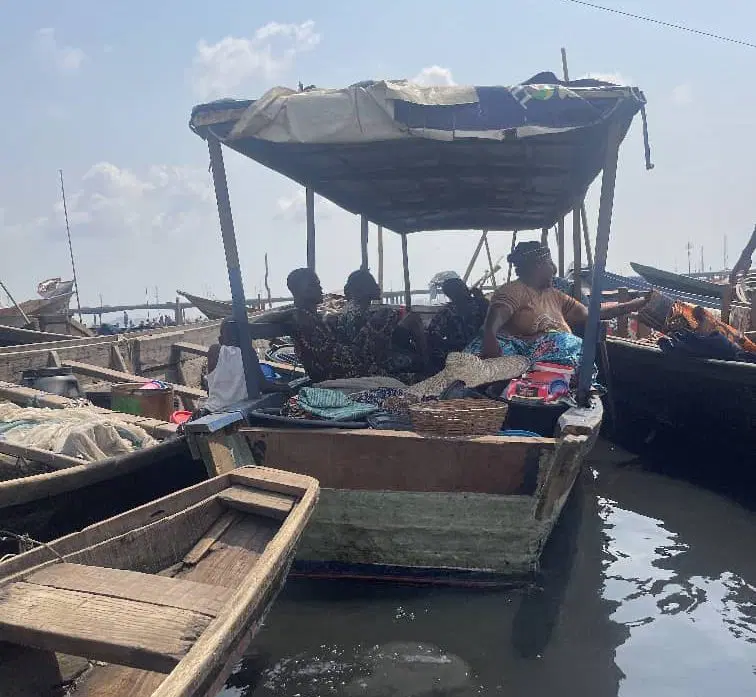
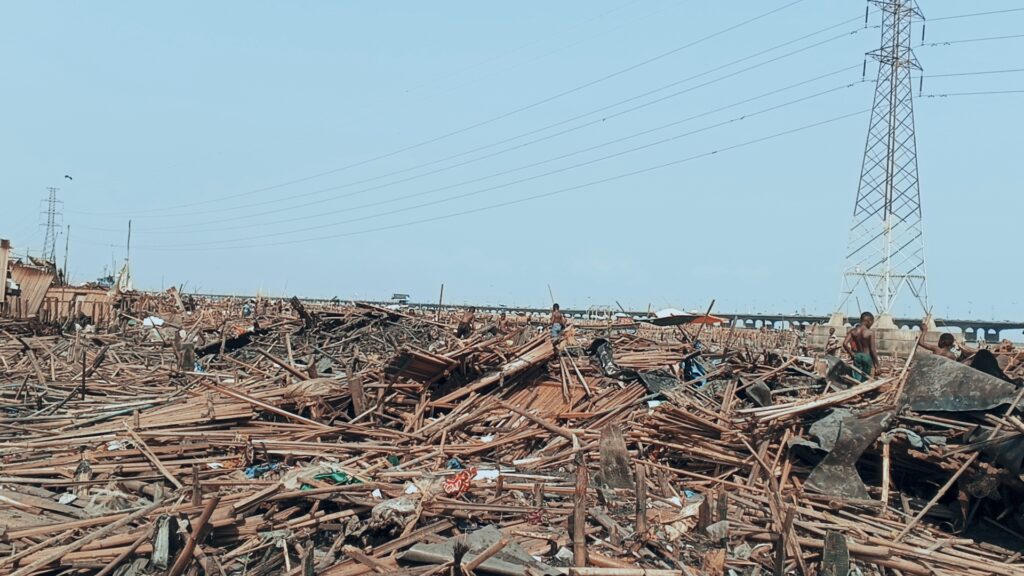
During a visit to Makoko, DevReporting saw residents ferrying salvaged belongings on canoes and wooden boats, while others dismantled their structures themselves before the arrival of the task force. Some had erected makeshift tents on boats to shield themselves and their children from the sun.
A resident who identified herself simply as Elizabeth said some families had moved to other houses they owned elsewhere, noting that many have nowhere to go. “Most of us are still here on the water. This is our life,” she said.
Ms Elizabeth said her household of nine had lived in a single wooden structure before it was demolished, noting that other families housed 15 to 20 people in similar conditions. “So many people are affected, even childhood has been replaced by survival.”
Residents estimate that more than 100,000 people may have been impacted by the Makoko demolitions, with many refusing to leave because they see no realistic alternative outside the community.
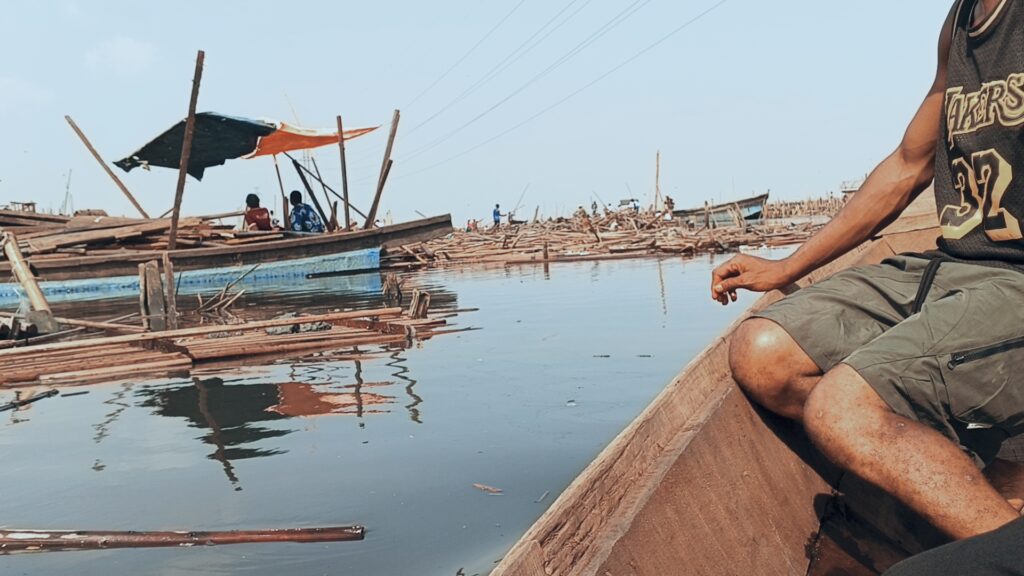
Also, 29-year-old mother of three, Elizabeth Ottom, said she and her family now live in a canoe. Pointing at the canoe, she said, “We sleep here, that is our house now. We don’t even have food,” she wept as she narrated that her home was pulled down without warning, notice, consultation or plan for an alternative. They just came and destroyed everything. They didn’t ask us where we would go,” she sobbed.
Compensation, relocation divide residents
While the Lagos State government has repeatedly said efforts are being made to cushion the impact of the demolitions, many affected residents insist they have neither received compensation nor been offered viable alternatives.
During his television appearance, the Commissioner for Waterfront Infrastructure Development, Dayo Bush-Alebiosu, said the government had considered relocation and compensation but acknowledged division among residents.
“There have been quite a few things. From my findings, I was made to understand that a particular location had been obtained for them, but they had been divided; some were happy to go, some weren’t happy to go,” he said, noting that such disagreements often complicate resettlement efforts.
“You don’t always see things like that. Unfortunately, there’s a saying that for the flower to bloom, it has to get wet a bit. I feel for them, but the government has to do what it has to do to save lives,” Mr Bush-Alebiosu expressed.
He clarified that residents were not asked to leave entirely but to maintain a safe distance from powerlines, adding that further clarification should come from the Special Adviser on enterprise geographic information system (eGIS) and Urban Development, Olajide Babatunde.
Efforts to reach Mr Babatunde via phone call failed as he did not respond to all calls put across to his line, nor did he respond to messages sent to him.
Also, the Commissioner for Physical Planning and Urban Development, Olayinka Olumide, when contacted, told our reporter to meet the Director of Media in the ministry.
Calls for humanitarian support
Amid the displacement, displaced residents are appealing for urgent humanitarian assistance.
“We don’t want anything against the government. We don’t have anywhere else to go. What we are asking for now is food and basic support for the people who have been rendered homeless,” Ms Elizabeth echoed the plea, stressing that many residents were born in the community and had no life outside it.
“Many of us you see here were born on this water. This is where our business is. We can plan for ourselves if they give us 30 metres.”
She alleged that the demolition had extended beyond the agreed 100-metre setback.
“They said 100 metres, but this demolition has gone beyond that, and they are still coming back. As you can see, we are staying on boats. Our children have gone to help others evacuate their property.”
Government insists notices were served
Responding to claims of sudden demolitions, Mr Bush-Alebiosu insisted that the government does not act without prior notice.
“If you remember, particularly Makoko, it’s been an ongoing issue over the last 23 years,” he said. “There is no way under the sun that the government would move without prior notices, not notice, notices.”
He said engagements with Oworonshoki residents dated back almost two years, adding that repeated warnings are often ignored. “I have seen cases where we seal a place three times, and the person breaks the seal and continues building. When we finally move in, the assumption is that no notice was given.”
The commissioner acknowledged overlaps between ministries, including Urban Regeneration, Physical Planning and Waterfront Infrastructure Development, noting that such complexity often fuels confusion among residents.
The Permanent Secretary, Office of Urban and Regional Development, Gbolahan Oki had earlier said that the state government held stakeholders’ meetings with residents for three years, urging them to regularise building approvals.
“We don’t just go to demolish; due process was followed. People complained that those who rob on the third mainland bridge run back to the shanties,” Mr Oki said at a press conference.
He said many of the demolished structures were dilapidated and unsafe, adding that illegal buildings under high-tension cables posed serious risks.
“We have held several meetings with people living in Makoko because many of the shanties are built under high-tension cables. If any of those cables fall and anything happens to the people, the blame will be on the government. The lives of the people are more important,” Mr Oki maintained.
Expert speaks
The Lagos City Manager at the African Cities Research Consortium (ACRC), Temilade Sesan, described the demolition exercises in Makoko and Oworonshoki as a troubling reflection of governance choices in Lagos, particularly in how they affect long-standing communities.

In the case of Makoko, she noted that the settlement is not a recent encroachment but a historic fishing community that dates back to the nineteenth century. Beyond housing, Makoko, according to her, represents cultural heritage and a way of life tied to the lagoon, a fact that gained international attention when a foreign newspaper, The New York Times, once described it as the “Venice of Lagos”.
“Unlike comparable waterfront cities elsewhere, the residents of Makoko have seen little effort to preserve or upgrade their environment,” Ms Sesan said, stressing that Makoko and similar lagoon-side communities play a critical role in Lagos’s food system as artisanal fishers in the community and along the lagoon corridor supply a significant share of the fish consumed across Lagos, supporting markets that stretch from local neighbourhoods to major ports such as Tin Can Island.
Displacing these communities, according to the expert, disrupts livelihoods built over generations. “These are skilled fisherfolk who depend on proximity to water. Relocating families far inland, in some cases to Ogun State or Ikorodu, will cut them off from their sources of income and render them unemployed.”
She said: “The economic implications extend beyond individual households. In a city with limited formal employment opportunities, informal livelihoods provide a critical safety net. Removing these livelihoods deepens poverty and weakens the city’s economy. As poverty rises, Lagos risks becoming increasingly polarised, with a shrinking middle class and a growing population struggling to survive.
“When income levels fall across such a large section of the population, it is not just communities that appear poor; the city itself is seen as poor just as the global economic assessments judge cities by average income levels.”
On solutions, the expert emphasised that the starting point must be a shift in government attitude towards informal settlements, advising that rather than viewing residents as illegal occupants, authorities should recognise their right to live and work in the city.
“The same principles that allow bankers, civil servants or oil workers to settle in Lagos also apply to fishermen and traders. With such recognition, governments can work collaboratively with communities to design practical safety measures, housing improvements and environmental protections that do not rely on displacement,” she said.
Ms Sesan further argued that affordable housing must be treated as a shared societal responsibility. She noted that in many global cities, governments partner with private developers to ensure that a portion of new housing remains affordable, often supported by public subsidies or housing funds financed through property taxes in wealthier areas.
She added: “A popular approach in other cities is that developers are concessioned land, and out of every 100 units they build, a certain percentage, say 20 per cent, is allocated to public housing at stabilised rent. People who cannot afford market prices get it below market price, but it’s not solely the developer who bears the cost.
“The developer and the government work it out, so it’s win-win. If the government needs to subsidise, there should be affordable housing funds, a pool of funds from, say, property taxes in wealthier neighbourhoods that is then used to cross-subsidise housing for the poorest. This is necessary because housing is a societal problem.”
Informal settlements, she said, are not evidence of criminality but a grassroots response to a severe housing deficit. “People build informally because they do not want to sleep on the streets. In a city like California, where they cannot build informal communities, people end up sleeping on the streets. California really comes to mind, they are the capital of homelessness in the world. Step outside a posh hotel and you find a homeless person sleeping on the ground because they cannot afford housing and do not have shacks.”
She stressed that if Lagos truly wants to be a great city, it must stop criminalising survival and instead co-create solutions that allow all residents, rich and poor, to live safely and with dignity.