




The European Union (EU) has launched an 18-month intervention aimed at countering disinformation and strengthening democratic resilience across five states in Northwestern Nigeria amid concerns over the impact of false narratives on security, social cohesion and governance.
The initiative, being implemented in partnership with the Centre for Journalism Innovation and Development (CJID), will focus on Sokoto, Zamfara, Katsina, Kebbi and Niger states.
Tagged “Countering Disinformation and Empowering Democracy in Northwestern Nigeria,” the programme seeks to bring together journalists, civil society groups, security agencies, traditional leaders, educators and digital influencers to address misinformation and harmful narratives spreading across the region.
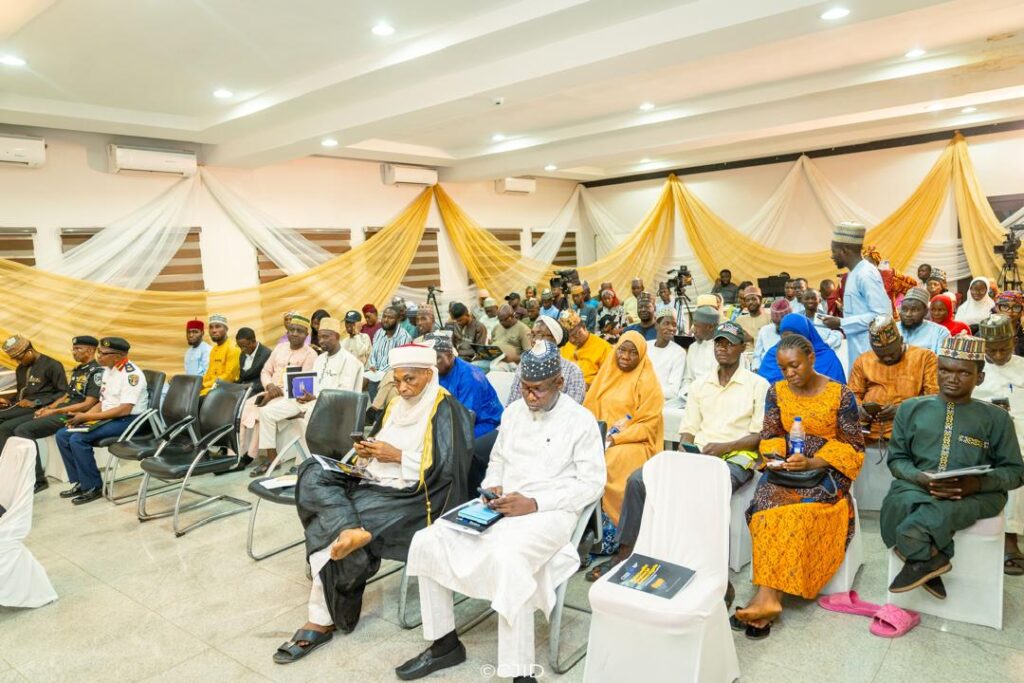
Speaking at the launch in Sokoto on Tuesday, representatives of the EU and CJID warned that disinformation has evolved beyond a media challenge and increasingly fuels insecurity, mistrust and conflict in fragile communities.
Disinformation now a security concern
Speaking at the event, Political Officer at the EU Delegation to Nigeria and ECOWAS, Xenia Stoll described disinformation and information manipulation as emerging threats to democratic stability.
“Disinformation and information manipulation are not only communications issues. They are used as tactics for destabilising societies and inciting violence and conflict,” she said.
According to her, the initiative is expected to improve media literacy and strengthen community resilience in Northwestern Nigeria.
The intervention comes at a time when parts of the region continue to grapple with insecurity, displacement, economic challenges and heightened social tensions.
Region vulnerable to harmful narratives
The chairman of the CJID Board and immediate past Vice Chancellor of the Federal University Kashere, Umaru Pate, a professor, said Northwestern Nigeria occupies a particularly vulnerable position due to multiple social and economic pressures.
He identified insecurity, population displacement, porous borders, youth frustrations, low literacy levels and rapidly changing digital communication systems as factors heightening susceptibility to misinformation.
Mr Pate noted that while radio remains one of the most influential sources of information in the region, platforms such as WhatsApp increasingly shape public conversations, allowing unverified narratives to move quickly from online spaces into everyday realities.
“Rumours, inflammatory content, fabricated security alerts, and hate-driven misinformation often spread faster than facts can follow,” he said.
He added that in fragile and polarised environments, disinformation now contributes to fear, weakened trust, communal tensions and democratic decline.
According to him, the programme is designed not only to respond to false information but also to build long-term resilience among communities.
“Its goal is not simply to respond to individual instances of misinformation, but to help communities become more resilient, more informed, less vulnerable to manipulation, and better equipped to respond peacefully during moments of tension and uncertainty,” he said.
The professor described the EU’s support as significant, saying it reflects growing recognition that protecting information integrity is crucial for democratic resilience and social stability.
Training teachers, journalists, students
The Executive Director of CJID, Akintunde Babatunde, said the project would adopt a multi-pronged strategy combining media literacy, journalism training, open-source intelligence (OSINT), AI-assisted verification, local language engagement and community mobilisation.
Under the initiative, Mr Babatunde noted that teachers will be trained to serve as frontline media literacy educators, while journalists and broadcasters will receive support on verification techniques and conflict-sensitive reporting.
The project, he added, will establish campus-based fact-checking networks and expand public engagement through radio programming and WhatsApp-driven media literacy campaigns.
Mr Babatunde said the intervention builds on CJID’s existing work around information integrity in West Africa through its programmes on fact-checking, media literacy, digital investigations, OSINT and artificial intelligence governance.
Through DUBAWA, CJID’s indigenous fact-checking and verification platform, the organisation has trained journalists, educators, researchers and civic actors across several African countries on verification and digital investigation methods.
Its Kwame Karikari Fact-Checking and OSINT Fellowship has similarly supported verification efforts across Nigeria, Ghana, Sierra Leone, Liberia, The Gambia, Senegal and Côte d’Ivoire.
The new project, according to Mr Babatunde, will further provide training, mentorship, verification support and collaborative monitoring opportunities for journalists, fact-checkers and OSINT practitioners across Northern Nigeria.
Sultanate Council backs initiative
The Sultan of Sokoto, Muhammadu Sa’ad Abubakar III, represented at the event by the Sa’in Daula Usmaniyya of the Sultanate Council, Muhammad Kilgori expressed support for the initiative.
He stressed the importance of sustaining collaboration beyond the project’s 18-month duration.
According to him, the Sultanate Council remains committed to partnerships aimed at promoting information integrity and peaceful coexistence across Northern Nigeria.

