




Each year, the International Day of Education draws attention not only to the value of education, but also to what societies lose when it fails.
In Nigeria, that loss is visible in classrooms emptied by insecurity, communities erased by demolitions and streets filled with children who should be in school learning. From conflict-ravaged villages in the North-East to fragile waterfront settlements in Lagos, education has become both a casualty of insecurity and a mirror of the country’s wider human and social crises.
While insecurity denies children safety, poverty limits their choices and weak governance leaves gaps where protection and opportunity should exist. Yet education remains one of the few tools capable of breaking these cycles, if it can be protected, sustained and made accessible.
Evidence from local initiatives and global programmes shows that when children return to safe, inclusive and well-supported schools, learning outcomes improve, social cohesion strengthens and long-term poverty declines.
In Nigeria, however, this promise of education remains out of reach for millions of children who are pushed out of school by the combined pressures of insecurity, poverty and systemic failure.
Together, these forces have eroded educational gains, widened inequality and denied generations their right to quality education.
Established by the United Nations in December 2018, International Day of Education is observed annually on 24 January to recognise education as a fundamental human right and a cornerstone of peace and development.
The observance highlights education’s role in building resilient communities and advancing sustainable development across societies. This year’s celebration is themed, “The power of youth in co-creating education.”
Out-of-school children, a national emergency
Recent analysis of national data shows that Nigeria is home to an estimated 18.3 million out-of-school children, the highest figure globally. About 10 million of these children live in the northern regions, where conflict and insecurity have disrupted schooling and displaced families.
The scale of the crisis is stark, with millions unable to attend school, hundreds of educators killed or displaced in attacks, and entire communities forced to choose safety and economic survival over learning. While insecurity remains the dominant driver, poverty and a struggle to balance education with daily subsistence continue to deepen the problem.
According to the head of the United Nations Children’s Fund (UNICEF) office in Kano State, Rahama Farah, girls account for about 60 per cent of Nigeria’s out-of-school population.
Insecurity linked to violence and mass kidnappings has forced authorities to shut down more than 11,000 schools in Nigeria since 2020, according to UNICEF.
When classrooms become targets of insecurity
Insecurity stands among the most entrenched barriers to education in Nigeria, particularly in the North-West and North-East. Armed conflict, banditry, kidnapping and insurgency have repeatedly turned classrooms into crisis zones.
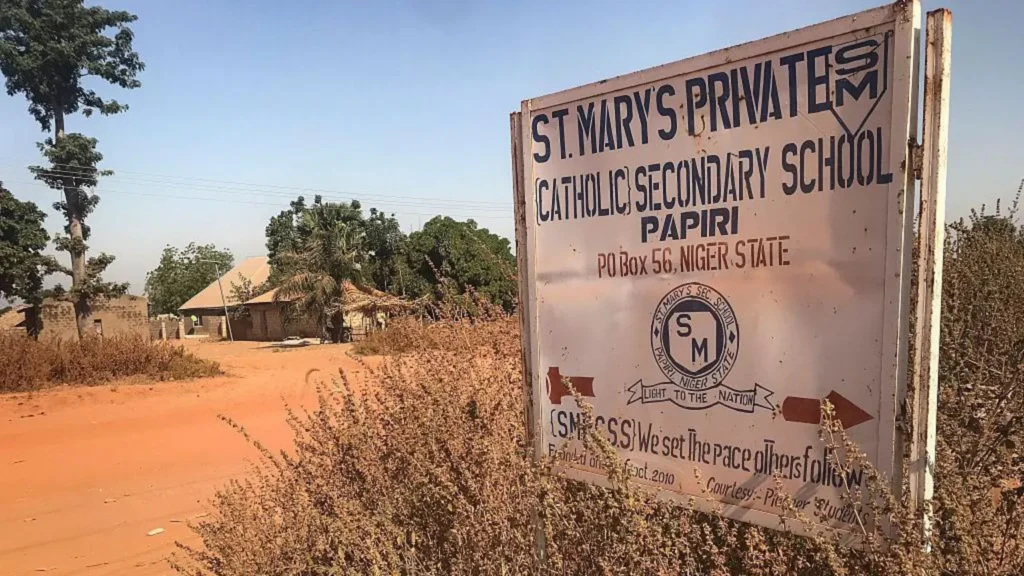
As of November 2025, a Save the Children report noted that at least 670 school children were affected in 10 school kidnappings in the space of two years, underscoring growing threat to school children’s safety.
“Fears of attacks are stopping some children from ever attending school. Around 19 million children in Nigeria (27 per cent) do not attend due to the threat of kidnappings, poverty and cultural factors, one of the highest numbers in the world,” the report noted.
Additionally, a 2021 report from the National Policy on Safety, Security and Violence-Free Schools noted that between 2012 and 2016 more than 600 teachers were killed in attacks and over 19,000 displaced by terrorists and bandits.
The National Policy on Safety, Security and Violence-Free Schools, published in 2021, reported that schools have also been targets of insecurity, with compounds razed or repurposed as camps for displaced families. With dozens of communities under threat, schooling is often suspended for safety reasons.
In states such as Borno and Zamfara, waves of insurgent attacks have forced closures, altered academic calendars and forced families to flee. According to humanitarian sources, millions of children in these areas have missed years of formal education because of protracted conflict.
Teachers report that parents who want to send their children back to school delay doing so because of fear of abductions or launch of new raids near school compounds.
The human toll extends from disruption of learning to loss of life, trauma and community fragmentation compound long-term educational deficits. Children who survive repeated displacements face gaps in literacy and numeracy that may take years to recover.
Demolition of informal settlements compounds out-of-school crisis
Beyond conflict zones, education in Nigeria is also under threat in urban slums, where forced demolitions and fragile living conditions have pushed thousands of children out of school, even in cities far from insurgency.
In Lagos, the recent demolition of waterfront communities in Makoko has exposed how urban renewal policies can unravel fragile education networks. The affected communities, home to thousands of low-income families, host several informal and community-supported schools that serve children otherwise excluded from formal education.
The human cost of the demolitions which two state governments tagged as “out of safety concerns” was brought into sharp focus by the founder of Slum2School Africa, Orondaam Otto, who described the experience as “personal and very painful”, noting that Makoko was where his social impact work began in 2011.
Presenting the 56th convocation lecture of the University of Lagos (UNILAG) on 19 January, Mr Otto said the destruction of homes across Lagos state has deeply affected families and young people.
He revealed the scale of the educational fallout, stating that of about 2,000 students in Slum2School’s scholarship programme, only about 100 were recently in school, not because of a lack of interest in learning, but because displacement had stripped families of the basic stability required to sustain schooling.
“Not because they did not value education, but because it’s impossible to think about it when you no longer have a roof over your head,” Mr Otto said.
In communities like Makoko, schools are often built with wood as temporary structures and operated by non-governmental organisations or faith-based groups. The demolition of a segment of the Makoko community has left the education hopes of thousands of children in shambles.
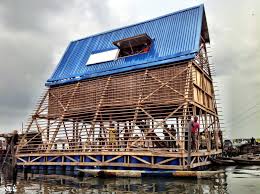
They had their schools, hospitals, churches and mosques in the slum before the demolition, but suddenly, classrooms disappeared overnight, leaving children without access to learning spaces, records or teachers. Although residents say efforts are on to bring the students together again, the crisis of the demolition still lives with the people, as they are left in disarray.
The educationist stated that without clear relocation plans or school reintegration strategies, the demolition exercise risks swelling the ranks of Nigeria’s out-of-school children, even in Lagos state where children enrollment to school is high.
Poverty, child labour and erosion of learning quality
While insecurity and displacement force children out of school, poverty pushes millions out by necessity, as families struggling to survive perceive education as a secondary daily subsistence.
According to Nigeria’s National Bureau of Statistics, more than 60 per cent of Nigerians live in multidimensional poverty, lacking access to clean water, healthcare, housing and basic education.
In such conditions, children are frequently compelled to work to supplement household income, trading schooling for survival.
Across major cities and rural communities, children hawk sachet water, fruits, and farm produce during school hours. In some parts of northern Nigeria, some children combine street trading with Qur’anic learning, while in the southwest, like Lagos, Ogun and Oyo states, many abandon formal schooling altogether to engage in domestic labour, apprenticeships or informal commerce.
Reports from a recent DevReporting education project in Oyo State found that despite the free education policy in the state, thousands of children remain on the streets, markets and motor parks hawking during school hours to complement the efforts of their parents.
A UNICEF-supported Multiple Indicator Cluster Survey has shown that millions of Nigerian children are engaged in child labour, with a significant proportion of them not attending school or attending irregularly. The consequence is not only reduced enrolment, but also poor retention and low learning outcomes among those who remain in classrooms.
Poverty also degrades the quality of education available to those who remain enrolled, particularly in slums and shanty areas such as Makoko, Ajegunle and parts of Port Harcourt’s waterfronts. Here, schools are often overcrowded, poorly ventilated and under-resourced, with limited teaching materials and untrained or underpaid teachers.
In Makoko, for instance, several schools operate on wooden platforms above water, vulnerable to flooding and fire, and lacking basic sanitation facilities. Pupils study in conditions that undermine concentration, health and safety, widening the gap between them and peers in better-served urban districts.
Unsafe infrastructure, the bane of education in Nigeria
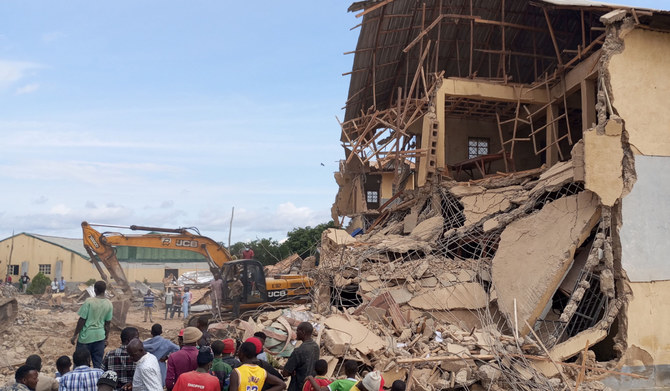
Nigeria’s education crisis is also reflected in unsafe infrastructure. In 2024, there was tragedy in Plateau State where a two-storey school building collapsed during morning classes, killing 22 students at Saints Academy College in Busa Buji community. 154 students, many of whom were 15 years old or younger, were initially trapped in the rubble.
In September 2025, a video of teachers and students scooping water from their classroom went viral on the internet. According to the teacher, students stopped attending classes frequently since a rainstorm blew off the school roof. The teacher and few students who show up have had to battle with the poor learning environment for days before crying out for help.

Many other schools only use trees as their shelter, while the students sit on the ground to learn, without a uniform or chalk board. These, among many other instances, expose the systemic failure in Nigeria’s education.
Education in emergency: Youths at the frontline
Commemorating the International Day of Education 2026, the United Nations Educational, Scientific and Cultural Organisation (UNESCO) placed youth leadership at the centre of global efforts to safeguard education in emergencies.
An event to mark the day, themed “Youth and students leading education in crisis-affected contexts: advancing SDG 4 from the frontlines”, was moderated by the UNESCO Programme Coordinator for Education in Emergencies, Hoda Jaberian alongside Yulla Levinska of Ukraine and Aman Shah Kabiri of Afghanistan.
Speakers at the hybrid event warned that education systems can no longer be treated as collateral damage in crises but must be protected as pillars of peace and development.
UNESCO officials noted that crises are now overlapping and prolonged, with conflict, climate disasters and economic shocks disrupting learning for years rather than weeks.
Ms Jaberian disclosed that climate-induced disasters now affect about one billion children in 85 countries, while global displacement has risen to over 122 million people.
She added that attacks on education have intensified, with more than 6,000 schools and universities affected in the last two years.
Despite this, UNESCO warned that adolescents and youth remain largely neglected in emergency responses, noting that 36 per cent of lower secondary-age youth in crisis contexts are out of school, while only about one in ten youths in fragile settings reach tertiary education.
The organisation said it is strengthening system resilience and expanding learning pathways through vocational training, digital skills and the UNESCO Qualification Passport, stressing that youths are not just beneficiaries but active solution providers.
Lessons from the fields
Youth from crisis-hit countries who spoke, shared experiences reflecting Nigeria’s own struggles with disrupted schooling.
From Jamaica, Christina Williams reported that hurricanes beryl and melissa damaged over 1,000 schools, forcing thousands of students out of classrooms and delaying examinations and graduation, prompting youth volunteers to mobilise relief and rebuild schools.
In Syria, refugee youth advocate, Muhammad Shehadat recounted how displacement halted his education until a UNESCO-backed scholarship restored his path, now driving his peacebuilding work.
Across stories from Afghanistan, Cameroon, Myanmar, Zambia and Mauritania, speakers agreed that when education collapses, communities fracture, but stated that, when young people lead recovery, learning becomes a foundation for resilience.