



Hundreds of residents and civil society activists under the banner of the Coalition Against Demolition, Eviction, Land Grabbers and Displacement in Lagos State, marched on Wednesday from the Ikeja under-bridge to the Lagos State House of Assembly, protesting ongoing demolitions across the waterfront and low-income communities in the state.
The coalition, comprising affected communities and civil society organisations, includes residents of Makoko, Oworonshoki, Bariga, Owode Onirin, and other areas impacted by recent demolition exercises.
However, the protest, scheduled to commence at 7 a.m., did not begin until after 9 a.m. as participants gradually assembled at the Ikeja under-bridge. Ahead of the march, no fewer than 14 police vans were stationed at strategic points around the bridge, where protesters were expected to gather before proceeding to the Assembly complex.
A member of the coalition’s coordinating committee told DevReporting that police officers allegedly barricaded the Makoko road axis, preventing residents from leaving the community to join the protest. According to the source, affected protesters were forced to seek alternative routes to the protest ground.
The protesters displayed banners and placards with inscriptions such as: ‘Justice for Ajegunle’, ‘Halt the Demolitions, It is Illegal’, ‘Justice for Ayetoro, Oko Agbon and Oko Baba’, ‘Full Compensation for All Homes, Schools, Health Facilities and Livelihoods Demolished’, ‘Compensation and Redress for Victims’, ‘For a Transparent and Inclusive Resettlement Plan’, ‘No to Forced Eviction, Lagos is not for the Rich Alone’, among others.
Students, residents struggle to survive
Students and residents affected by the demolitions in Makoko, Oworonshoki and other communities said they have been forced to sleep on open boats and cope with harsh conditions following the destruction of their homes.

A student of Birrel Avenue Senior High School, Yaba, who requested anonymity, said his family’s house was demolished and they have since been living in an open boat. “Rain and sun beat us. Sometimes, we go out of the boat to get shade, but at night, we go back to the boat to sleep,” he said, adding that police had chased residents further into the lagoon.
Another Makoko resident, Emily Oke, recounted that their houses were demolished while they were away at the market selling fish. Though her home had been situated under a power line, she said the destruction left her family displaced. She revealed that some family members are still unaccounted for. “We have heard from some of them, but we haven’t seen others”.

“In the boat where we live, one of our sisters who had just delivered a set of twins died, as did the babies. They couldn’t survive the teargas fired at the time,” Mrs Oke alleged.
The disruption has affected livelihoods, with fish sellers fleeing the area. “All those who sell fish to us have run away since the demolition, so we have not been able to continue our business,” a resident said.
Temitope Iroko, another Makoko resident, said schools built through community efforts have also been destroyed. “The only government primary school is across the road, which is difficult for children to cross safely,” he said.
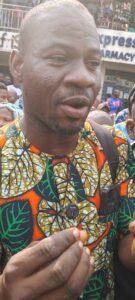
He emphasised the deep connection to their community. “There is a history to our community; it was Mahoto, but because people find it difficult to pronounce, it was named Makoko. We do not want to leave our community. We want the government to reclaim its 100-metre setback and rebuild the houses demolished outside the allowed area,” Mr Iroko said.
Adetoun Jimoh, a resident of Baba Ijora at Otumara, said she has been sleeping under a bridge with her children since her house was demolished in March 2025, adding that her grinding machines were also destroyed and now she hawks sachet water.
‘Demolitions illegal, unconstitutional’ – protesters
Speaking on behalf of the protesters, a member of the coordinating committee and National Coordinator of Education Rights Campaign (ERC), Hassan Taiwo, popularly known as Soweto, described the ongoing demolitions across the state as illegal and unconstitutional.

He said: “Today is the day that the poor people of Lagos state are marching to demand their rights and dignity. We are not dogs, goats or chickens but human beings. We have a right to shelter. A governor who did not build houses for us has no right to take what we have. We are saying enough is enough to forced eviction, demolition and land grabbing in Lagos
“Mr Sanwo-Olu’s government is a government of land grabbers by land grabbers and for land grabbers. We are here to say stop the bulldozers in Makoko, Oworonshoki, Owode Onirin, Shogunro, Bariga, and Mile 12. We are using this protest to expose the Lagos State Government to the world and to say that the megacity cannot be built on the blood and bones of the poor. Waterfront communities like Makoko are everywhere around the world; why is it that it is only in Lagos State that the government is pursuing residents in such communities?”
According to Mr Hassan, in other parts of the world, people who live on the water are allowed to live, noting that they are essential to food production. “All the fishes we eat across the country are produced by them. They do not deserve to be shot out, and they do not deserve to be killed in the middle of the night.”
Disregard for court orders
Mr Hassan also accused the government of ignoring court judgements to execute the demolitions, saying the Makoko residents once secured a court judgement a few years ago, “which clearly stated that any eviction of people of Makoko and Shogunro without an adequate resettlement plan is a crime against humanity.”
The court judgement, he said, also awarded the sum of N3.5 million against the government; but that up till now, the money has not been paid, and houses are still being demolished.
“The people of Owode Onirin are still in court, yet the state government is evicting them. There is a Supreme Court judgement that states that no state government, including Lagos State, has power over inland waterways. This means that communities on the waterfront cannot be regulated or concessioned by the state government but the National Inland Waterways Authority (NIWA), which is a federal agency.” Mr Hassan said.
12 lives lost in Makoko
Mr Hassan alleged that at least 12 people have been killed since the demolition exercise began in Makoko on 15 December, claiming that those killed include a five-year-old child, who he said died after police were deployed to the community, as well as twin babies reportedly delivered in a canoe, whose mother also allegedly died following the firing of teargas by security operatives.
The Assistant Executive Director of Corporate Accountability and Public Participation Africa (CAPPA), Zikora Ibeh, in an interview during the protest, condemned the Lagos State Government for allegedly rendering more than 10,000 people homeless in Makoko under the guise of urban development and safety.
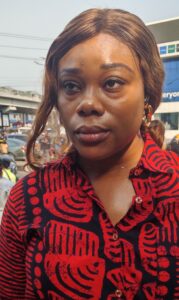
Ms Ibeh accused the state government of demolishing houses far beyond the stipulated 100 metres setback from the power line, extending demolitions to over 500 metres.
“What this has done is create a sense of hopelessness. Many families have lost their sources of livelihood. People are sleeping, cooking and attending to their daily needs in open boats on the water because they have nowhere else to go. Many children are out of school because their schools have been demolished,” she lamented.
Describing the situation as a humanitarian crisis, she noted that women and girls are also sleeping in the open, exposing them to heightened risks and insecurity.
She added that similar conditions are being experienced in other informal communities across Lagos, including Maroko, Bariga, Mile 12 and Owode Onirin, among others, while calling on the state government to halt further demolitions.
The National President of the Centre for Human and Social Economic Rights, Alex Omoteyinse, said apart from the administration of former governor Lateef Jakande, no government in Lagos has provided low-cost housing for the poor, arguing that current developments are designed for the wealthy.
Mr Omoteyinse accused the Lagos State Government of attempting to push the poor out of the state, noting that the affected communities are predominantly inhabited by low-income residents.
He also raised concerns about what he described as selective enforcement of court judgments, citing cases against Magodo and Agidingbi, where rulings have yet to be executed.
“Why is it that whenever the government wants to carry out enforcement, it targets the poor first? This is clearly not about the judgments, it is evident that the government intends to allocate these lands to their cronies, as some developers have reportedly begun marketing them,” he said.
Six traders killed in Owode Onirin demolition
Mr Omoteyinse said the Owode Onirin market was relocated from Lagos Island to its current location in 1979, during the administration of the late Mr Jakande.
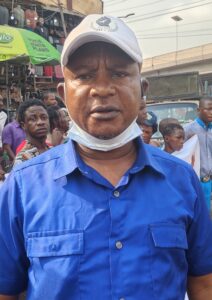
“They have been there for over 40 years, only for the Lagos State Government and land grabbers to wake up one day and demolish the structures. At the end of the exercise, six innocent traders were killed. We have their pictures. All of this is a deliberate ploy by the government to chase the poor out of Lagos,” he added.
Mr Omoteyinse appealed to the state government to halt further demolitions across the state.
“The government is currently demolishing Mile 12, Bariga, Otumara, Makoko, Oworonshoki, Owode Onirin, among others. How many communities are left for the common people to survive?” he asked.
Protest ends in teargas, arrest at Assembly gate
Protesters were denied access to the entrance of the State House of Assembly as the gate was shut. While they insisted on going in, the police fired teargas and suspected bullets at unarmed protesters, which included women and children demanding to speak with the lawmakers.
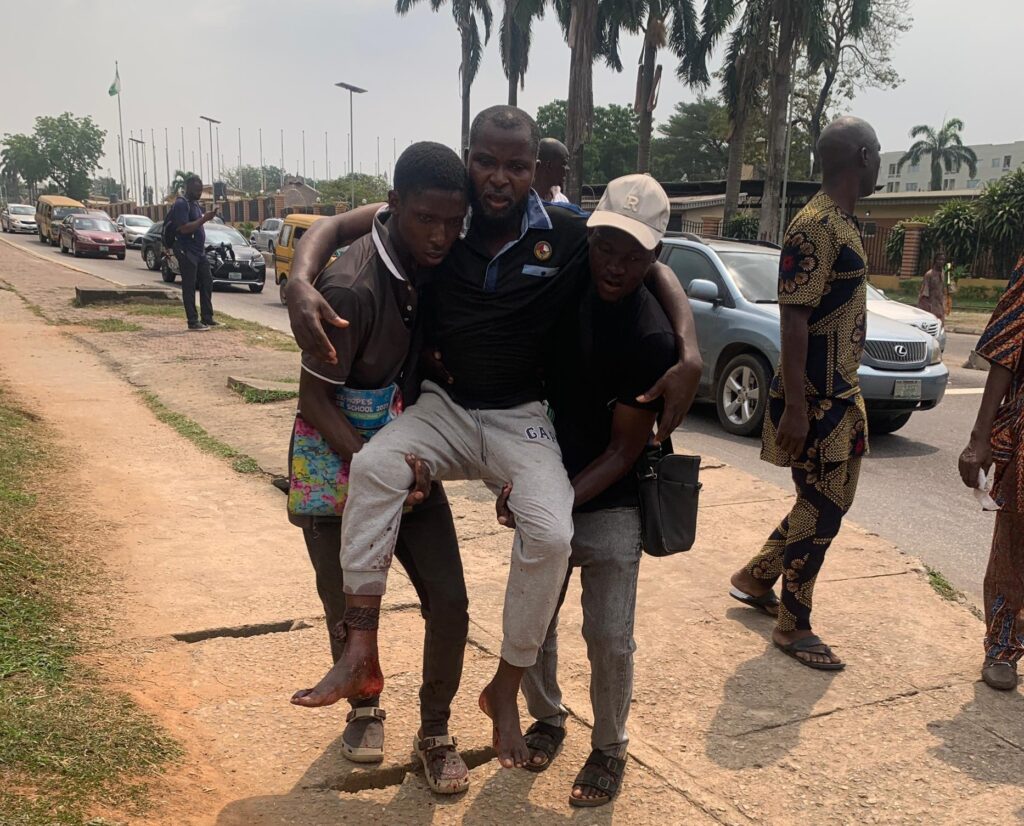
Mr Hassan, who led the protest, was whisked away by the police while a few persons were injured. Goods brought to the venue for sale were scattered on the ground as everyone scampered for safety.
The protesters were unable to gain an audience with the legislators before they were dispersed.
‘Government not responsible for dispersal of protesters’
The Special Adviser to Governor Babajide Sanwo-Olu on Media and Publicity, Gboyega Akosile, said the government was not responsible for dispersing the protesters, saying it is a security matter.
“The matter is for the police to react to since it is a security matter. But I can assure you that Governor Sanwo-Olu will never support any form of violence against any Lagos resident, irrespective of their social or political status,” Mr Akosile said.
Meanwhile, efforts to get the reaction of the police authorities in Lagos proved abortive as a phone call to the spokesperson for the Lagos Command, Abimbola Adebisi, was purportedly picked by an unnamed officer who reported that Mrs Adebisi was in a meeting with the Commissioner of Police, Moshood Jimoh.
“The PPRO is not on seat now and she is the only authorised official who can speak on the matter of protest. I will relay your message when she is back,” the unnamed police officer said on the phone.