



By Adedoyin Oguntade
Barely one week after a new transport system began at Obafemi Awolowo University (OAU), the Students’ Union has announced a 72-hour lecture boycott, escalating growing concerns over high fares, long queues and difficult movement across campus.
The boycott, scheduled from 14 to 16 April, follows what the union described as persistent hardship caused by the new system, despite earlier engagements with the university management.
Students had, in the past week, complained that the transport arrangement, introduced to improve mobility, has instead made movement more stressful and expensive, particularly for those living off campus.
Frustration builds among students
For Oritsejolomisan Edun, a 300-level student who resides off campus, the experience was already shaping up to be difficult even before her return to school.
“I have not resumed on campus yet, but from the videos I have seen, I already know movement will be stressful,” she said. “Even before they fully implemented this system, it was obvious that it would make transportation harder.”
Her concerns reflect a broader sentiment among students, many of whom say long queues and extended waiting times now define daily movement.
“With the old system, I spent about ₦500 daily. Now it’s going to be around ₦800, and that is honestly not something I can keep up with,” she added.
She questioned the decision to phase out the popular Towngboro buses, saying she might resort to walking part of the distance to cope with rising costs.
“I cannot imagine how students with disabilities will cope with this, as the buses are not even enough,” she said. “The Towngboro buses should have still been running for people staying in town.”
Background to the new system
The new transport arrangement was introduced following the donation of 50 compressed natural gas (CNG) buses and 30 tricycles by Nigeria’s first lady, Oluremi Tinubu, an alumna of the university.
Commissioned on 29 January, the initiative was presented as a fulfilment of a promise made during a convocation ceremony in December 2024, where the first lady pledged to alleviate transportation challenges on campus.
However, its rollout has significantly altered how students move. Under the current model, buses largely operate between designated bus stops within campus and the main gate, while tricycles serve internal routes.
The new system also led to the removal of Towngboro buses and commercial motorcycles (okada), which previously provided quicker and more flexible movement, especially for off-campus students.
‘More stress than relief’
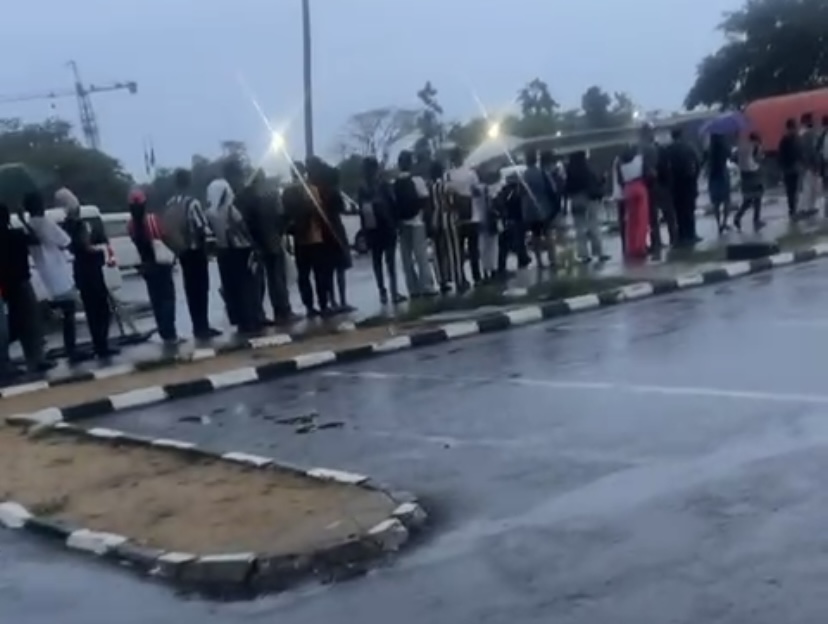
For many students, the immediate impact of the new transport system has been increased waiting time and reduced convenience.
Another student, David Ojo, describes the system as overwhelming. “The new transport system has been a burden for me. I perceive it as regression rather than progress, and that is ironic, because it was supposedly meant to make life easier for us,” he said.
According to David, students now spend longer periods queuing for buses, even on common routes like the gate to a bus stop. He lamented that there lies a bigger challenge with the tricycles that have been designated to transport students within the campus.
“This is unlike before, when we could easily get a bike and pay at convenience,” he noted while he criticised the ticketing process, which he said adds another layer of difficulty.
“We now have to walk long distances or queue for a long period just to get tickets. I really wish it were made online,” he said, stating that the unpredictability of movement has become a major concern.
Students’ Union orders lecture boycott
Amid mounting complaints, the Students’ Union has moved beyond consultations to direct action.
Following what it described as a one-week “observatory mode”, the union, after a congress held on 9 April, announced a total 72-hour lecture boycott.
The union in a statement signed by its spokesperson, Olowosile Oreoluwa, said the new transport system has subjected students to “severe conditions”, including inadequate campus coverage, shortage of buses and tricycles, overcrowding and insufficient drivers.
Despite repeated engagements with the university management, it said, the issues remain unresolved.
Among its demands are the immediate provision of more vehicles to serve the over 35,000 students, the temporary reintroduction of the previous transport system, and full consultation with the union before further changes.
The union also warned that further actions, including a possible mass protest, may follow if the situation does not improve.
Disrupting an established system
Before the changes, Towngboro buses formed the backbone of student transportation, connecting the campus directly with off-campus areas such as Mayfair, Asherifa and Damico among others.
Their removal has disrupted that link, leaving students to rely on more expensive and less coordinated alternatives.
Earlier concerns raised
Before announcing the boycott, the Students’ Union had acknowledged widespread dissatisfaction and raised concerns with university authorities.
In an earlier statement on 4 April, it identified key issues, including vehicle shortages, rising costs and a malfunctioning ticketing system.
It also highlighted the plight of off-campus students who now depend on commercial operators charging higher fares, and criticised the lack of immediate alternatives following the ban on motorcycles.
Management seeks patience
In response, the university management described the current challenges as a temporary “teething period”.
In a statement issued on 6 April, the institution’s spokesperson, Abiodun Olarewaju, said the system was designed to move about 20,000 students within two hours, with a waiting time of less than five minutes.
“This initiative is still a work in progress,” he said, adding that improvements were ongoing.
The management pledged to procure additional buses within three months and automate ticketing to improve efficiency. It also said the CNG buses could be converted to petrol if necessary and that battery issues affecting tricycles had been resolved.
While assuring students that concerns would be addressed, the management urged them to rely on ambulances and emergency services for urgent mobility needs, an option the Students’ Union has described as inadequate, citing existing gaps in service coverage.

