



A community engagement for the African Cities Research Consortium (ACRC) waste management baseline study has highlighted both the scale of waste management challenges and the economic potential embedded in Ajegunle, Ikorodu Road, Lagos.
The engagement held on Tuesday, 28 April, in Ajegunle, included a field visit to a plastics waste collection point and an urban garden site, reinforcing calls for practical, community-led solutions.
Findings from the study conducted by the ACRC, Rethinking Cities, and the Centre for Housing and Sustainable Development, show that over 400 households across Ajegunle, Irawo and Thomas Community Development Associations face limited access to formal waste collection.
A majority of residents remain outside the private sector participation system, relying instead on burning, roadside dumping and disposal in canals. Plastics and food waste dominate household refuse, while waste separation remains low.
Lead researcher, Waste Management Baseline Study, and co-founder of Rethinking Cities, Deji Akinpelu, said poor waste practices are directly linked to flooding and health risks.
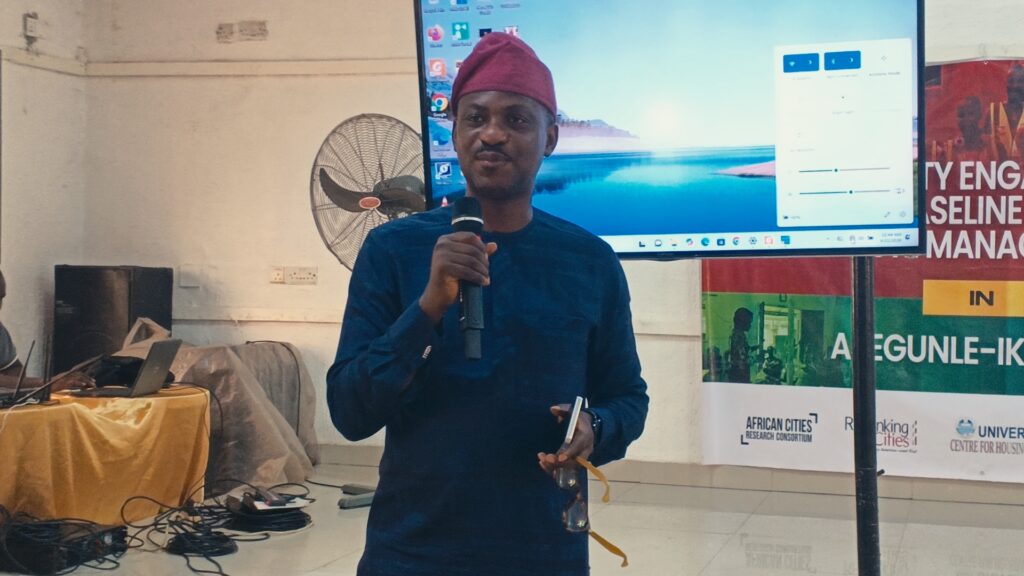
He noted that blocked drainage systems affect a large share of households, while residents reported frequent malaria cases, alongside cholera, typhoid and rodent infestations.
Despite these challenges, the study identified a thriving informal waste economy.
Many households earn supplementary income through recycling plastics, metals and electronics, with monthly earnings ranging from about N1,000 to N4,000, and peaks reaching N30,000.
Residents also showed strong awareness of environmental risks and willingness to adopt improved waste practices, with 85 per cent prioritising more accessible collection points.
Transformative waste economy
Mr Akinpelu said the findings position Ajegunle-Ikorodu for practical transformation through waste economy, explaining that integrating formal waste systems with existing informal recycling networks could deliver cleaner environments, improved health outcomes and expanded economic opportunities.
The research team is already working with community leaders, the Lagos Waste Management Authority and private stakeholders to design targeted interventions, including new collection hubs, recycling education and pilot waste enterprises led by women and youth.
ACRC Lagos City Manager, Temilade Sesan, described the initiative as a model for inclusive urban reform.

According to her, “ACRC is focused on catalysing urban reform focused on making urban cities liveable for all.”
She added that the waste management initiative is a multi-stakeholder coalition working with community and experts across affected sectors to get diverse viewpoints and lived experiences.
Mrs Sesan stated that the project demonstrates how community-driven approaches can address complex urban challenges, adding that the waste collection hub would improve sanitation while creating income opportunities.
Government urge partnership, pledge support
Government representatives at the engagement stressed the need for stronger collaboration and need for collective community efforts to sustain the initiatives.
Advisory Board Chairman, Lagos Recyclers Association, Mr Taiwo Adewole, said the study provides critical data for flood prevention efforts, noting that waste disposal patterns contribute significantly to drainage blockage.
He cited existing projects where food waste is converted into gas and compost, urging partnerships with recyclers to improve waste collection efficiency.
Representative of Agboyi-Ketu Local Council Development Area, the supervisor for the Environment, Innocent Osakwe, identified irregular payments, illegal dumping and gaps in formal infrastructure as key challenges facing waste operators.
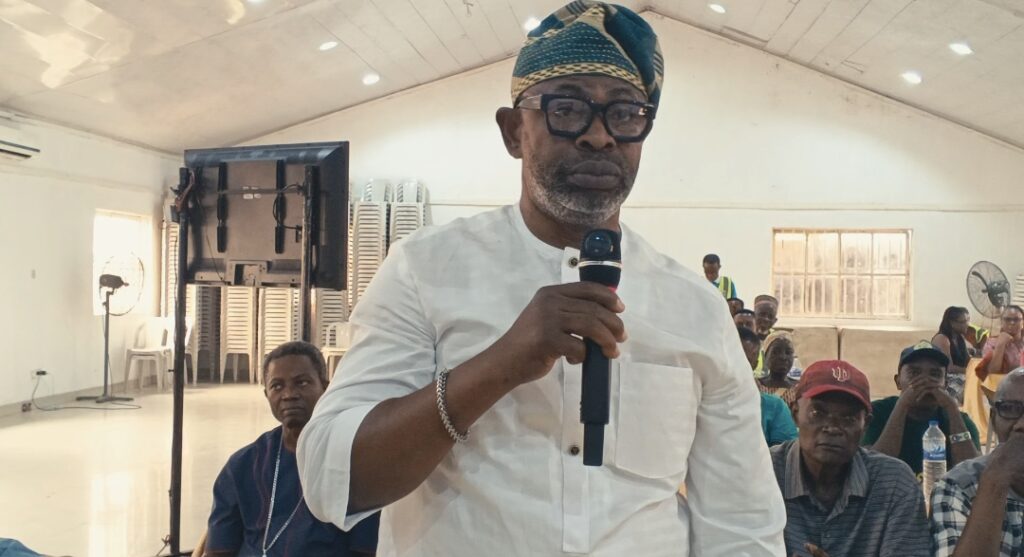
Representing the local government chairman, Adetola Abubakar, he pledged support for the waste management initiative, assuring the organisers that the LCDA is ready to support in necessary ways.
Head of Strategy and Partnerships, Mr Lanre Yusuf, added that the council is open to replicating similar resilience strategies in other communities.
Community interest, concerns, and considerations
Community members raised concerns about the siting and management of the proposed collection hub, including potential pollution and proximity to residential and religious spaces.
The Baale of Ajegunle, Moyosola Oladunjoye, called for structured waste collection schedules similar to systems observed abroad, where perishable waste is collected more frequently.
He said that wastes of perishable food items that may cause environmental pollution are collected everyday, while some are collected weekly and others monthly. He asked if the provision for such strategic waste collection has been made.
Also speaking, a community member, Nathaniel Iwa, raised concern on food waste collection that the collection point is close to a church in the community, asking how the collection point with the wastes will not cause environmental problems between the church and the community.
President of the Association of Scrap and Waste Pickers of Lagos, Mr Okay Friday, urged residents to separate waste from their homes.
He said waste only becomes useless when it is not properly utilised, adding that separation can generate income and support payment for formal waste services.
Responding, Mr Akinpelu said there are opportunities to convert food waste into biogas and compost, noting that similar initiatives already exist in Lagos.
He assured that concerns about the collection hub location would be addressed through ongoing community dialogue.
In considerations, the study concluded that while Ajegunle-Ikorodu faces severe waste management challenges, it also has strong foundations for a circular waste economy driven by local participation.
Stakeholders say with coordinated support from government, civil society and private partners, the community can transition towards a sustainable system that improves environmental conditions, strengthens livelihoods and enhances quality of life.