


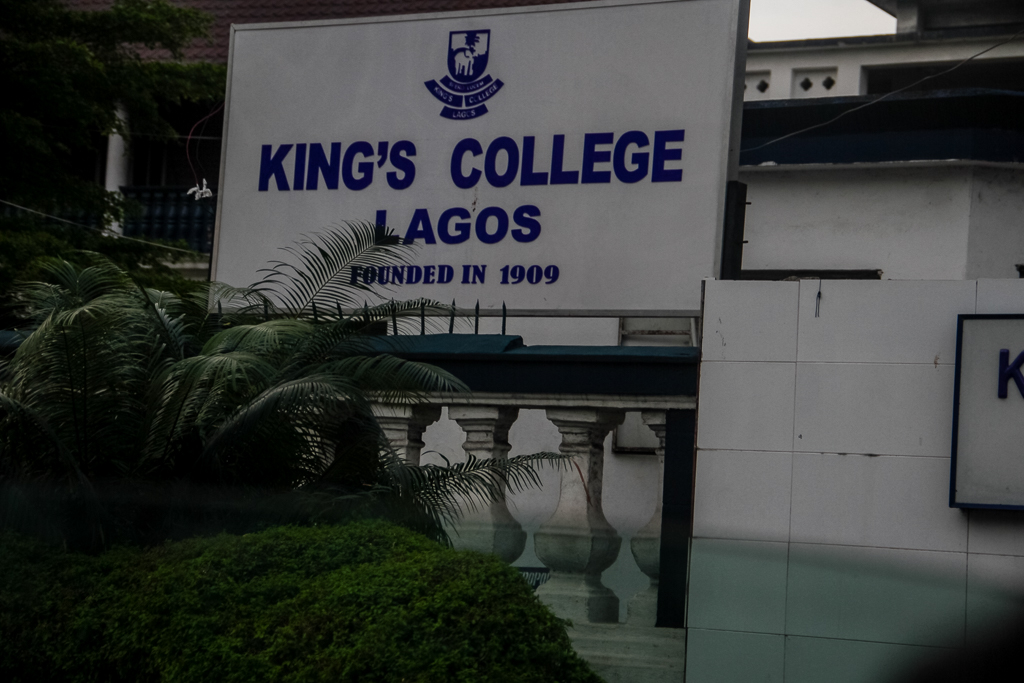
The industrial dispute over the proposed concession of King’s College, Lagos to its old boys’ association has taken a new turn, with the Association of Senior Civil Servants of Nigeria (ASCSN) and the Joint Workers Committee of Unions (JWC) directing workers to suspend their strike and resume duties, while a faction of ASCSN has ordered the continued shutdown of federal unity colleges nationwide.
The conflicting directives followed a conciliatory meeting between the Federal Ministry of Education and organised labour, during which the proposed concession to the King’s College Old Boys Association (KCOBA) was placed on hold for two weeks to allow further consultation and review.
This development comes after the proposed transfer of the management of the 117-year-old public school to its old boys’ association disrupted resumption in several federal unity colleges, leaving students in affected schools at home.
Unions suspend industrial action
In a statement issued on 18 September, ASCSN announced the immediate suspension of the industrial action over the proposed concession.
Signed by its Secretary-General, Gamaliel Acho, the statement said the decision followed the resolutions contained in the communiqué issued at the end of the conciliatory meeting between the Federal Ministry of Education and organised labour.
The association said the proposed concession had been placed on hold for two weeks to enable further consultation and review.
It also announced the constitution of a seven-member high-level committee comprising representatives of the Federal Ministry of Education, organised labour, KCOBA and the Federal Ministry of Labour.
The committee, it said, would comprehensively review the concession agreement and related issues and submit its report and recommendations within two weeks.
“Accordingly, ASCSN has directed its members to suspend the industrial action pending the outcome of the review, in line with the signed communiqué,” the statement said.
The association acknowledged the minister’s “unreserved apology” regarding inadequate prior engagement with the concerned ASCSN stakeholders.
“ASCSN appreciates the Honourable Minister of Education, Dr. Tunji Alausa, CON, the Honourable Minister of State for Education, the Acting Permanent Secretary, Directors and officials of the Ministry for their willingness to engage and address the concerns raised, including the Minister’s unreserved apology regarding inadequate prior engagement with the concerned ASCSN stakeholders.”
The association commended the immediate withdrawal of the police detachment deployed to King’s College and the agreement that no staff member would be victimised, harassed, sanctioned or punished for participating in the industrial action arising from the dispute.
JWC directs staff to resume duties
The JWC also directed workers to suspend the industrial action with immediate effect across all federal unity colleges and the education ministry headquarters in Abuja.
In a notice dated 17 September, the committee said its decision followed the communiqué issued by the national bodies of ASCSN, the Amalgamated Union of Public Corporations, Civil Service Technical and Recreational Services Employees (AUPCTRE), the Nigeria Union of Public Service Reporters and Workers (NUPSRAW), and the National Union of Civil Service Employees (NCSU).
“Accordingly, all staff and union members are enjoined to resume normal official duties and maintain peace, order and discipline while awaiting further directives and developments on the matter,” the notice said.
The JWC said it remained committed to protecting the legitimate interests and welfare of workers across the federation and would continue to engage relevant stakeholders constructively.
ASCSN faction orders continued shutdown
While the two statements called for the suspension of the industrial action, a separate statement signed by Joshua Apebo, who identified himself as Secretary-General of ASCSN, ordered a total and indefinite shutdown of all federal unity colleges.
The statement accused the Ministry of Education of undermining an earlier agreement reached with the ASCSN leadership and the Trade Union Congress of Nigeria (TUC) on 14 September.
According to the faction, the ministry, on 16 September, entered into a “fraudulent and illegitimate parallel agreement” with individuals who lacked the mandate or recognition of the association.
“This action constitutes a direct assault and disrespect on the sanctity of collective bargaining, a violation of established industrial relations protocols, and a calculated attempt to weaken organised labour,” the statement said.
The faction declared that the alleged action would not stand and directed the immediate closure of all academic and administrative activities in federal unity colleges across the 36 states and the Federal Capital Territory.
It also instructed members to establish monitoring teams to ensure compliance with the strike and disregard counter-directives from school authorities or ministry officials.
“This industrial action shall remain in full force until the national leadership of the ASCSN directs otherwise. This struggle is not merely about procedure, it is about defending the authority of organised labour, protecting collective bargaining and resisting institutional sabotage,” the statement said.
The statement rejected the suspension directive issued by the ASCSN leadership in a separate statement signed by Gamaliel Acho, who also identified himself as Secretary-General.
ASCSN leadership crisis
The conflicting directives are linked to a longstanding leadership dispute within the Association of Senior Civil Servants of Nigeria (ASCSN).
DevReporting gathered that the union elected a new Central Working Committee (CWC) at its fifth quadrennial national delegates’ conference of ASCSN held in Lagos in 2024. The committee was led by Shehu Muhammed as National President, Joshua Apebo as General Secretary, Olubunmi Fajobi, Samson Okere, Onjeh Enewa and Archibong Okon as National Vice Presidents, among others.
The emergence of the new leadership, however, triggered a crisis within the union. In April 2026, the National Industrial Court (NIC) in Abuja affirmed the August 10, 2024 election that returned Innocent Bola-Audu as ASCSN National President for a second four-year term.
In a judgment delivered by Justice Rakiya Haastrup, the court held that Shehu Muhammed and Joshua Apebo, who had been presenting themselves as the National President and General Secretary of ASCSN, respectively, lacked the legal authority to act in those capacities.
The court affirmed Bola-Audu as the legally elected president of the union and ordered that he be allowed to assume leadership, including access to the union’s national secretariat, without molestation, disruption or harassment by the defendants.
How the King’s College dispute began
The dispute followed a 4 September letter from the Federal Ministry of Education to the principal of King’s College, announcing that the college had been concessioned to KCOBA after the conclusion of what the ministry described as “all necessary processes” and the signing of a concession agreement.
The letter said a transition committee would oversee the handover of the school’s management to KCOBA within six months.
It also stated that funding for the college from the Federation Account would stop after the transition period and directed the principal to provide a list of staff willing to remain in the employment of the Federal Civil Service Commission.
The proposed arrangement triggered opposition from unions, parents and education advocates, who raised concerns about the future of public education, staff welfare, school fees and the implications for other Federal Unity Colleges.
The unions subsequently suspended first-term resumption in the federal unity colleges nationwide, demanding that the concession be reversed.
Government defends concession arrangement
The Federal Government has maintained that King’s College has not been sold or privatised.
The Minister of Education, Tunji Alausa, said the government would retain ownership of the institution, while KCOBA would finance, rehabilitate, modernise, operate and maintain the school under a Public-Private Partnership arrangement.
The minister has also maintained that the concession was intended to improve the college’s overall management and that the government followed due process in arriving at the decision.
However, parents, unions and other stakeholders have continued to seek clarity on the agreement’s financial terms, staffing arrangements, school fees, accountability provisions and the future of government funding.
The committee’s findings, together with clarification from the relevant authorities and union leaders, will be crucial to resolving the dispute over King’s College’s future management and the resumption of academic activities in the affected schools.

