



By Adejumo Kabir Adeniyi and Dr Ola Bello
The safe return of 20 prospective National Youth Service Corps (NYSC) members abducted along the Owerri-Onitsha Road in Imo State, South-South is welcome news for their families and the country. But their release after seven days in captivity should not end the conversation.
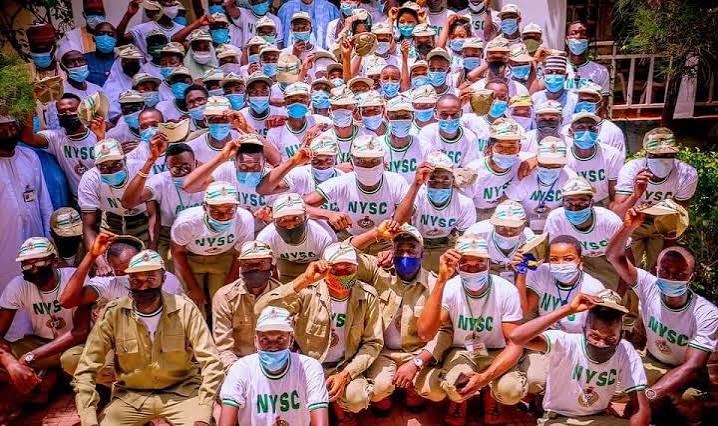
The graduates were travelling from Ibadan to NYSC orientation camps in Abia and Akwa Ibom states when gunmen attacked the two buses near Umunoha in Imo State on October 1. They were among passengers taken into captivity as the attackers disappeared into the surrounding bush. After a week of search-and-rescue operations involving the police, military and Department of State Services, the 20 prospective corps members were rescued on October 7. They have since been taken to a DSS hospital in Owerri for medical attention.
The circumstances of their rescue remain undisclosed, including whether any ransom was paid or whether any of the suspected kidnappers were arrested. What is known, however, is that security agencies reportedly located the kidnappers’ camp through drone surveillance.
For the families, the ordeal was far from an abstract security incident. Reports said the abductors initially demanded ₦50 million for each of the 20 corps members before reducing the demand to ₦5 million per victim.
Their eventual rescue is therefore a reason for relief, but not a reason to return to business as usual.
Created in 1973, following the civil war, with national integration at its core, NYSC was designed to expose young Nigerians to communities outside their states of origin, encourage interaction across ethnic and cultural boundaries and contribute to national development.
The law still reflects this philosophy. It requires the NYSC to pursue equitable distribution of corps members and, as far as possible, assign young people to states other than their states of origin. It also explicitly seeks to promote national integration and the free movement of labour.
While the above objective remains important, the context in which it operates has changed dramatically.
Nigeria is now confronting a kidnapping economy that cuts across regions and increasingly targets people on major highways. SBM Intelligence recorded 1,411 kidnapping incidents involving 7,825 victims between July 2025 and June 2026. At least ₦7.78 billion was reportedly paid in ransom during that period.
For young graduates travelling to unfamiliar parts of the country, this security environment creates a particular vulnerability. A corps member may be posted to a state where the place of primary assignment is relatively safe but be required to travel through several other states to reach it. The journey to the orientation camp can therefore become the most dangerous part of the assignment.
A case too many
The recent Imo incident is not the first time prospective corps members have been targeted while travelling. In January 2026, prospective corps member Lateefah Binuyo was abducted in Kogi State while travelling to an NYSC orientation camp in Taraba State. The vulnerability became even more evident in August 2026, when 15 corps members returning to Abuja after completing their orientation in Bayelsa State were reportedly abducted along the Ofu/Itobe–Onicha-Igo axis in Kogi State.

The account of one of the rescued corps members, David Ayodele, illustrates the severity of the risk. He said the attackers forced the passengers into the forest while shooting into the air and later flogged and kicked some of the victims.
There have also been cases involving corps members killed or abducted while travelling for official activities. In May 2026, a corps member was among four people reportedly killed when terrorists ambushed travellers along the Jikamshi–Funtua road in Katsina State while the corps member was travelling for monthly clearance.
The pattern is difficult to dismiss as a collection of unrelated incidents. It includes prospective corps members travelling to orientation camps, serving corps members returning from camps, corps members travelling for monthly clearance and corps members facing threats within their places of primary assignment.
A 2023 report by the Foundation for Investigative Journalism documented at least 80 cases of corps members being abducted between 2013 and 2023.The question should therefore shift from whether individual corps members can take better precautions to whether the deployment system itself is sufficiently responsive to Nigeria’s security environment.
If the state knows that particular highways have become kidnapping corridors, why should young people undertaking a compulsory government programme continue to be directed through them without additional protection? If particular communities face persistent insecurity, why should corps members be deployed there without a transparent assessment of the risks? And if a corps member is required to travel hundreds of kilometres for orientation, who bears responsibility for the safety of that journey?
These are not merely operational questions for the NYSC. They are questions of public accountability.
A programme designed to promote national unity cannot afford to treat the physical safety of the young Nigerians carrying out that mission as an administrative detail. The evidence increasingly suggests that the security of corps members must be considered from the moment they leave home, through their journey to orientation, their period of service and their eventual return.
The state cannot eliminate every risk. But it can identify foreseeable risks, reduce unnecessary exposure and ensure that those compelled to serve the nation are not left to confront Nigeria’s security crisis on their own.
Deployment should be intelligence-led, not simply geographic
Nigeria needs to rethink the assumption that national integration necessarily requires long-distance deployment. The NYSC Act gives the Directorate considerable responsibility for determining where and when eligible graduates are deployed. It also allows deployment to be structured around national needs and appropriate urban or rural areas.
Before every mobilisation exercise, NYSC should work with security agencies to conduct a current assessment of kidnapping, terrorism and other security threats along major transportation corridors and in prospective areas of deployment.
Where an area is experiencing severe and sustained insecurity, posting corps members there should be reconsidered. Where the destination is relatively safe but the route is dangerous, transportation arrangements should be reviewed. The current model places considerable responsibility on individual graduates and their families to navigate these risks. That is inadequate for a programme in which participation is compulsory for eligible Nigerians.
A risk-based deployment model would not necessarily undermine national integration. A graduate from Lagos serving in Ogun or Oyo, for instance, remains capable of contributing to national development and interacting with communities outside their immediate locality. Where long-distance deployment is necessary, safer transportation and stronger security coordination should accompany it.

The objective should not be to eliminate the national character of NYSC. It should be to ensure that national service does not require avoidable exposure to danger.
The NYSC legal framework does not treat corps-member welfare as an afterthought. The State Governing Boards are assigned responsibilities including accommodation, transportation and other facilities essential to corps members’ welfare. At the local-government level, NYSC committees are explicitly required to provide for the welfare needs of corps members and ensure their security.
The security of a corps member should therefore not begin only after the person reaches the place of primary assignment. If a graduate is instructed to report to an orientation camp hundreds of kilometres away, the journey required to comply with that instruction is part of the service process.
There should also be clearer protocols for families. When a prospective corps member is abducted, families should not be left navigating a maze of security agencies, NYSC officials and state governments while trying to establish who is responsible for the rescue effort.
NYSC should not become a gateway to employment
The security debate also presents an opportunity to reconsider another feature of the NYSC framework which is its relationship with employment. Section 12 of the NYSC Decree provides that, for employment anywhere in the Federation, prospective employers are required to demand a Certificate of National Service or an exemption certificate from eligible graduates.
This means that NYSC certification is not merely a record of civic participation. It has been embedded in the legal architecture of employment. This arrangement deserves a serious policy review.
An individual’s ability to perform a job is not necessarily determined by whether that person has completed a year of national service. A journalist should be assessed on journalism skills and experience. A researcher should be assessed on research ability. A software developer should be assessed on technical competence. An accountant, engineer, designer or communications professional should similarly be assessed on relevant qualifications and capabilities.
NYSC itself was designed partly to encourage graduates to seek employment across Nigeria and to encourage employers to employ qualified Nigerians irrespective of their states of origin. But requiring evidence of national service before employment creates a different effect, as it makes participation in the scheme a condition for access to much of the formal labour market.
With the serious security risks attached, organisations should begin a broader conversation about whether NYSC certification should continue to function as a universal employment requirement, beyond whatever obligations current law imposes. The governmentThe government should consider whether the employment requirement should be amended so that employers can focus on competence, qualifications and experience.
Reform, no abolition
There is a tendency for debates about NYSC to become polarised between abolition and preservation. A more productive approach is institutional reform. The scheme still has legitimate purposes. Nigeria remains a diverse country, and opportunities for young Nigerians to work and live outside their immediate communities can contribute to social understanding and national cohesion.
But a scheme created more than five decades ago must be capable of adapting to a radically different security environment. Authorities should consider risk-based deployment; greater use of regional or proximity-based postings where security conditions warrant it; secure transportation for prospective corps members; temporary suspension of deployment to severely affected areas; improved emergency communication and tracking; and alternative forms of service where physical deployment creates unacceptable risks.
The Federal Government should also periodically publish or communicate the criteria used to determine whether particular areas remain suitable for corps-member deployment. Greater transparency would allow graduates and their families to understand how security considerations are incorporated into deployment decisions.
The cost of getting it wrong
For policymakers, the graduates abducted in Imo State are a reminder that administrative decisions can have consequences far beyond paperwork.
For their families, the experience is not an abstract debate about deployment policy. It is a mother watching her daughter sitting on the ground in a forest and asking how a family of petty traders could possibly raise such an amount. These are precisely the circumstances in which governance must be judged by more than whether a policy is faithfully implemented. It must also be judged by whether the policy remains appropriate to the conditions in which citizens are expected to live.
The NYSC’s founding objective was to strengthen Nigerians’ sense of shared citizenship and common destiny. That objective should not be abandoned. But protecting the citizens asked to carry out that mission must be treated as equally important. Again, the country should have an honest conversation about whether completion of NYSC should remain a prerequisite for formal employment. The argument is no longer simply where Nigeria should send its young graduates. It is whether the state has done enough to ensure that sending them there is reasonably safe and whether participation in national service should determine whether they can earn a living afterwards.
Adejumo Kabir is a senior researcher at Good Governance Africa (GGA)
Dr Ola Bello is an Executive Director at Good Governance Africa (GGA)

