



By Sodiq Mojibola & Fathia Omoniyi
Nigerian universities must move beyond conventional lecture-based teaching and equip students with practical, digital and entrepreneurial skills to solve societal problems, education leaders and industry experts have said.
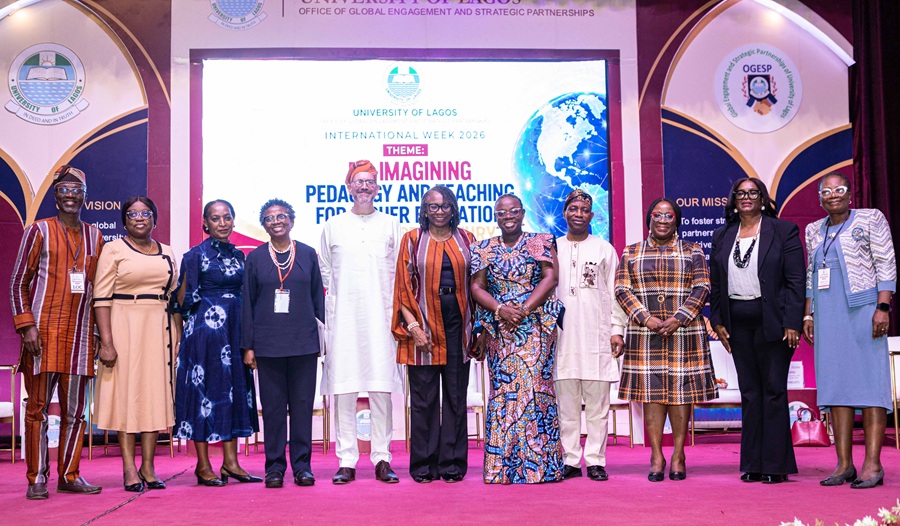
They made the call at the University of Lagos (UNILAG) International Week 2026, where stakeholders urged institutions to rethink teaching methods, strengthen industry collaboration and make learning more responsive to Nigeria’s development needs.
The event, themed “Reimagining Pedagogy and Teaching for Higher Education in the 21st Century”, also featured the launch of a transnational education partnership between UNILAG and the University of Birmingham, United Kingdom, to strengthen academic cooperation and expand opportunities for students and staff.
The stakeholders said universities must prepare graduates not only for employment but also to create opportunities and address challenges as artificial intelligence (AI), digital transformation and changing labour market demands reshape professional careers.
Universities urged to prioritise practical, learner-centred teaching
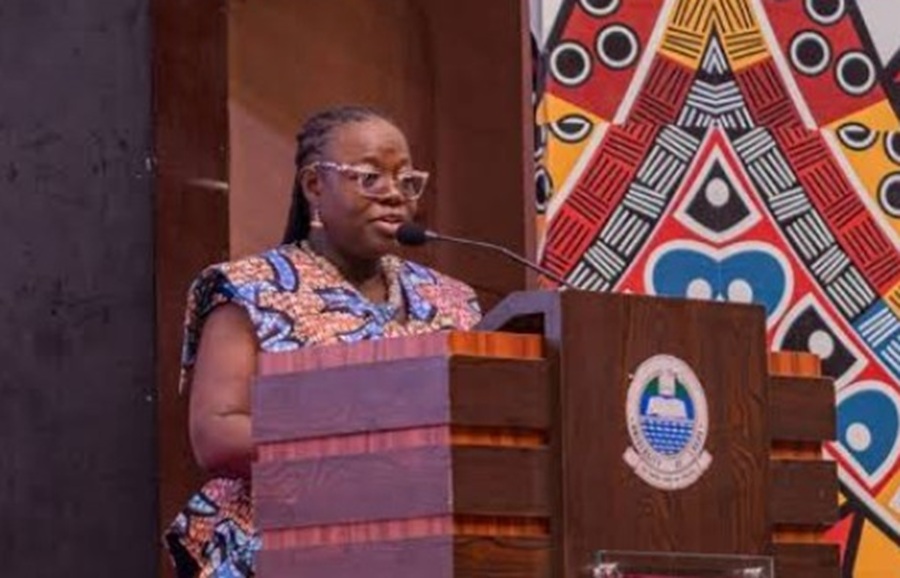
The Vice Chancellor of the University of Ghana, Nana Amfo, a professor of linguistics and keynote speaker, said meaningful reform must begin with the purpose of higher education rather than the adoption of new technologies.
“The starting point for reimagining pedagogy is not technology, it is purpose,” she said, urging universities to reconsider the qualities and responsibilities expected of their graduates.
She said conventional lectures remained useful for building foundational knowledge but were insufficient on their own to prepare students for complex, real-life challenges.
“Students are not simply recipients of information. They become active participants in constructing, testing, and applying knowledge,” she said.
Mrs Amfo advocated problem-based learning, case studies, simulations, collaborative projects, fieldwork and community engagement to help students translate classroom knowledge into practical solutions.
She added that African universities must address challenges including food insecurity, public health, environmental sustainability, inequality and technological inclusion while preserving the value of humanities, fundamental sciences and theoretical inquiry.
The Vice Chancellor of UNILAG, Folasade Ogunsola, a professor of medical microbiology, said the increasing availability of digital tools required universities to reconsider how they teach, assess and certify learning.
She said employers increasingly valued critical thinking, problem-solving, adaptability, communication, creativity and digital collaboration.
“So how do you teach these? It is certainly not through lectures,” she said, stressing the need to focus on learning outcomes rather than students’ ability to recall information.
However, Mrs Ogunsola warned against importing teaching models without considering African universities’ realities, including overcrowded classrooms, infrastructure constraints and students’ economic challenges.
“Any reimagining of pedagogy that ignores these realities in favour of models imported wholesale from contexts with different resources will fail the very students it claims to want to serve,” she said.
Government backs partnerships, demands measurable outcomes
The Minister of Education, Tunji Alausa, represented by Elizabeth Ogundipe, a director in the ministry, described the UNILAG-University of Birmingham partnership as an opportunity to improve teaching, research and access to quality higher education.
He said transnational education could support curriculum development, research collaboration and staff development while reducing some financial and logistical barriers associated with studying abroad.
However, he stressed that partnerships must demonstrate affordability, accessibility, quality and sustainability rather than be measured by agreements alone.
Similarly, Lagos State Governor, Babajide Sanwo-Olu, represented by the Commissioner for Tertiary Education, Tolani Sule, called for research-driven learning and stronger collaboration between universities, government and industry.
“Academic knowledge must not remain confined to lecture rooms. It must translate into solutions that address societal needs,” he said.
The governor also stressed that AI and digital platforms should complement, rather than replace, human judgement, ethical values and personal engagement.
UNDP urges universities to reward innovation
The Resident Representative of the United Nations Development Programme (UNDP) in Nigeria, Elsie Attafuah, urged universities to create systems that reward innovation, inclusion and interdisciplinary collaboration.
She cited the experience of Deborah, an insurance student with a physical disability who relied on another person to write her examination responses. The challenge inspired her to collaborate with students from other disciplines to develop an AI-powered robotic scribe that converts spoken words into handwriting.
“That is the promise of education, knowledge that expands our ability to act, to contribute, and to live with dignity,” Mrs Attafuah said.
She called for reforms in student assessment, academic promotion and research funding to recognise innovation and help research move beyond campuses into practical applications.
Funmi Olonisakin, a professor and Vice-President for International Engagement and Services at King’s College London, said universities must support lecturers through professional development and promotion systems that recognise teaching excellence alongside research.
“If you want academics to teach differently, universities must create the conditions that enable them to do so,” she said.
She also urged institutions to listen to students and adapt teaching innovations to local conditions rather than imitate models designed for better-resourced environments.
“The goal is not to imitate innovation, it is to improve learning. That distinction should guide our choices,” she said.
Industry calls for employment-focused curricula
Private-sector representatives called for stronger links between universities and employers to ensure graduates develop skills relevant to changing workplace demands.
The Executive Director of Operations at Stanbic IBTC Bank, Funke Amobi, said AI was transforming how organisations processed information, analysed data and developed solutions.
She urged universities to teach students how to use emerging technologies while strengthening critical thinking and academic integrity.
Luke Wales, Director of International Strategic Engagement at the University of Birmingham, said universities should track graduate outcomes and work with employers to assess graduates’ performance.
At UNILAG, the Deputy Vice-Chancellor for Academic and Research, Matthew Ilori, a professor, highlighted the university’s entrepreneurship programme, which supports students in developing business ideas and turning them into viable ventures.
He said the initiative was intended to cultivate an entrepreneurial mindset rather than leave graduates dependent solely on conventional employment.
Student innovation demonstrates inclusive education
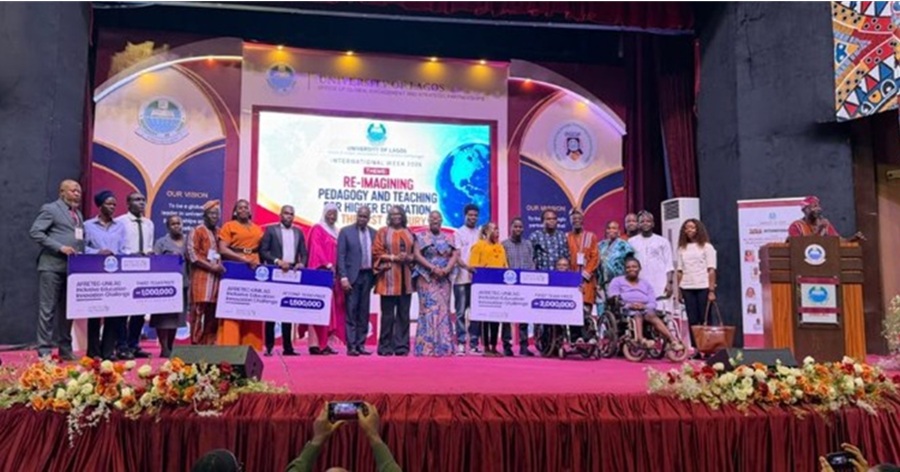
The value of practical and inclusive learning was illustrated by Oluwakemisola Aladesanmi, a recent UNILAG Science Education graduate whose team won N2 million in an AFRETEC innovation challenge.
She said the team developed software that allows users to control on-screen functions through eye movements, offering an alternative for people who have difficulty using their hands, including some people living with cerebral palsy, hand tremors and limb loss.
The idea was partly inspired by her experience of hand tremors during a computer-based examination, when she struggled to complete the test.
She said the software was designed to work across social media and online learning platforms and to be freely accessible.
Ms Aladesanmi encouraged young people to pursue their ideas despite setbacks, stressing that disability should not be treated as an inability

