



By Fatimah Hamid
For many girls in Oyo State, the journey out of school does not begin with poor grades or a lack of ambition. It begins quietly, inside homes shaped by poverty, gender bias and deeply rooted cultural expectations.
When Ripples spoke with Akanji Kaothar in Ibadan, the capital of Oyo State, her story revealed how neglect, discrimination and the absence of protection can push a girl from the classroom into early marriage, with consequences that linger far beyond childhood.
At 24, Ms Kaothar carries the emotional scars of growing up unwanted. The only daughter among five children, she said her father never hid his resentment.
“He refused to pay my school fees, insulted me constantly, denied me food, and sometimes threw me out of the house at night. Eventually, he told me never to come back,” she said.
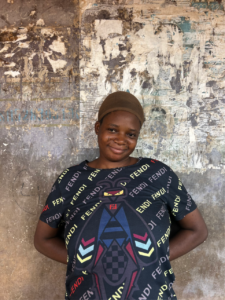
With her mother frequently absent and unable to intervene, Ms Kaothar was left without shelter or support. Forced out of her home, she dropped out of school and moved in with a man, not out of love, but as a means of survival. The relationship soon resulted in an unwanted pregnancy.
“My pregnancy journey was filled with depression and overwhelming loneliness. There was a night I almost harmed myself.”
Motherhood, she explained, sealed the end of her education. “I could not return to school because I had to raise the child I gave birth to and take care of a home I never chose.”
Her experience reflects a wider pattern. Studies show that early marriage and forced cohabitation remain major drivers of school dropout among girls, particularly where poverty and parental neglect intersect.
Dreams Deferred
Akinpelu Seyioluwa was 21 when her life took a similar turn. Following her pregnancy, her mother insisted she must marry, believing that once a girl becomes pregnant, marriage is the only acceptable next step.

At first, Ms Seyioluwa resisted. But the pressure was relentless. “I loved education. I wanted to become a doctor.”
She recalled waking as early as 5 a.m. each day, eager to prepare for school. Her dream of progressing to university, however, ended abruptly with marriage.
“I still hope to return to school someday but that will be later, when my daughter is old enough. For now, she needs me,” she said, noting that leaving school was emotionally devastating.
“It took me a long time to accept that my dreams had to be put on hold for my child and my marriage.”
‘One day I was a student’
Another girl, who pleaded anonymity, said she was just 16 when her parents informed her she was getting married. “I had no preparation. I wasn’t allowed to choose. They simply told me I was getting married.”
At the time, she was still in school, still discovering who she was. “One day I was a student. The next day, I was someone’s wife.”
The sudden transition left her frightened and confused. With no guidance or emotional support, she was expected to obey, adapt and abandon her education overnight.
What data says
According to the United Nations Children’s Fund (UNICEF) data, one in four Nigerian girls is married before the age of 18 as child marriage remains a critical issue affecting the development and well-being of adolescent girls globally, with Nigeria ranking third in the prevalence of child brides.
The data further shows that child marriage prevalence remains high in Nigeria, with 44 per cent of girls married before the age of 18, totaling over 24 million child brides and ranking third globally.
Although recent data suggests a decline in national prevalence from 44 per cent to 30 per cent, progress has been slow and uneven, particularly affecting the poorest households, rural areas, and girls with little or no education.
In the South-West, including Oyo State, early marriage persists, particularly in rural communities. Although comprehensive statewide data remains limited, studies from areas such as Saki suggest troubling trends. A study found that over 28 per cent of married respondents were under 20, while more than half had no formal education, patterns closely linked to early marriage.
Schools on the frontline
Educators say they encounter the consequences daily. A teacher and departmental head at Nurul Islamiyah Grammar School, Ibadan, Hamzah Olayiwola, said early marriage is most common in rural areas, where parents are largely farmers.
“In many cases, girls are simply withdrawn from school and moved to their husband’s house,” he said.
He recalled a student who stopped attending classes. When questioned, her mother claimed she had changed schools. Further investigation revealed she had been married off and was learning a trade at her husband’s home.
Returning to school after marriage, he said, is rare. “Even when it happens, the girls struggle academically and emotionally. They are shy, withdrawn, and often placed in classes with younger students.”
He added that pregnant students are barred from attending school under Ministry of Education regulations, and while some schools offer counselling and sexual health education, sometimes with NGO support, these efforts remain insufficient.
The principal of Community Grammar School, Ibadan, Gbadamosi Modupe identified poverty as the strongest driver of early marriage and school drop out.
“Despite free education, dropout rates due to early marriage have not declined,” she said. “Girls often seek relief where there is money, not realising it is only temporary.”
She noted that many schools are unaware when girls are withdrawn for marriage, as parents often claim financial hardship instead.
“There is little institutional support beyond free education. The biggest gap lies between parents and government,” Ms Modupe said, urging the state authorities to ban child hawking.
According to her, girls who hawk daily are exposed to risks that often lead to early pregnancy and marriage.
Human rights perspective
The National Human Rights Commission (NHRC) in Oyo State says reported cases of forced marriage have declined, a development it attributes to sustained public sensitisation.
However, the Commission’s state coordinator, Babs Onilary, said complaints about girls being forced out of school remain frequent.
“Investigations often reveal poverty, broken homes, custody disputes and parental irresponsibility. These conditions expose girls to abuse, exploitation and trafficking.”
He stressed that while child marriage may not be widespread in Oyo State, its impact on affected girls is severe, leading to low self-esteem, social withdrawal and long-term psychological harm.
The Child Rights Act, he said, is enforced on all reported cases, but stronger policy implementation and collaboration between education authorities and human rights agencies are needed.
‘A 10 out of 10 problem’
Education expert and Lead Consultant at Florish-Gate Global Consult, Dideolu Adekogbe, described early marriage as a crisis. “On a scale of one to ten, its impact is a full ten,” she said.
Despite Nigeria’s strong legal frameworks including the Child Rights Act, the National Strategy to End Child Marriage and the Universal Basic Education policy, implementation, she said, remains weak. “The problem is not policy. It is enforcement,” she reiterated.
Early marriage, she explained, traps girls in cycles of early pregnancy, domestic labour and economic dependence, making continued education almost impossible.
“No child bride remains in school without extraordinary support and many of the men who marry these girls are not responsible providers,” Ms Adekogbe stated.
What must change
Experts and stakeholders agree that urgent, coordinated action is required. Schools must track absenteeism promptly, strengthen counselling units, and create environments where girls feel protected and valued. Communities should report early marriage cases immediately, while safeguarding victims from stigma.
Government agencies must enforce existing laws, ban child hawking, expand scholarships and deploy trained counsellors to schools. NGOs should intensify outreach, particularly among girls, to address sexual health, deception and the long-term cost of early marriage.
Ultimately, experts say, ending early marriage requires confronting poverty, challenging harmful beliefs and recognising that educating girls is not a cultural threat but a pathway out of hardship for families and society alike.

