


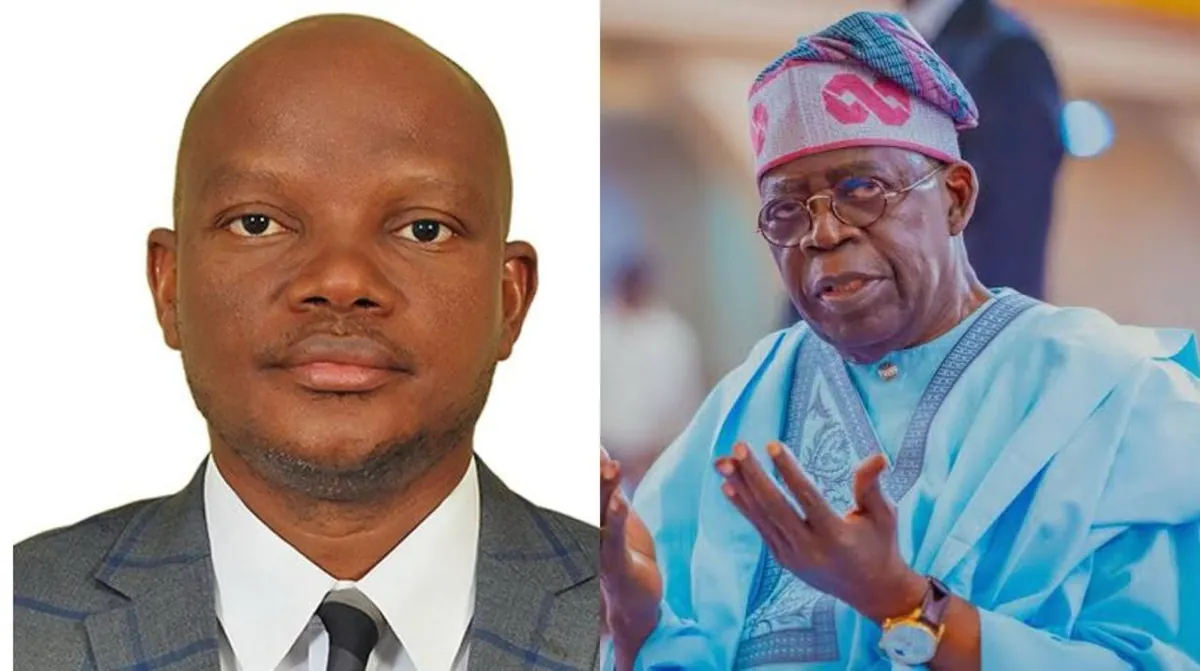
Tuesday, 23 December, may go down in history as unforgettable for Nigeria’s university education stakeholders, as the lingering crisis between the Nigerian government and the Academic Staff Union of Universities (ASUU) over the renegotiation of an agreement earlier signed in 2009 may soon be over.
The leadership of ASUU confirmed to DevReporting on Friday that, after intense debates and negotiations, an agreement deemed acceptable to both the union and the government was finally signed on Tuesday.
A memo dated Wednesday, 24 December, and addressed to the zonal and branch leaderships of ASUU across the nation also confirmed the latest development.
The memo, signed by the union’s President, Chris Piwuna, a professor of psychiatry at the University of Jos, thanked the members for their patience and perseverance, saying it “has been a long walk through the renegotiation.”
Earlier on Friday, in a short telephone conversation, the ASUU president confirmed the development to DevReporting, noting that, going by a significant step taken by the Minister of Education, Tunji Alausa, a medical doctor, towards ensuring that the agreement was signed on Tuesday, there are strong indications that the government might not default this time.
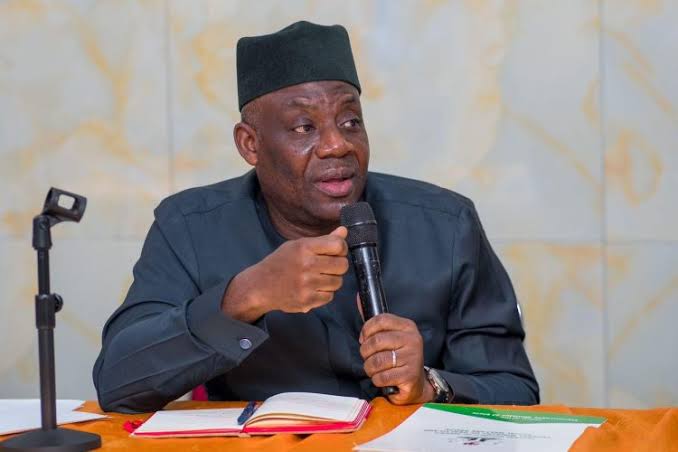
“The much I can say is that we now have a signed agreement. I can’t say more than that because there are still processes to follow to ensure that the contents are implemented to the letter,” Mr Piwuna said.
Mr Piwuna also said the agreement will be formally presented to ASUU’s National Executive Council (NEC) in February when its next meeting is scheduled to hold.
15 years of fruitless engagements
The 2009 FGN-ASUU agreement had been due for renegotiation since 2013, or thereabouts, but ASUU has consistently accused successive government administrations of poor commitment to the renegotiation.
In 2017, when the administration of late President Muhammadu Buhari indicated interest in the renegotiation, the appointment of Wale Babalakin, a Senior Advocate of Nigeria, was seen by ASUU as a round peg in a square hole.
The union accused Mr Babalakin of a preconceived mindset against it, even as it accused the lawyer of being an advocate of the commercialisation of education, a position said to be antithetical to ASUU’s agitation for the provision of quality and affordable education
Three years after the Babalakin-led renegotiation committee was constituted, following his suspension as the Chairman of the Governing Council of the University of Lagos, he was also removed as the chairman of the committee.
Since the dissolution of the Babalakin-led committee, this latest committee, which was set up after the lecturers’ union declared a two-week warning strike earlier in the year, is the fifth in the series of renegotiation committees to address the same matter.
The union accused the government of routinely constituting renegotiation committees only to fail to sign or implement the draft of the said committee.
In protest against what it described as insincerity on the part of the government, ASUU had at different times embarked on prolonged industrial actions between 2020 and 2025.
Reposted below is the memo addressed to the union members nationwide confirming the new agreement:
UPDATE ON THE CONCLUSION OF THE RENEGOTIATION OF THE 2009 FGN–ASUU AGREEMENT
Recall that our 2009 agreement was to be reviewed in 2012. That did not happen despite concerted efforts, negotiations, threats of strike and strike actions. Finally, the efforts of our past and present leadership and membership paid off. The Academic Staff Union of Universities (ASUU), our union, reached an agreement with the Federal Government of Nigeria on December 23, 2025. As earlier stated, it is the outcome of a prolonged renegotiation process initiated in 2017 to review the 2009 FGN–ASUU Agreement. The aim is to revitalise Nigeria’s University system.
The agreement focuses on conditions of service, funding, university autonomy, and academic freedom, as well as other systemic reforms aimed at reversing decay, curbing brain drain, and repositioning universities for national development.
The key agreement under Conditions of Service includes a 40 per cent upward review of academic staff emoluments. It reaffirms pension provisions under existing laws, granting professors a pension equivalent to their annual salary upon retirement at age 70 with defined service requirements and recognition of approved service periods.
On funding, the agreement proposes a new budgeting template recognising university peculiarities, with dedicated percentages for libraries, research, equipment, staff development, and laboratories. A major highlight is the proposed National Research Council (NRC) to fund research at not less than 1% of GDP, strengthen innovation, and support research universities and centres of excellence.
The agreement strongly affirms university autonomy and academic freedom, emphasising merit-based governance, elected academic leadership (Deans/Provosts). The Provosts/Deans of Postgraduate Schools) will now be elected, with only Professors eligible to contest.
The agreement takes effect from 1st January 2026 and it will be reviewed after three years. The agreement guarantees that no individual shall be victimised for participating in the renegotiation process. It is our hope that the Federal Government will commence the implementation without delay.
I wish to appreciate the commitment of Mallam Yayale Ahmed (CFR), and the other members of the Renegotiation Team to the renegotiation of the 2009 agreement that has been dragging on for eight (8) years. I also wish to appreciate the Minister of Education, Dr Tunji Alausa, to the renegotiation, especially the last push that we needed to cross the line. I want to urge the government to hasten the negotiations with the other University-based Unions (SSANU, NASU, and NAAT). This is to guarantee a rancour-free and smooth running of the university. This is also the wish of the Nigeria Labour Congress, whose solidarity throughout this struggle has remained unshakeable.
The leadership of the Union extends our highest appreciation to our members for their patience and perseverance. It has been a long walk through the renegotiation. As we approach Christmas and the New Year, I wish our Christian brothers and sisters a merry Christmas and a happy New Year in advance to all.
Thank you.
Yours in the struggle,
Chris Piwuna
President

