




As Nigeria approaches the end of 2025, a surge in school attacks across several states has left parents questioning whether classrooms remain safe spaces for their children. Despite rescue efforts and policy promises, fear persists, forcing families to withdraw children from schools and deepening concerns over the country’s worsening education and security crisis.
By Mohammed Taoheed
Across Nigeria, recent attacks on schools have left parents grappling with a difficult question: is it still safe to send their children to school?
Although all abducted students and teachers in different states may have been released, the fear triggered by these incidents has not faded. From Kebbi to Niger and Kwara states, repeated attacks have shaken parents’ confidence, turning schools, once regarded as safe spaces, into sources of anxiety and uncertainty.
That fear has become a shared reality for families affected by the recent school abductions, forcing many parents to rethink sending their children to school.
One such family is in Kebbi State. Bello Doro, a father of four, told DevReporting that while he might still consider sending his sons to school, he no longer feels comfortable allowing his daughters to attend.
According to Mr Doro, several parents in his neighbourhood have already withdrawn their children from schools. “The few parents who want their children to obtain formal education at all costs now avoid boarding schools altogether,” he said.
GGCSS attack
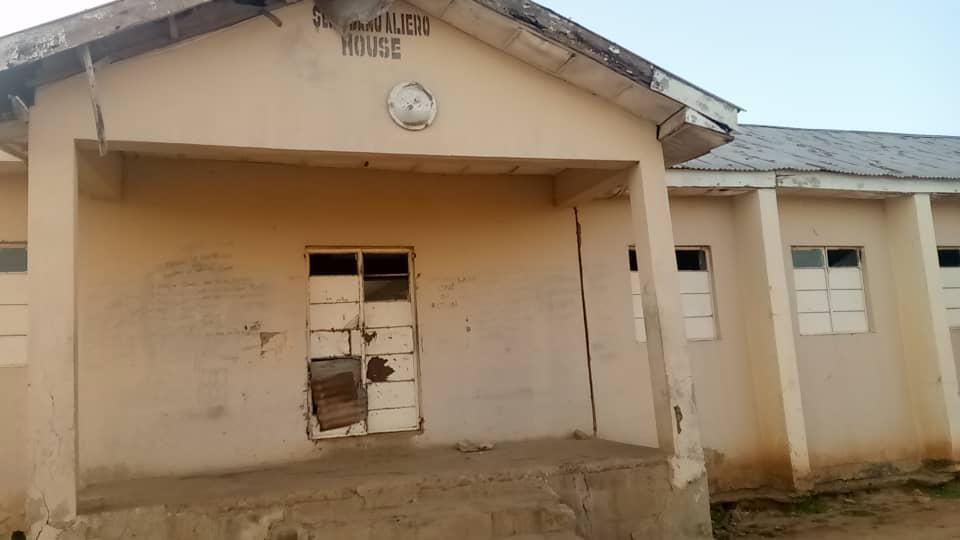
On 17 November, suspected bandits attacked Government Girls’ Comprehensive Secondary School (GGCSS), Maga, in the Danko/Wasagu Local Government Area of Kebbi State, abducted 25 schoolgirls and killed the school’s vice principal.
The incident generated reactions across the country, heightening parents’ fears about the safety of their children in Nigerian schools.
The Minister of State for Defence, Bello Matawalle, who coordinated the rescue mission from Birnin Kebbi, and the state governor, Nasir Idris, announced the release of the abducted schoolgirls in Birnin Kebbi on 25 November, after eight days in captivity. While the news brought relief, many communities were reminded of past abductions, and families now face difficult decisions about whether to send their children, especially girls, back to school.
While Mr Doro acknowledged the importance of education, he expressed that it has become increasingly risky to send girls to school in the face of persistent insecurity. “This is not a one-off incident; it has been happening for years, and even staying outdoors after Maghrib prayer now feels unsafe. People who are abducted are being killed. There’s no safety anymore in Nigeria.”
Mr Doro’s fear reflects a wider anxiety spreading across communities in northern Nigeria, where repeated school attacks have eroded trust in the safety of learning spaces. His experience is not isolated; it mirrors a growing national concern over whether the country can still guarantee children’s right to education.
Three episodes of abductions in four days
Barely two days after the Kebbi school abduction, bandits abducted 38 worshippers from the Christ Apostolic Church in Oke Igan, Eruku, Kwara State.
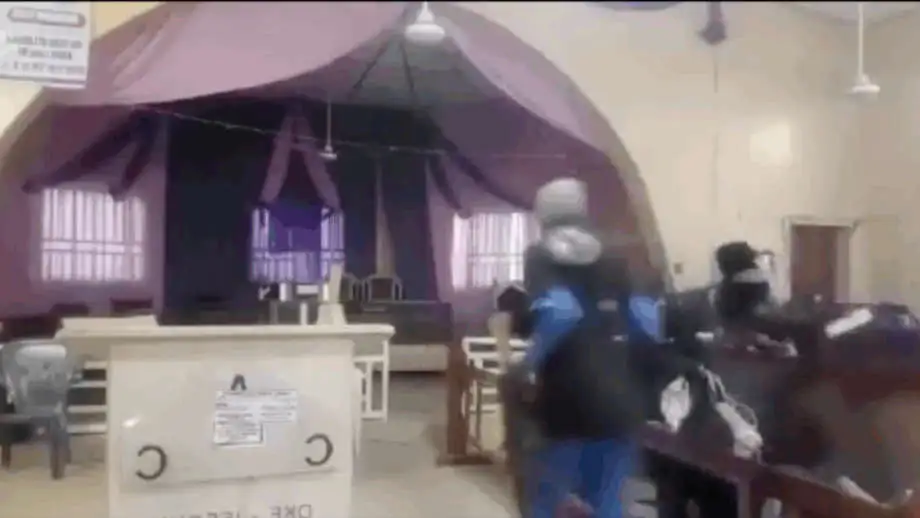
Two days later, another attack targeted St Mary’s School, a Catholic institution in Papiri, Agwara Local Government Area of Niger State, about 170 kilometres from Maga, where over 200 schoolchildren were reportedly abducted.

On 23 November, all 38 worshippers abducted from the Christ Apostolic Church in Eruku, Kwara State, were rescued. Also, last month, the Christian Association of Nigeria (CAN) in Niger State announced that 50 students abducted from St. Mary’s Private Catholic Primary and Secondary Schools had escaped from captivity and reunited with their families.
The chairman of the Niger State chapter of CAN, Bulus Yohanna, explained that out of the total number of 430 pupils in the school, 377 of them are boarders, while the remaining 53 are day students.
“Aside from the 50 pupils who escaped and have returned home, we have 141 pupils who were not abducted. As it stands, 236 pupils, three staff members’ children and 14 secondary school students, totalling 253 children, are with the abductors, along with 12 members of staff,” Mr Yohanna had told journalists earlier in the month, appealing for continued support and calm as efforts intensify to secure the release of the remaining abductees.
Just four days to Christmas, on 21 December, the remaining students and teachers who were left with the abductors regained their freedom.
What data says
According to the UN Office for the Coordination of Humanitarian Affairs, the security situation in Nigeria has resulted in a humanitarian emergency, with more than 7.8 million people, approximately 80 per cent of whom are women and children, requiring urgent assistance.
The worst hit victims of these attacks are school children scattered around conflict-torn northern parts of the country, where the number of out-of-school children and the Almajiri population worsens every year.
Spate of abductions
In April 2014, Boko Haram attacked Government Girls Secondary School in Chibok, Borno State and abducted 276 girls, an incident that attracted international concern, with many criticising the government’s handling of the escalating security situation.
Responding to the Chibok crisis, Nigeria launched the Safe School Initiative in 2014. Since its inception, a $10 million fund has been set up to pilot 500 safe schools in northern Nigeria.
The initiative covers school-based interventions, community protection efforts, and special measures for institutions located in conflict-torn regions.
Findings by the Punch Newspaper revealed that the federal government earmarked a total of N144.7 billion for the Safe Schools Initiative between 2023 and 2026.
The programme was birthed by Gordon Brown, the United Nations Special Envoy for Global Education, in partnership with the Nigerian Global Business Coalition for Education and private-sector leaders, to secure all schools by 2026.
However, despite this huge amount, the country continues to witness an unprecedented kidnapping spree.
In February 2018, suspected Boko Haram militants stormed the Dapchi Girls Secondary School in Yobe State and kidnapped 110 students. One of the girls abducted, Leah Sharibu, remains in captivity.
Similarly, in December 2020, the Kankara Science Secondary School in Katsina State recorded a kidnapping attack where terrorists transported more than 300 students to an unknown forest. Then, in February 2021, gunmen attacked the Government Girls Secondary School Jangebe, a boarding school in Zamfara State, kidnapping around 317 students.
On 8 March 2024, 287 children were abducted from the Local Education Authority (LEA) Primary and Junior Secondary School, Kuriga, Chikun Local Government Area of Kaduna State. Some days later, 15 other students were kidnapped from a school in Gada, Sokoto
More parents express fear
Urwatu Dogo, a resident of Birnin Kebbi, Kebbi State, said parents are no longer eager to send their wards to schools, especially those operating boarding houses.
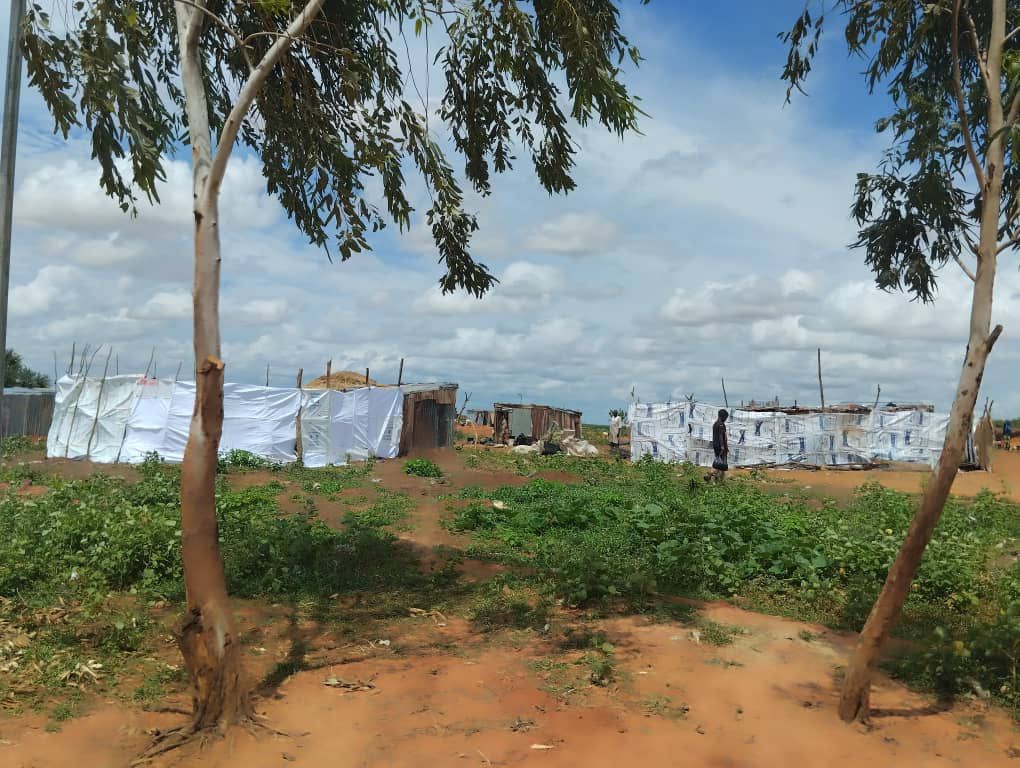
“The incident of Chibok girls has made a lot of parents unwelcome to the idea of sending their children to school, and if you look at it very well, the development of private schools in Kebbi has recorded a significant growth,” he told DevReporting in Hausa.
The commercial farmer said, “As a parent, I am not willing to lose my children. Imagine taking your child to a school only to hear that he/she has been abducted. So, we are stopping the education of our children until things get better.”
Mr Dogo recommended the deployment of at least five security guards to secure each boarding school since students cannot learn effectively when they are unsafe.
Away from Kebbi, parents in other states are also apprehensive. Elizabeth Falade, 34, has become sceptical about taking her child to school nowadays, even though the school compound is a stone’s throw from her street in Agbado Ijaye, a suburb in Lagos State, Southwest Nigeria.
“Sincerely speaking, other parents like me are scared of people waking up and coming out of their homes, let alone taking their kids to school,” she began, adding that her three-year-old daughter would not know how to run for safety whenever things went dark in her school.
The entrepreneur said she and other parents in her neighbourhood are scared of what would happen to their children in school because the country has degenerated into one where the next 10 minutes might birth something deadly for young school children.
She said; “Sometimes, I’ll visit my daughter’s school during their break time to see what’s going on. I must confess that this is because my mind is not settled. I would like to implore the government to put it in order. The insecurity in the country is getting out of hand.
“How do we sleep at night without being scared of what might happen? We are not safe putting our kids in school anymore, because these kids are vulnerable. The authorities in the school alone cannot handle this, we need the government to put in security measures to make our country safe for us and our wards.”
Experts weigh in
A child rights activist, Taoheed Adegbite, described the Kebbi schoolgirls’ abduction as saddening and a step backwards in Nigeria’s effort to escape being the global capital of out-of-school children.
“Schools becoming a target for armed groups will not only put enrollment at risk, but also force parents to think twice about sending their wards, especially girls, to unsafe places.”
He said the victims would also suffer from trauma “because they were not just kidnapped to unknown places by unknown faces, many of them may witness the killings of one or two officials at that moment.”
He said the thoughts of sporadic gunshots alone could make any school environment traumatic for them by the time they eventually return home.
Mr Adegbite said Nigeria needs the political will to treat terrorists as terrorists and take sponsors for the attacks for who they are, no matter how powerful they may be if the country is ready to counter the threat of insecurity around schools and the society at large.
Timothy Avele, a Lagos-based security expert, described the incessant abductions of schoolchildren without prosecution of the kidnappers by security agencies as a major blow to the future of education in Nigeria.
He said, “As it is now, parents in rural areas will think twice before sending their kids to schools because they are not sure of their safety. This is too bad for the Nigerian future leaders, as their education is already threatened from the very foundation.”
Speaking on ways to tackle the menace, Mr Avele, the director of AgentX Security, observed that immediate proactive measures by local authorities are necessary to enhance physical security around and within the school environment.
He said; “Installation of solar street lights, solar cameras, GSM alarm systems and well-trained security guards knowledgeable in situational awareness, counter-surveillance and counter-intelligence, including proper school fencing, is the first most important strategy,” he said.
“State governments should set up an emergency reporting and responding app connecting all schools within the state to a command and control centre linked to well-equipped, quick-response combined security teams in strategic locations across the state. The incorporation of enterprise long-endurance, all-weather drones is highly recommended.
“The federal government must insist on enhanced intelligence operations, cooperation among security agencies and above all, dismantle all known terrorist camps scattered all over Nigerian forests, go after their sponsors, block weapons inflow into the country and persecute arrested criminals to deter others from carrying out such hideous crimes in the future.”
CSOs condemn abduction, call it attack on education
The Coalition of Civil Society Organisations (CSOs) in Kebbi has described the recent abduction of schoolgirls in the state as a deliberate attempt to undermine educational development in the region.
The coalition’s Chairman in the state, Ibrahim Ngaski, made this known while addressing a press briefing in Birnin Kebbi on Monday, 24 November.
“This heinous act is a direct attack on the safety, education and future of our children.
“We condemn in the strongest terms the abduction and the violence against these innocent girls and their families.
“Education is a fundamental right; therefore, no child should live in fear of violence in any manner when pursuing their dreams,” the chairman said.
Ngaski, therefore, called on the government to intensify search and rescue operations to ensure the safe return of all the abducted girls and other people in captivity, while appealing for enhanced security measures around schools and communities.
“Relocate all boarding schools situated in remote areas or prone/vulnerable to attack across the state to safer locations to prevent recurrence of such incidents.
He also recommended the full implementation of the Safe Schools Initiative, noting that the Kebbi State Government was a beneficiary of the grants received from the World Bank under the AGILE Project.
Mr Ngaski also called for the strengthening of partnerships with the sister states of Sokoto, Zamfara and Niger in the areas of intelligence gathering and the protection against any possible attacks by the terrorist groups.
He added, “Continue providing support to security agencies and our local security outlets to help in overcoming the security challenges bedevilling our state.”
The chairman called on the international community, the media and all Nigerians to stand in solidarity with the affected families, while amplifying calls for swift justice and protection for the children.
“To this end, we call on parents, teachers and communities to remain vigilant and work closely with authorities,” he said.

