




As the International Day for Street Children is observed globally on 12 April, the reality in Nigeria tells a different story. Many of the children the day represents do not know it exists. They wake under bridges, in motor parks and at bus stops, and set out in search of food.
International Day for Street Children (IDSC) has been celebrated globally since 2012, to recognise the humanity, dignity and defiance of street children in the face of unimaginable hardships.
According to the Consortium for Street Children (CSC), this year’s celebration focuses on one of the most urgent challenges facing street-connected children – access to justice.
The consortium maintained that street children need access to justice because they are routinely subjected to discrimination, criminalisation, and violence, yet remain largely excluded from legal protection. However, every child has the right to protection and access to justice, especially those most excluded and at risk.
“Justice is more than courts. It means being seen, heard, and protected. It means being able to seek support, report abuse, and access help without fear. Justice begins with listening to children and making sure systems respond to their realities, not punish them for survival,” the consortium noted.
A growing but uncertain population
There are an estimated 100 million children living on the streets worldwide today, many of whom are highly vulnerable to victimisation, exploitation, and the abuse of their civil and economic rights. This situation, according to the international child and youth care network (CYC-Net) is further worsened by widespread international indifference, which has contributed to the continued neglect and suffering of these children.
The scale of street children in Nigeria remains difficult to determine, as the absence of reliable national data reflects a broader gap in policy and coordination, leaving many children uncounted and unaccounted for.
Data from the United Nations Education Scientific and Cultural Organisation (UNESCO) show that 20.2 million children are out-of-school in Nigeria while UNICEF reports that one out of three children in Nigeria is out of school.
Pathways to the streets
Children do not arrive on the streets by chance. A mix of poverty, displacement, and social instability continues to push them there.
Nigeria’s population is growing rapidly, with the National Population Commission (NPC) estimating millions of new additions each year. In many low-income households, family sizes remain large while incomes stagnate, stretching already limited resources. In such conditions, children are often the most affected.
Urban demolitions and evictions have also displaced thousands of households in recent years. Rights groups have documented cases of children separated from their families during forced evictions. Some of the displaced children never find their way back home. They end up on the streets.
Economic pressures further exacerbated the situation. The removal of fuel subsidy in 2023 led to an increase in transport and food costs, with subsequent price hikes compounding the strain on already struggling families. For some children, the street has become an alternative to homes that can no longer support them.
Stigma and social exclusion
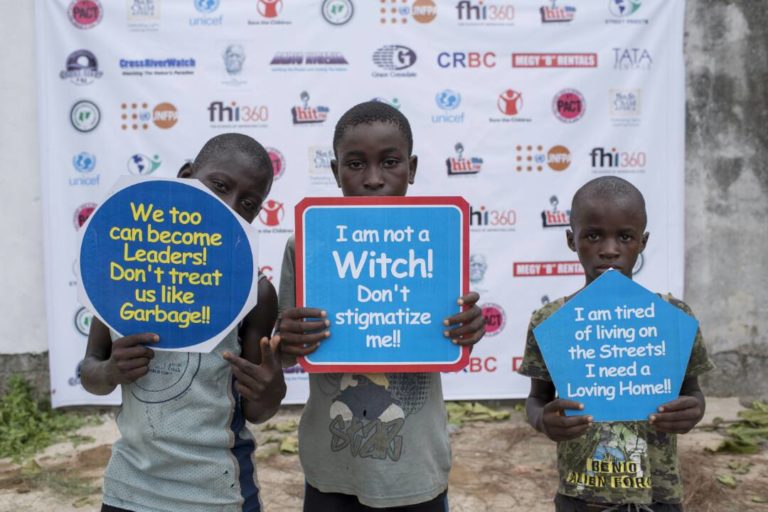
Despite the scale of the issue, Nigeria lacks a dedicated national policy for street children. The National Social Investment Programme (NSIP), introduced in 2016 to reduce poverty, has reached vulnerable households but largely excludes street children. Without fixed addresses or identification, they are unable to access cash transfers or other forms of support.
Many also lack birth certificates, school records, and access to healthcare. This absence of documentation limits their chances of entering the formal economy later in life, reinforcing cycles of marginalisation.
Although Nigeria has ratified the United Nations Convention on the Rights of the Child (CRC), which mandates the protection of all children, implementation remains weak.
Beyond institutional gaps, street children face widespread social stigma. They are often driven away from public spaces, reported to authorities, or excluded by community groups.
Labels such as delinquents, beggars, “area boys” and “agberos” shape how they are perceived.
These perceptions limit their access to opportunities, including education and employment. Without support or skills development, many remain trapped in street life, with the pattern extending across generations.
NGOs fill the gap
In the absence of a coordinated government response, non-governmental organisations have stepped in to provide support.
In Osun State, the Safe Haven Children’s Initiative has worked with street children for over eight years, offering food, shelter, basic education, and vocational training, alongside family reunification efforts.
Adaeze Nwosu, Programme Coordinator at the organisation, said the number of children seeking support has increased significantly.
“Before 2022, we received about 25 to 30 children every month. Now, we receive between 50 and 60. The economic situation is the biggest driver,” she said.
“We do not have enough beds, staff, or funding. For every child we support, many more remain on the streets,” she added.
She noted that many children arrive with deep trauma, often linked to violence, exploitation, or prolonged neglect.
“We see children who do not trust adults. They have been let down too many times. Building that trust takes time,” she said.
While NGOs provide critical support, their efforts are not a substitute for systemic action.
“We rely on donor funding. When funding ends, programmes end. That is not sustainable,” Ms Nwosu said.
She also pointed to the lack of coordination within the sector. “There is no shared database. One organisation may be searching for a child who is already in another facility. We are working, but without a complete picture,” she said.
Bridging the gap
Ms Nwosu called for stronger government involvement, including formal partnerships with NGOs, consistent funding, and the creation of a national database of street children.
“You cannot protect a child you do not count. Accurate data is the starting point for any meaningful intervention,” she said.
She also emphasised the role of communities in supporting reintegration. “These children are on the streets because systems failed them. Stigma only makes their situation worse,” she said.
According to her, reintegration efforts often fail because communities are unprepared to accept returning children. “We prepare the child, but not always the community. That is where the system breaks,” she said.
A crisis that persists
UNICEF has repeatedly called on the Nigerian government to expand social protection systems to reach vulnerable children. However, there is still no comprehensive national framework addressing the needs of street children.
The conditions driving children to the streets including poverty, displacement, and weak welfare systems remain largely unchanged. As the International Day for Street Children is marked, advocacy efforts continue. For many children across Nigeria, however, the day passes like any other, defined not by recognition, but by survival.
Advocacy, rights, and holistic support for street children
An opinion piece titled “What future for street children in Nigeria?” by Yinka Adeosun in 2024, describes the International Day of Street Children as a painful reminder of the urgent need to confront the suffering of vulnerable children and to defend their rights.
He argues that the issue should not be seen only as a failure of government, but also as a breakdown of parenting and broader societal responsibility, especially in situations where children are left without adequate care, guidance, or emotional support. “The street is harsh and cruel,” he said.
Mr Adeosun further explains that many street-connected children come from unstable or dysfunctional homes where their sense of safety has been eroded by abuse, neglect, poverty, or loss of parents. She added that some have been abandoned outright, while others are orphaned and forced to survive independently in unsafe urban environments. In such conditions, daily survival becomes a constant struggle.
He also highlights the heightened risks of exploitation and abuse as street children, often lacking adult protection, become easy targets for traffickers and other predators who may lure them into forced labour, prostitution, or other illicit activities. Beyond these dangers, she noted that many are also deprived of access to essential services such as healthcare and education, which deepens cycles of poverty and social exclusion.
Despite these harsh realities, she acknowledged the resilience of street children, noting their courage, adaptability, and resourcefulness as they navigate life on the streets, often forming strong bonds with one another and developing creative ways to meet basic needs in the face of adversity.
The day therefore seeks to give voice to homeless children and promote their rights to safety, education, and opportunities. “It is a day to fight against the prejudice and stigma that frequently accompany their real-life situations and to promote compassion and empathy in society.
“Supporting street children requires a multifaceted and holistic approach that takes care of both their immediate needs and the underlying issues that make them vulnerable,” Mr Adeosun said.

