



By John Musenze, [KAMPALA, SciDev.Net]
Researchers are racing to develop a vaccine against the Bundibugyo strain of Ebola as an outbreak in the Democratic Republic of Congo (DRC) has resulted in 223 suspected deaths and triggered a global health emergency response.
The development comes amid warnings from international aid agencies that response efforts are struggling to keep pace with the outbreak, which the World Health Organisation (WHO) has declared a public health emergency of international concern.
The Coalition for Epidemic Preparedness Innovations (CEPI), a global organisation focused on vaccine development, on 1 June pledged US$62 million to accelerate three investigational vaccine candidates for trials against the bundibugyo virus, for which there are currently no approved vaccines or treatments.
“With Bundibugyo virus spreading rapidly and no licensed vaccines, every day counts in the race against this deadly disease,” CEPI Chief Executive, Richard Hatchett said.
WHO’s Technical Advisory Group has identified the International AIDS Vaccine Initiative’s (IAVI) single-dose rVSV candidate, developed in partnership with the University of Texas Medical Branch with US$3.2 million from CEPI, as the most promising vaccine in development.
Researchers say doses of vaccine could be ready for human testing within two to three months, while the most promising candidate may take up to nine months before it is ready for human testing.
The chief executive officer (CEO) of IAVI, Mark Feinberg assured, “We are acting with urgency to advance this candidate quickly and responsibly.
“While significant work remains, including definition of accelerated pathways for clinical evaluation and regulatory review, we believe it is important to expedite development of this vaccine candidate to explore its potential to help address a pathogen for which no countermeasures currently exist and that is causing a tragically increasing number of deaths, serious illness, and grave disruption across a wide region.”
As of May 29, the outbreak had caused 223 suspected deaths in DRC and one in Uganda. On Tuesday (2 June) Uganda confirmed six new cases, bringing the total confirmed in the country to 15.
Global response
Gavi, the Vaccine Alliance has committed US$50 million to the Ebola outbreak through its First Response Fund, including up to US$40 million to accelerate access.
“While we are some way off having a safe and effective vaccine against Bundibugyo virus, we need to act now to ensure that, once one or more vaccine candidates are ready, manufacturers are in a position to start producing doses at scale,” said Gavi Chief Executive, Sania Nishtar.
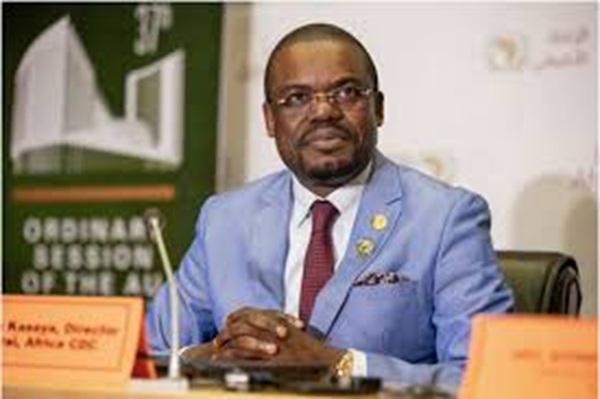
The head of Africa Centres for Disease Control and Prevention (Africa CDC), Jean Kaseya, promised that Africa would have a vaccine and treatment “by the end of this year”.
The African Union health agency has forged a continent-wide response plan to strengthen outbreak control in at least 11 high-risk countries, a plan it says will require US$319 million in the next six months.
Mr Kaseya warned that South Sudan, Somalia, Rwanda, Kenya, Tanzania, Ethiopia, Republic of Congo, Burundi, Angola, Central African Republic, and Zambia are at high risk of Ebola spread, in addition to DRC and Uganda due to cross-border population movement.
Speaking at a press briefing on 28 May, Mr Kaseya said the continent can no longer afford to respond to recurring outbreaks without medical countermeasures.
“This is the third time we are seeing Bundibugyo in Africa. If this was happening in Western countries, they would have a vaccine by now.”
Search for treatments
The rare Bundibugyo species of Ebola has caused just three outbreaks in nearly two decades, the first in Uganda in 2007, with a second in DRC in 2012. It has no approved vaccine and no licensed treatment, and existing medical tools developed for the more common Zaire strain are largely unsuitable for the current outbreak.
Mr Kaseya also disclosed that he had received a direct message from Russia’s Minister of Health, informing him that the Gamaleya National Research Centre had developed an Ebola vaccine.
“My team is working with the Russian team and with all other partners to understand,” he noted.
Africa CDC officials confirmed the Russian vaccine was originally developed following the 2014-2016 West Africa Ebola outbreak and targets the Zaire strain. Technical teams were this week assessing whether the platform could offer protection or be adapted for the Bundibugyo species.
WHO experts have also recommended several experimental therapeutics for evaluation in clinical trials among confirmed Ebola patients. These include the monoclonal antibodies MBP134 and Maftivimab, the antiviral remdesivir, and combination therapies involving both antibody treatment and antivirals.
The organisation is also studying the use of obeldesivir tablets as post-exposure protection for confirmed contacts. These are oral antivirals administered before symptoms develop in an attempt to prevent infection.

