



As the Democratic Republic of Congo (DRC) battles a worsening Ebola outbreak that has infected 710 people and claimed 149 lives, the Lagos State Government has launched a statewide public awareness campaign aimed at preventing the importation of the deadly disease into Nigeria.
The campaign, tagged “Operation Lagos BioShield”, comes amid growing concerns over the spread of the Ebola Virus Disease (EVD) in parts of East and Central Africa, where health authorities are struggling to contain an outbreak caused by the rare Bundibugyo strain of the virus.
Government data from the DRC shows that the country had recorded 710 confirmed Ebola cases and 149 deaths as of Friday according to a situation report that documented 21 new cases in the previous 24 hours.
The latest Ebola outbreak is caused by the rare Bundibugyo virus, which does not have an approved vaccine. The Bundibugyo species of Ebola also has no licensed treatment, and existing medical tools developed for the more common Zaire strain are largely unsuitable for the current outbreak.
Against this backdrop, Lagos authorities say they are taking proactive steps to strengthen preparedness and public awareness, even though no Ebola case has been detected in Nigeria.

No Ebola case in Nigeria
In a statement issued on Saturday, the Lagos State Commissioner for Health, Akin Abayomi, a professor, reassured residents that there are currently no confirmed cases of Ebola Virus Disease in Lagos State or anywhere in Nigeria.
Mr Abayomi said the awareness campaign was designed to strengthen public vigilance and preparedness rather than respond to an ongoing public health emergency.
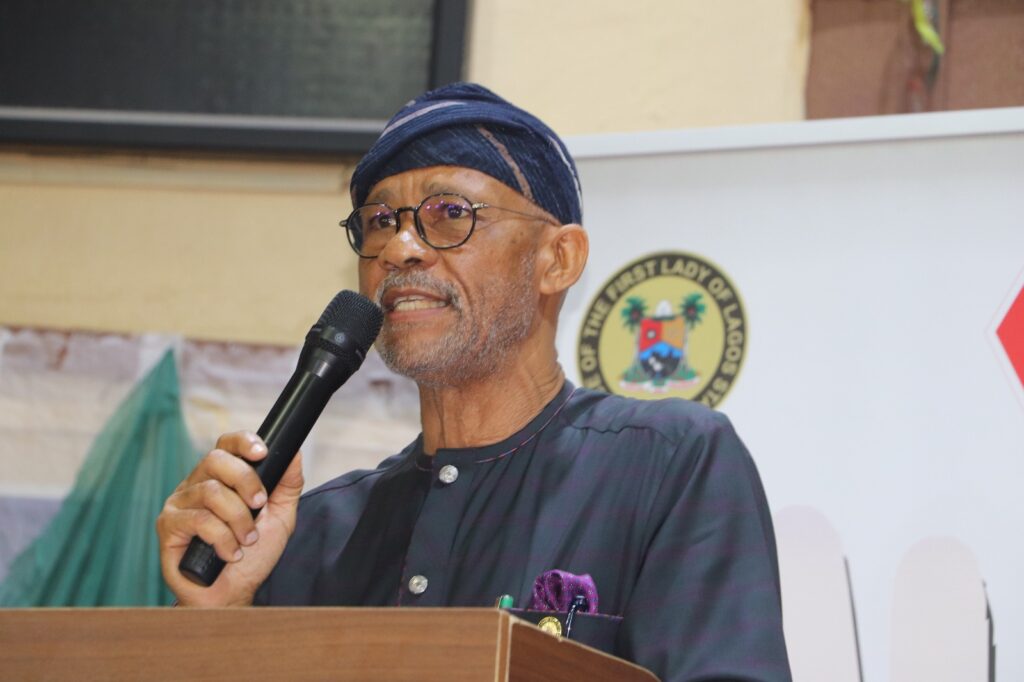
“This campaign is not a response to a crisis. It is a proactive measure to strengthen public awareness, preparedness and prevention,” he said.
According to him, the initiative reflects the government’s commitment to protecting public health through early intervention and effective risk communication.
Concerns over regional outbreaks
Mr Abayomi said the current Ebola outbreak affecting parts of the Democratic Republic of Congo and Uganda involves the Bundibugyo strain of the virus, for which there is currently no widely available licensed vaccine or specific antiviral treatment.
According to him, prevention and early detection remain the most effective means of containing the disease. “Prevention, early detection, rapid isolation, and supportive medical care remain our most effective tools,” he said.
He stressed the importance of public understanding of the disease, noting that accurate information is essential to limiting transmission and preventing unnecessary panic.
How Ebola spreads
The commissioner cautioned against misinformation, explaining that Ebola is not transmitted through casual contact.
According to him, the virus spreads through direct contact with the blood, bodily fluids, or contaminated materials of an infected person who is already ill.
He reiterated that increased public awareness would help reduce stigma while strengthening community cooperation in disease prevention efforts.
Surveillance at entry points
As Nigeria’s commercial hub and a major regional transport hub, Lagos maintains extensive air, maritime and land connections with other countries.
Mr Abayomi said the federal and state governments are collaborating with aviation, maritime, border health and public health authorities to strengthen surveillance and screening protocols at points of entry.
He assured that the state government will intensify public enlightenment campaigns in the coming weeks, focusing on Ebola symptoms, preventive measures, reporting channels and community-level preparedness.
The campaign, he said, will target homes, schools, workplaces and other public spaces across the state.
Residents urged to remain vigilant
The commissioner urged residents to remain vigilant while avoiding panic, advising them to rely only on verified information from health authorities.

He called on travellers returning from countries affected by Ebola outbreaks to seek immediate medical attention if they develop symptoms such as fever, weakness, vomiting, diarrhoea or unexplained bleeding.
Such individuals, he said, should contact emergency lines 112 or 767, or reach the State Epidemiologist through the designated response channels while limiting contact with others pending medical advice.
Lessons from 2014
Mr Abayomi also recalled Lagos State’s successful containment of Ebola during Nigeria’s 2014 outbreak, describing it as evidence of the state’s capacity to respond effectively to future public health threats.
“Through strong leadership, effective surveillance, rapid response, and the collective efforts of healthcare workers and residents, our State successfully contained Ebola and protected millions of lives.
“Today, we remain prepared, vigilant, and committed to safeguarding the health of every Lagosian. Together, we will keep Lagos safe.”

