



By Adedoyin Oguntade
The Chairman of the Editorial Board at The Nation Newspapers and an alumnus of Obafemi Awolowo University (OAU), Sam Omatseye, has offered a fresh perspective on Nigeria’s democratic journey, describing the country’s political identity as “half-born”, shaped by historical legacies and persistent challenges.
Mr Omatseye made this assertion on Thursday, 29 November, while delivering a lecture titled “How to Make a Democrat” at OAU. The event marked the second Faculty of Arts Distinguished Alumni Lecture.
Ethnicity, power and the roots of Nigeria’s democracy
He identified time as a critical ingredient in the realisation of a full democracy and examined the emergence of tribal politics within Nigeria’s early democratic experience.
According to him, political figures such as Nnamdi Azikiwe exemplified how ethnic loyalties often overshadowed national unity, producing what he described as “tribal democrats”.
This, he argued, reflects a broader struggle against authoritarian tendencies embedded in attempts to impose freedom without genuine consent or understanding, a notion consistent with Jean-Jacques Rousseau’s political philosophy.
DevReporting had earlier reported that Mr Omatseye would deliver the lecture under the chairmanship of the Governor of Ekiti State, Biodun Oyebanji.
Democracy and the limits of imposed freedom
Mr Omatseye further argued that the President of the United States, Donald Trump, has expanded the meaning of democracy.
He said, “Trump was such a democrat that he ordered his country to abduct the leader of another country, and one of the pretexts was that the leader had rigged an election.”
He further discussed the issue within the context of the United States before relating it to Nigeria’s experience, saying, “We did not crave democracy before a country foisted it on us. Talk about a system based on freedom, yet we were forced to adopt it.”
Mr Omatseye went on to explore how British colonial rule fundamentally disrupted indigenous political systems and cultural identities. He argued that colonial authorities were not merely passive observers but actively manipulated emerging local leaders, described as “budding democrats” to serve their interests while suppressing genuine self-governance.
This process, he noted, is captured in the concept of “manufacturing consent”, where political structures appeared to empower Nigerians but ultimately served as tools of continued control.
Mr Omatseye maintained that time remains indispensable to democratic maturity. “In our own case, it is because the democrat has always been half-born. It was half-born before and at independence, and it has occurred repeatedly in our history.
“For a democrat to fully emerge, it must be allowed to grow. Too many ingredients make a democrat, but the most important one, often ignored by scholars is time,” he said.
Democracy still the best option – Oyebanji
Chairman of the lecture and Governor of Ekiti State, Biodun Oyebanji, commended the guest lecturer, the Dean of the Faculty of Arts, Gbenga Fasiku, a professor, and members of the faculty.
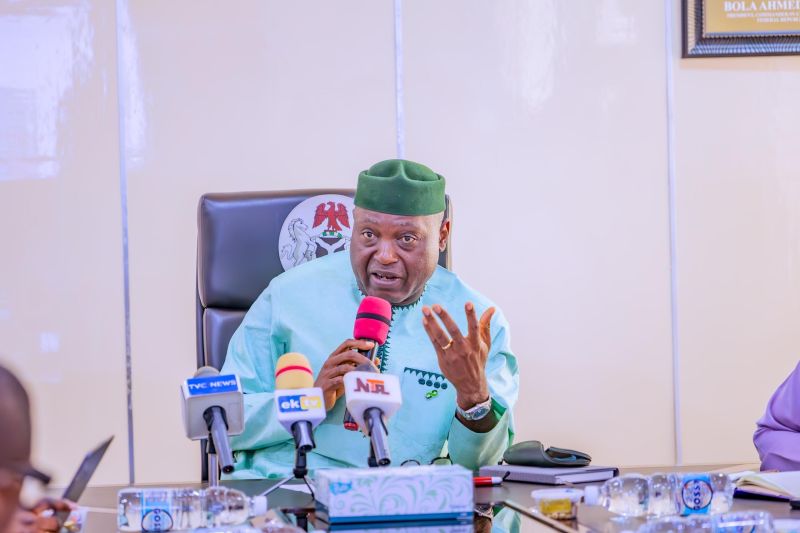
He described alumni lectures as a long-standing tradition in reputable universities worldwide, aimed at reconnecting institutions with distinguished alumni.
Commenting on the theme of the lecture, the governor said, “Despite its inadequacies, democracy remains the best form of government for a diverse, complex and modern society like ours.”
He explained that democracy’s contestations often produce polarisation and tension, making the ability to manage disagreements critical.
The governor urged Nigeria to deliberately cultivate a political culture that promotes consensus-building, cooperation, inclusion, decent public conduct, respect for rules, acceptance of majority decisions, and magnanimity in both victory and defeat.
He also beseeched political actors not to turn elections into warfare, stating that the winner-takes-all mentality should be discouraged.
Mr Oyebanji called on the academic community to “awaken the giant within” and lead national development through research, knowledge creation, and social mobilisation.
Honouring distinguished guests
The event, which drew lecturers, students, faculty members, and other members of the university community, also featured award presentations to the Ekiti State Governor, the guest lecturer, and other distinguished guests, including the representative of the Governor of Osun State.

