



By Ibrahim Awotunde
The Vice Chancellor of the University of Lagos (UNILAG), Folasade Ogunsola, a professor of Medical Microbiology, has called for a fundamental rethinking of academic partnerships between Nigeria and the United Kingdom, arguing that global north-south collaborations must move beyond arrangements in which African institutions serve as junior partners implementing agendas set elsewhere.
Mrs Ogunsola made the call on 18 March at the Presidential Keynote and Global Goals Roundtables, themed “Co-creating Sustainable Futures for Africa”. The event, which featured a presidential keynote delivered by President and Vice-Chancellor of LSE, Larry Kramer, was jointly convened by UNILAG and the London School of Economics and Political Science (LSE).
Held at the Design Studio, Faculty of Social Science, the roundtable brought together academics, researchers and members of the public for discussions, shared group reflections and networking sessions focused on advancing the United Nations (UN) Sustainable Development Goals (SDGs) on the African continent.
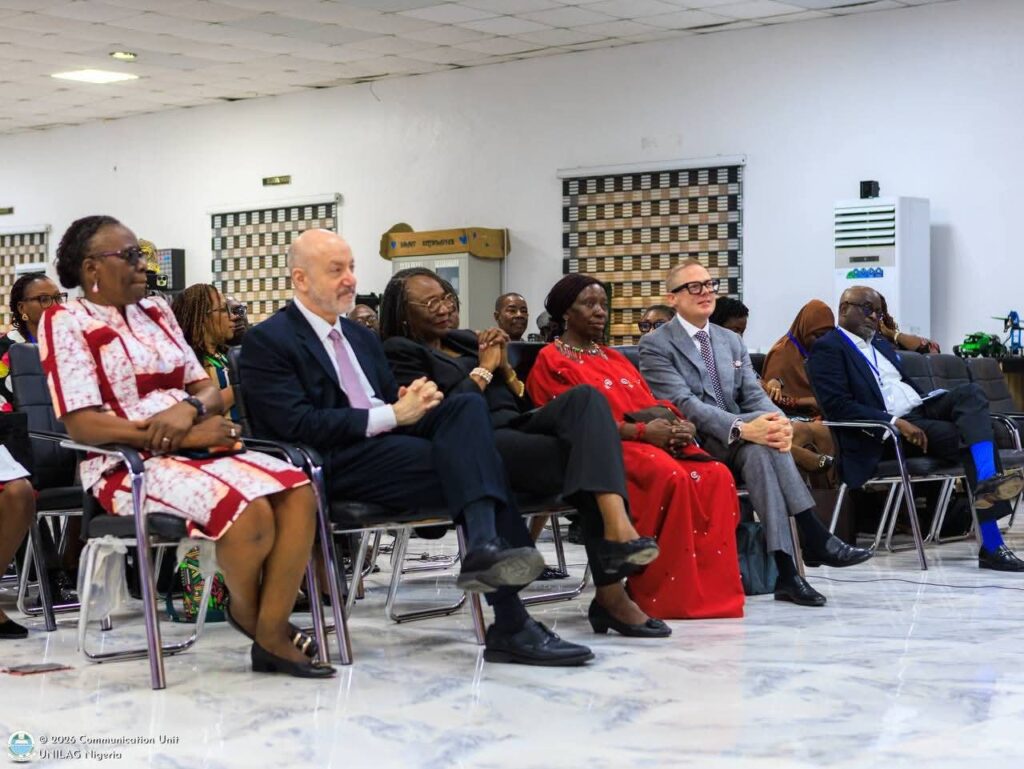
Need for equitable partnerships
Mrs Ogunsola emphasised that both Nigeria and the UK face similar pressures, particularly in public services, education and infrastructure, albeit from different perspectives.
She noted that while the UK grapples with issues such as housing shortages, immigration and workforce constraints within systems like the National Health Service, Nigeria is contending with the demands of a rapidly growing and youthful population.
According to her, Nigeria’s median age of about 19 presents both an opportunity and a challenge, placing enormous pressure on education systems, infrastructure and governance.
“We are dealing with an exploding population. How do we educate them and ensure they are properly catered for?” she asked, adding that the situation also impacts energy, housing and public trust in governance.
The UNILAG vice chancellor pointed out that both countries can learn from each other, stressing that the UK’s well-established governance structures, transparency and accountability frameworks could offer lessons to Nigeria, while Nigeria’s dynamism, innovation and resilience present valuable insights for the UK.
On the question of the Nigerian diaspora, she drew attention to the growing migration of skilled Nigerians, noting that this diaspora population could be strategically leveraged to strengthen collaboration in education, healthcare and governance between both nations.
Speaking on global academic partnerships, Mrs Ogunsola noted that partnerships between the global north and south have historically been driven by northern priorities, leaving southern institutions in largely implementation roles.
“For partnerships to be truly equitable, both sides must contribute to defining research agendas and solutions, regardless of the source of funding. Complex global challenges cannot be solved from one perspective alone.”
She stressed the need for joint problem-solving and recognition of the value each partner brings. “Building trust, fostering long-term relationships and ensuring that all parties contribute meaningfully are critical to achieving sustainable collaboration,” Mrs Ogunsola added.
Technology and the social sciences
Addressing the role of education in a rapidly evolving technological landscape, Mrs Ogunsola argued that while technology continues to advance, many of the challenges it creates, such as ethical concerns, privacy issues and shifts in human behaviour, are fundamentally human problems.
“People are not technology; people use technology,” she said, noting that disciplines within the social sciences are essential for understanding the societal and psychological impacts of technological change.
Mrs Ogunsola further warned that increasing digital immersion, especially among young people is influencing value systems and social interactions, making it imperative to strengthen studies that examine human behaviour and societal trends.
Education must go beyond skills training, says Kramer
The LSE vice chancellor, Mr Kramer, a constitutional law professor, cautioned against the growing global trend of reducing university education to narrow skills training, insisting that institutions must preserve their role in shaping socially responsible and value-driven graduates.
He noted that although students increasingly pursue higher education for career advancement due to rising costs and economic pressures, universities must continue to instill a sense of social responsibility and civic engagement.
“University education has to go beyond skills training. Students want to make a difference in the world, and that must remain part of what we offer,” he said, adding that education is fundamentally a values issue.
He noted that LSE was founded on principles that emphasise improving society, and that despite evolving global realities, that core mission remains relevant. However, he acknowledged that universities are under pressure from families and society to prioritise employability and income generation.
Mr Kramer said institutions must strike a balance between equipping students with marketable skills and nurturing their capacity to contribute meaningfully to society.
Nigeria and LSE’s Africa agenda
On international collaboration, Mr Kramer identified key global challenges shaping research and partnerships at LSE, including the future of democracy, political economy, sustainability, inequality, technological disruption and the need for a stronger multilateral global order.
He described Nigeria as a country of growing global importance and expressed interest in expanding collaboration with institutions such as UNILAG across areas like policy research, digital innovation, climate action and leadership development. While noting that LSE is still exploring specific partnership pathways, Mr Kramer said such collaborations are essential in building a global intellectual ecosystem capable of addressing shared challenges.
Commenting on the future of higher education delivery, Mr Kramer emphasised the expansion of online, hybrid and transnational learning models, while reaffirming the value of traditional campus-based education, particularly LSE’s diverse student body drawn from over 140 countries.
However, he expressed reservations about universities establishing foreign campuses, arguing that such ventures are often costly and difficult to replicate at the same quality as home institutions. He therefore called for strategic partnerships, including student and faculty exchanges, as a more effective model.
The LSE vice chancellor expressed concerns about the rising cost of education globally, noting that declining government funding is shifting the financial burden to students and alumni. He revealed that scholarships, particularly for African students, remain a top priority for LSE.
On the debate around global north-south partnerships, Mr Kramer downplayed the framing as overly simplistic, arguing that differences among universities are more about resources than geography.
“Academic excellence exists worldwide, with talented students and faculty across all regions; partnerships should be built on mutual respect and recognition of these strengths, rather than assumptions of superiority. We think of LSE as a global university, not just a UK institution,” he said.
He added that the institution’s model is to attract top talent globally and equip them to contribute to development in their home countries.
The context of the convening
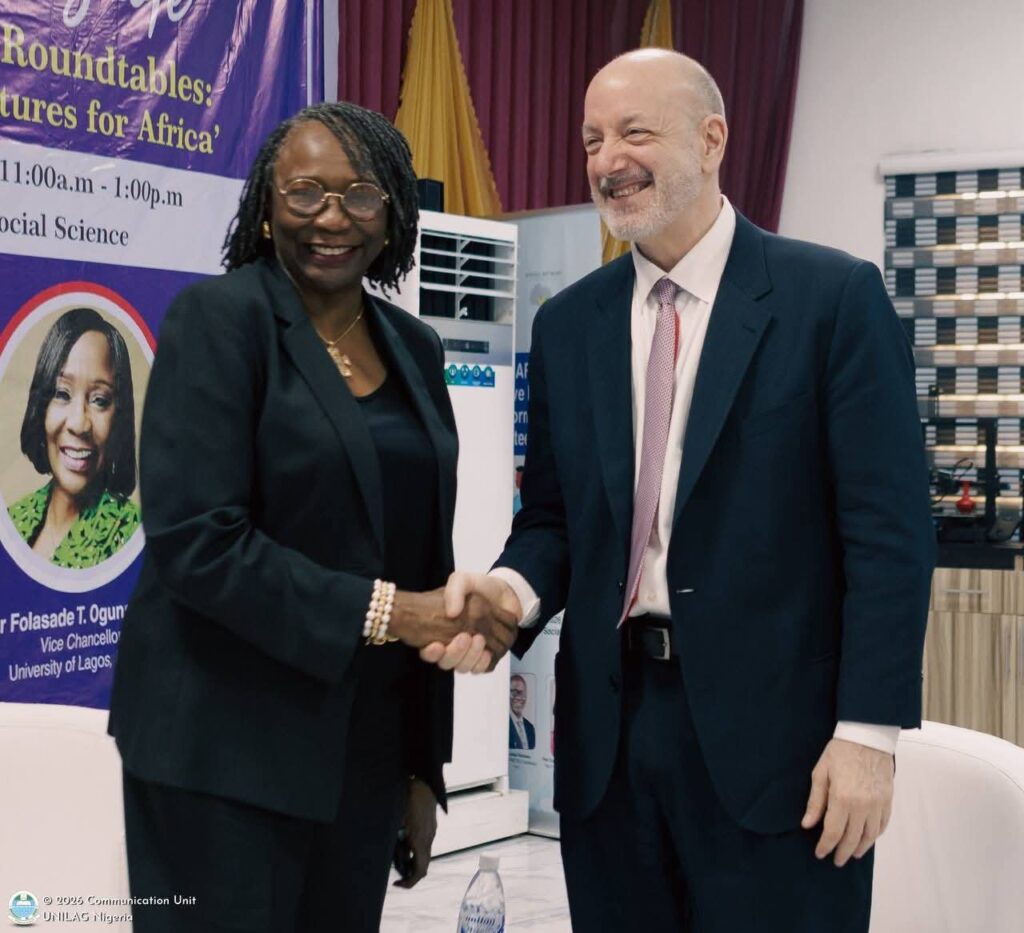
The Global Goals Roundtables programme convenes partner institutions across the world to advance structured, multi-stakeholder dialogue on the SDGs. The SDGs, adopted by the UN General Assembly in 2015, set 17 interconnected targets to be met by 2030, covering poverty eradication, quality education, clean water and sanitation, climate action, sustainable cities and related development priorities. With less than five years to the deadline, progress across Africa remains uneven.
The choice of UNILAG as host reflects the university’s standing as Nigeria’s highest-ranked institution in recent world university rankings and its track record of active international research engagement.
LSE’s Firoz Lalji Institute for Africa (FLIA), which marks 10 years of operation in 2026, has over that period drawn together more than 100 academics from across the school, producing research with direct policy implications for governments and institutions across the continent.
The event took place against the backdrop of the state visit to the UK by President Bola Tinubu, during which Nigeria and the UK signed a series of bilateral agreements spanning trade, migration and education, adding further diplomatic weight to the academic conversation at UNILAG’s Design Studio.

