


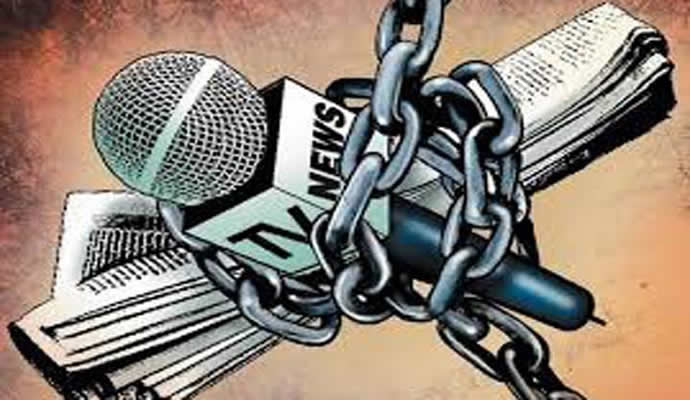
The Africa Media Development Foundation (AMDF) has raised concerns over what it describes as a steady decline in press freedom across Africa, warning that journalists face increasing violence, repression and legal restrictions that governments have not moved to stop.
The foundation issued the warning on 3 May 2026 to mark World Press Freedom Day. In a statement signed by its Press Freedom Manager, Zhiroh Jatau, it said evidence from its Africa-wide Press Freedom Tracker and other monitoring platforms shows that the space for independent journalism on the continent is shrinking.
AMDF’s tracker, covering 2020 to 2026, documents violations ranging from killings and disappearances in conflict zones to arrests and prosecutions in countries at peace. It said the trend reflects a pattern across regions and political systems, not isolated incidents.
“The evidence across multiple trackers, including our own, points to a single conclusion that press freedom in Africa is under serious threat,” the foundation said.
Sudan: most killings, most missing
AMDF said Sudan recorded the highest number of journalist killings in 2025 and also has the highest number of missing journalists on the continent.
The country has been in conflict between the Sudanese Armed Forces and the Rapid Support Forces since April 2023, with journalists operating without protection.
According to the foundation, the conflict has displaced millions, collapsed basic services, and turned large parts of the country into areas where movement is dangerous and communication cut off.
“Journalists covering the war, both Sudanese and foreign, have operated without protection, with many killed or reported missing in circumstances that have not been publicly accounted for.”
AMDF said the figures from Sudan reflect what happens to journalism when conflict and political instability combine without meaningful protection for media workers, describing the situation as one of the most extreme on the continent.
Eritrea leads in jailing journalists
While Sudan leads in killings, Eritrea remains Africa’s leading jailer of journalists, according to AMDF’s tracker.
The foundation said journalists are held in prolonged detention without charge or trial, noting that private media was shut down by the government of President Isaias Afwerki in 2001 and many detained journalists have not been seen since.
International press freedom organisations have repeatedly listed Eritrea among the worst countries in the world for journalists. AMDF said the continued detention of journalists without accountability indicates that the government faces no consequences for its actions against media workers.
Military governments shut down media across Sahel
Across the Sahel, particularly in Niger, Mali and Burkina Faso, AMDF said military governments have suspended independent media, expelled foreign broadcasters and detained journalists.
AMDF said these governments have intensified crackdowns on independent media, restricting the flow of information to the public in countries where access to reliable news is critical.
The Sahel has also witnessed a deteriorating security situation, with armed groups operating across borders. Journalists reporting on security issues in the region face pressure from both state and non-state actors, with several arrested under anti-terrorism laws that broadly define threats to state security.
The foundation said military governments in the Sahel have shown a consistent pattern: restricting the media as part of efforts to control public information, while facing little opposition from regional bodies.
Journalism criminalised in Great Lakes
In the Great Lakes region of Central and East Africa, including the Democratic Republic of Congo, Rwanda and Burundi, AMDF said governments are using courts and criminal charges to target journalists.
According to the foundation, reporters in these countries face harassment, prosecution and intimidation. In Rwanda, journalists and bloggers have been jailed under laws that criminalise criticism of the government or speech deemed to constitute genocide ideology.
In Burundi, independent media has been suppressed since a political crisis in 2015 that forced many journalists into exile. In the Democratic Republic of Congo (DRC), journalists who report on armed groups, corruption or human rights face threats from both state and non-state actors.
The foundation said this approach allows authorities to silence reporters under the guise of legal processes.
Nigeria among most dangerous in West Africa
In West Africa, AMDF’s tracker singles out Nigeria as one of the most dangerous environments for journalists. The foundation said reporters in Nigeria face attacks from both state and non-state actors.
Nigeria has a large and active press, but journalists who cover security, corruption and government accountability face serious risks. Several reporters and bloggers have been arrested and charged under the Cybercrimes Amendment Act 2024, which has been criticised by press freedom groups as a tool used to silence online journalists and commentators. Others have been physically attacked while covering protests and other public events.
In the Niger-Delta and in the North-East, where conflict continues, journalists who report from the field face threats from armed groups alongside a lack of institutional support from the government or media organisations that employ them.
AMDF said the combination of state and non-state threats in Nigeria makes it stand out even in a region where press freedom conditions are generally weak.
Five countries most critical
The foundation listed Eritrea, Djibouti, Sudan, Ethiopia and Rwanda as countries where press freedom conditions are most severe.
Journalists operating in these countries are heavily restricted, facing risks of detention, torture or death.
The governments of these countries have, in different ways, constructed systems in which journalism that challenges authority is treated as a criminal or security matter rather than a protected activity.
Djibouti, which does not often appear in international press freedom coverage, is described by AMDF as a country where independent media does not exist and where journalists face immediate consequences for attempting to report outside what the government permits.
Ethiopia, despite some reforms following the coming to power of Abiy Ahmed, Prime Minister in 2018, has continued to jail journalists, particularly those covering the conflict in Tigray and its aftermath, as well as those reporting on the Oromo political situation.
AMDF outline demands
AMDF called on African governments to uphold commitments to freedom of expression and media independence; urging regional bodies including the African Union (AU), Economic Community of West African States (ECOWAS) and the East African Community (EAC) to act against violations.
It also called on the international community and civil society to strengthen protection mechanisms and collaboration across borders. “Protecting journalists is essential to protecting democracy,” the foundation said.
Many of the governments implicated in press freedom violations have signed international agreements that protect the rights of journalists, but AMDF said those commitments have not translated into practice.
It therefore urged the international community to strengthen protection mechanisms for journalists at risk, including through diplomatic pressure, funding for press freedom organisations, and direct support for journalists forced to flee their countries.
MRA urges FG to enforce court judgment
Against the backdrop of concerns raised by AMDF over worsening press freedom conditions across Africa, the Media Rights Agenda (MRA) has urged the Federal Government to comply with a 16 February 2024 judgment directing it to investigate and prosecute attacks on journalists.
In a statement issued in Lagos to commemorate World Press Freedom Day, MRA said the government’s failure to enforce the court’s orders more than two years later is enabling impunity and encouraging further attacks on media practitioners.
The organisation’s programme officer, Ayomide Eweje, said the state of media freedom in Nigeria remains “deeply concerning”, citing persistent attacks on journalists, growing hostility towards the media, and an increasingly restrictive environment for independent reporting.
She said journalists covering governance, corruption and public accountability continue to face intimidation, harassment, arbitrary arrests and detention by security agencies and other state actors, as well as, in some cases, physical attacks.
“These actions not only violate the rights of journalists but also undermine the public’s right to know,” she said.
Court judgment yet to be implemented
Ms Eweje recalled that the judgment, delivered by Inyang Ekwo, followed a suit filed against the Attorney-General of the Federation by lawyer Mojirayo Ogunlana on behalf of MRA.
She said the court granted eight declaratory reliefs and directed the federal government to take measures to prevent attacks on journalists, investigate and prosecute perpetrators, and ensure victims have access to effective remedies.
However, she noted that despite the court’s orders, perpetrators are rarely held accountable, allowing violations to persist and eroding public confidence in the rule of law.
Misuse of laws, economic pressures
She said the misuse of laws and regulations to stifle dissent remains a major challenge, noting that provisions of the Cybercrime Act and other laws have been deployed to target journalists, bloggers and media platforms, often under the guise of national security or public order.
She also raised concerns about economic pressures facing the media, including financial instability, declining revenues, and political and commercial influence, which she said are undermining editorial independence and limiting investigative journalism.
Stressing that a free and independent media is essential, Ms Eweje urged the government to end harassment, intimidation and unlawful detention of journalists, ensure prompt and transparent investigations into attacks, and review laws inconsistent with constitutional and international guarantees of freedom of expression.
She also called for full implementation of the Freedom of Information Act 2011 and urged security agencies, regulators and political actors to respect journalists’ rights, particularly during elections and public interest reporting.
Ms Eweje commended journalists working under difficult conditions, describing their efforts as vital to democracy and citizens’ right to information.

