



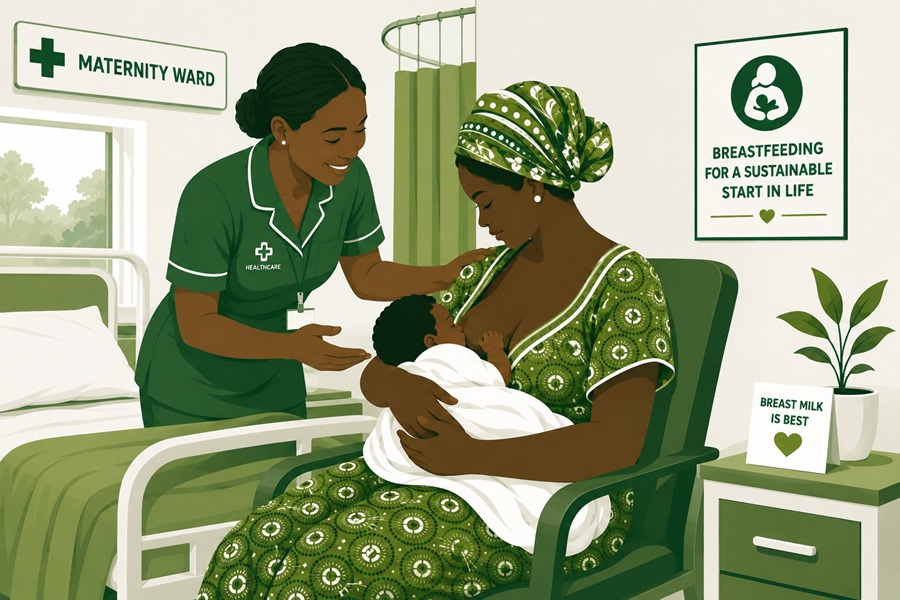
When Asmau, 30, had her first baby eight years ago, she hoped breastfeeding would begin immediately after delivery. But the hours passed and she did not see any milk. Then a day passed, and another. Worried that her baby was hungry, she began giving him formula.
Days later, her breast milk started to come out little by little. By then, the baby had become used to the bottle. Worried and unsure of what to do, Asmau continued with the formula.
Three years later, after having her second child, Asmau faced the same problem. Her milk did not seem to come quickly, so formula was introduced again. Breastfeeding became a difficult experience for her.
Twenty-six-year-old Morenikeji had a similar experience. After the delivery of her first child in 2018, she waited for her milk to come in. More than a week passed before she began producing breast milk. By then, she had started giving her baby formula. Even after her milk came, she felt it was not enough to satisfy the baby, so formula remained part of the baby’s daily feeding.
Asmau and Morenikeji’s stories are common among many mothers, especially first-timers who experience delayed lactation (the process of creating and releasing breast milk from your mammary glands). They are not stories of failure, they show the need for mothers to receive good information, encouragement and support before and after delivery.
The 2026 World Breastfeeding Week, themed “Breastfeeding for a Sustainable Start in Life: Strengthen What Works”, and marked from 1-7 August in commemoration of the 1990 Innocenti Declaration, offered a reminder that what works is accurate information, skilled care, family support, workplaces and communities that give women the time and dignity to breastfeed.
WBW started in 1992, with annual themes including healthcare systems, women and work, the International Code of Marketing of Breastmilk Substitutes, community support, ecology, economy, science, education and human rights. Since 2016, WBW has been aligned with the Sustainable Development Goals. In 2018, a World Health Assembly resolution endorsed WBW as an important breastfeeding promotion strategy.
For women like Asmau and Morenikeji, strengthening what works means making sure that preparing for breastfeeding is not about forcing milk to come before birth but about giving mothers knowledge, confidence and support before they need it most.
The challenge often becomes most intense in the first hours after childbirth. A baby cries. The mother is exhausted. She looks at her breast and does not see milk flowing. Soon, relatives may suggest water, pap or formula.
During pregnancy, the breasts naturally begin to prepare for breastfeeding. Hormones cause changes in the breast. After the placenta is delivered, hormonal changes help the body produce more milk.
For many mothers, this happens within the first few days after birth. For some, it may take longer. Research suggests that up to 30 per cent of women experience delayed milk production after delivery.
According to experts, delay in milk production may not necessarily mean a woman failed to prepare her breasts. It may happen after a difficult delivery, caesarean section, illness, premature birth, separation from the baby or problems with latching (the process of initiating nursing at the breast). They noted that a mother’s delay does not mean she cannot breastfeed.
What breast provides

“Breast milk is not just milk; it is a living fluid,” says a Principal Nursing Officer at Orile Agege general hospital, Lagos, Adebiyi Oluwatosin, in an interview.
“When a child is breastfed, that child is having carbohydrates, protein and fat. The child is also having antibodies at the same time.”
According to Rainbow Paediatrics, a paediatrics health blog, breast milk is not just milk but a complex biological fluid containing a range of components that are vital to a baby’s growth, development and protection.
Breast milk, according to the PNO, is different from animal milk because it contains what a child needs for growth in the first six months of life.
“It is the only milk that contains everything needed for the growth of a child for the first six months of life. It helps to protect babies from infections while supporting their growth and development.”
The World Health Organisation (WHO) recommends exclusive breastfeeding for the first six months of life, meaning babies should receive only breast milk, except for prescribed medicines where necessary.
The first milk should not be thrown away
Many mothers, especially first-time mothers, worry when the milk does not appear white or flow in large amounts immediately after birth.
The first milk, known as colostrum, is often thick and yellowish. Some families still believe it is dirty and should be discarded. Mrs Oluwatosin says, “Colostrum is the first immunisation that you give your baby. It has antibodies, proteins and immune factors that help to protect the child,” she said.
Colostrum, she said, is produced in small quantities, but it is suited to the newborn’s small stomach. It is rich in protective factors and should be given to the baby. She says mothers need reassurance at this stage, rather than pressure to introduce water or other feeds.
She advised mothers to begin breastfeeding within the first hour after childbirth, including after a caesarean section where mother and baby are medically stable. She noted that while only a small amount of milk may be produced at first, early skin-to-skin contact and the baby’s suckling help to stimulate the hormones that establish and sustain milk production.
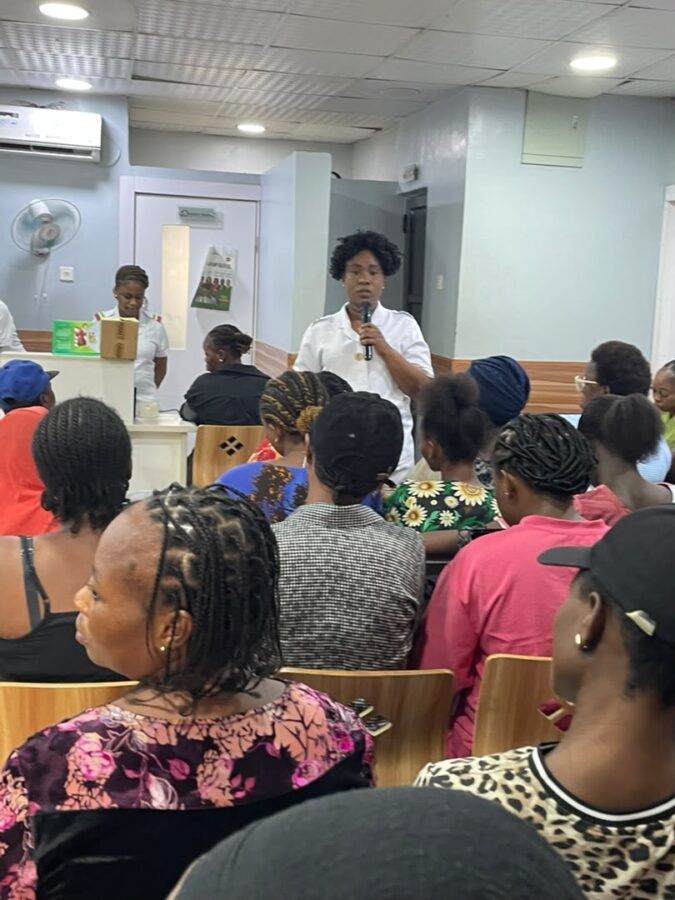
“A midwife, nurse or other trained health worker can support a mother to position her baby correctly at the breast soon after delivery. The early suckling is important not only for feeding but also for signalling the body to begin lactation.
“Mothers should not be discouraged if milk does not appear to flow freely immediately after birth. Regular and effective attachment to the breast helps stimulate production, while difficulties such as flat or inverted nipples, blocked milk ducts or poor positioning may make breastfeeding harder. For this reason, preparation and breastfeeding support should begin during pregnancy.”
This is in line with WHO guidance, which encourages skin-to-skin contact and breastfeeding within the first hour after birth. According to the organisation, newborns who have prolonged skin-to-skin contact with their mother are more likely to breastfeed successfully.
A newly updated Cochrane review found that babies who have skin-to-skin contact with their mother within the first hour of birth are more likely to see a variety of benefits, including exclusive breastfeeding, optimal body temperatures and blood sugar levels.
A study by WHO also found that 90 minutes of uninterrupted skin-to-skin contact, where a baby is dried and laid directly on their mother’s bare chest after birth, maximises the chance for babies to be physically ready to breastfeed.
This support, according to Mrs Oluwatosin, is important after both vaginal and caesarean births; stressing that a mother who has had surgery may need help finding a comfortable position or bringing the baby close to her breast, but she should not be assumed to be unable to begin breastfeeding.
Why breastfeeding preparation should start during pregnancy
Mrs Oluwatosin believes preparation for breastfeeding should begin during pregnancy. She stressed that it is important for a woman to prepare her breast while she is still pregnant, so as to establish lactation and sustain it.
“To lactate well, start while you are still pregnant. You need to start cleaning your breasts and your nipple. Clean the areola (the black area on the breast) and the nipple, clean it with cotton wool and either coconut or olive oil. Do this everyday and also pull out your nipple. Many women do not pull out their nipples, some have flat nipples, and some women have inverted nipples (the nipple that goes in). If you have this kind of nipple, there’s no way you will be able to breastfeed a baby well.
“So you need to pull out the nipples, they need to be pointed, and that is why you need to start pulling out your nipple while you are still pregnant. Also, during pregnancy, everything tends to grow bigger including the breast. If the breast is getting bigger the nipple has the tendency to become flat. So endeavour to pull them out.”
Still stressing on cleaning the breast, Mrs Oluwatosin said: “When you clean your nipple with cotton wool and oil it would help to remove whatever can block the milk duct. A woman cleaning her breast would see a lot of black particles that are capable of blocking the milk duct. If you don’t clean it off and the outlet where the milk will pass out is blocked, even if there’s 10 litres of milk in your breast, there’s no way you will be able to breastfeed your baby.
“So you need to clean your nipple and the areola very well during pregnancy. This should be done during pregnancy and also after childbirth,” she said, advising pregnant women to discuss concerns about their breasts and nipples with a trained health worker during antenatal care.
Mother and Child Hospital also encourages washing the nipples regularly with plain water and massaging the breast and areola daily with a lubricant such as olive or coconut oil or vitamin A or D ointment. It advises women to gently pull out the nipples while massaging and to use a nipple former or shield for additional support if they have flat or inverted nipples.
Experts say breast and nipple massage may begin around the 20th week of pregnancy, during the stable period, to help prepare the breasts for breastfeeding, noting that nipple stimulation can trigger the release of oxytocin, a hormone involved in the milk-ejection reflex.
However, because nipple stimulation can also trigger uterine contractions, pregnant women should consult a doctor or midwife before beginning the practice, particularly if there are concerns about preterm labour.
Husbands and the preparation for breastfeeding
Health workers say husbands have a role to play in preparing their wives for breastfeeding and supporting them through the process.
The PNO, Mrs Oluwatosin, explained that pregnant women are often reluctant to allow their husbands to suck their nipples because of pain, discomfort or the belief that their husbands may suck out breast milk.
“We used to tell our pregnant women, allow your husbands to suck on your nipples when you are pregnant. But you see, the majority of them will say no, it’s painful for me. Why will my husband suck my breast? Some will even think the husband will suck the milk,” she said.
According to her, the purpose of the practice is not to obtain milk during pregnancy but to help the breast and nipple become accustomed to the sucking that would occur when the baby begins breastfeeding.
She also said husbands could support their wives by helping to clean and stimulate the nipples, while reminding them to maintain breast hygiene.
This advice is not new. During the 2023 World Breastfeeding Week in Uyo, Akwa Ibom State, the Coordinator of a Primary Health Centre in Uyo, Peace Essien, said husbands of pregnant women had a role to play in preparing their wives for breastfeeding.
Essien said husbands could suck their wives’ breasts during pregnancy to help prepare the nipples for breastfeeding, adding that, alternatively, they could use their fingers to stimulate the nipples.
She made the remarks while calling for greater involvement of families, communities and religious leaders in promoting exclusive breastfeeding.
A breastfeeding mother needs more than food
The nursing officer also spoke about hydration and nutrition during pregnancy and after delivery.
“Another preparation during pregnancy is to rehydrate yourself. Pregnant women replace water with soft drinks; they replace it with a lot of other drinks. You need to be hydrated. Take a lot of water,” she stressed.
She said mothers should not be left exhausted and hungry after labour, especially when they are expected to begin breastfeeding.
“During the time of delivery, some women starve themselves, knowing fully well that their first assignment is to breastfeed. Some women get tired from the stress of labour because they did not eat, and they get too hungry to breastfeed after delivery. After delivery, families should make sure the mother eats well.”
For mothers whose milk does not come quickly, Mrs Oluwatosin said support from family members is essential.
“If a woman does not lactate in the first few days after delivery, it is the responsibility of the people around her to help her establish lactation,” she said.
The first help, she said, is allowing the mother to rest. “She needs rest. If she is not in the right frame of mind, she will not lactate well. Psychologically, a woman needs to be balanced; she needs to be happy.”
She described how anxiety and household pressure can affect a new mother.
“Majority of first-time mums are always anxious. ‘Is my baby sleeping? Is my baby breathing?’ All these will not make them rest well.”
She said mothers should be surrounded by people they trust, not people who will increase their workload.
Positioning
The nursing officer said correct positioning can make breastfeeding easier for both mother and baby.
“Some women get this positioning wrong which may discourage the baby from wanting to be breastfed. Bring the baby to the breast, do not take the breast to the baby.
“When a woman is putting breast to baby, she is bending and exerting pressure on her neck and back. She will be tired. Instead, the mother should sit upright and support the baby with a breastfeeding pillow or an ordinary pillow.
“The baby’s tummy and her tummy should be touching each other. The baby’s mouth should be directly proportionate to the nipple,” she said, noting that the baby should take more than the nipple into the mouth.
“The baby should not suck only on the nipple. The baby should suck on the nipple and the areola. By doing this, the nipple will not be cracked and the nipple will not be painful to the woman.”
When families support exclusive breastfeeding
Mrs Oluwatosin also urged older women and family members to stop discouraging new mothers who want to practise exclusive breastfeeding, saying breast milk provides the nourishment a baby needs during the first six months of life.
“Older women should stop discouraging their daughters-in-law, sisters-in-law, family and friends that want to do exclusive breastfeeding,” she said.
She explained that breast milk production is closely linked to how frequently the breast is stimulated, likening the process to the economic principle of demand and supply.
“The higher the demand, the higher the supply, just like we were taught in Economics,” she said. “The higher the demand on the breast, the higher the supply of the milk.”
According to her, mothers can stimulate milk production by allowing their babies to suckle frequently, expressing the milk by hand or using a breast pump.
Mrs Oluwatosin said breast milk contains 87 per cent water and essential nutrients needed by babies, including carbohydrates, fats, proteins and minerals, as well as components that help protect babies against infections.
“Don’t give the baby extra water at all. The baby is not thirsty. Breast milk contains sufficient water and nutrients. It has carbohydrates, it has fat, protein and minerals. So, the child is taking everything including antibodies that would help protect against infection.”
She urged mothers and their families to trust the breastfeeding process and seek appropriate support when they experience difficulties rather than immediately introducing other foods or liquids.
Mrs Essien, a Director in the Ministry of Health, similarly urged family members to encourage young mothers to practise exclusive breastfeeding, saying it was important for the growth and development of babies.
She said exclusive breastfeeding should begin within 30 minutes of delivery and continue for the first six months of a baby’s life.
The WHO recommends exclusive breastfeeding for the first six months of life, meaning no other food or drink, including water, unless medically indicated. The Federal Government of Nigeria says only one in four Nigerian infants is exclusively breastfed during the first six months of life despite more than 95 percent of babies receiving breast milk, describing the situation as a major contributor to child malnutrition and preventable childhood illnesses and under-five deaths.
The concern was raised at the launch of the 2026 World Breastfeeding Week and the First 1,000 Days of Life Social and Behaviour Change (SBC) Campaign in Abuja where the the Permanent Secretary, Federal Ministry of Health and Social Welfare, Daju Kachollom, said the first 1,000 days, from conception to a child’s second birthday, represent the most critical period for physical growth, brain development and lifelong health. She warned that poor nutrition during this window has irreversible consequences.
The newly launched first 1,000 Days of Life SBC Campaign is designed to promote healthier infant and young child feeding practices through sustained behaviour change interventions nationwide.
The Director and Head of the Nutrition Department at the ministry, Olufunmilola Adegbite, also noted that while 95.6 per cent of Nigerian children are breastfed at some point, only 35.5 per cent are put to the breast within one hour of birth, 25 per cent are exclusively breastfed for the first six months, while just 27.7 per cent continue breastfeeding between 12 and 23 months.