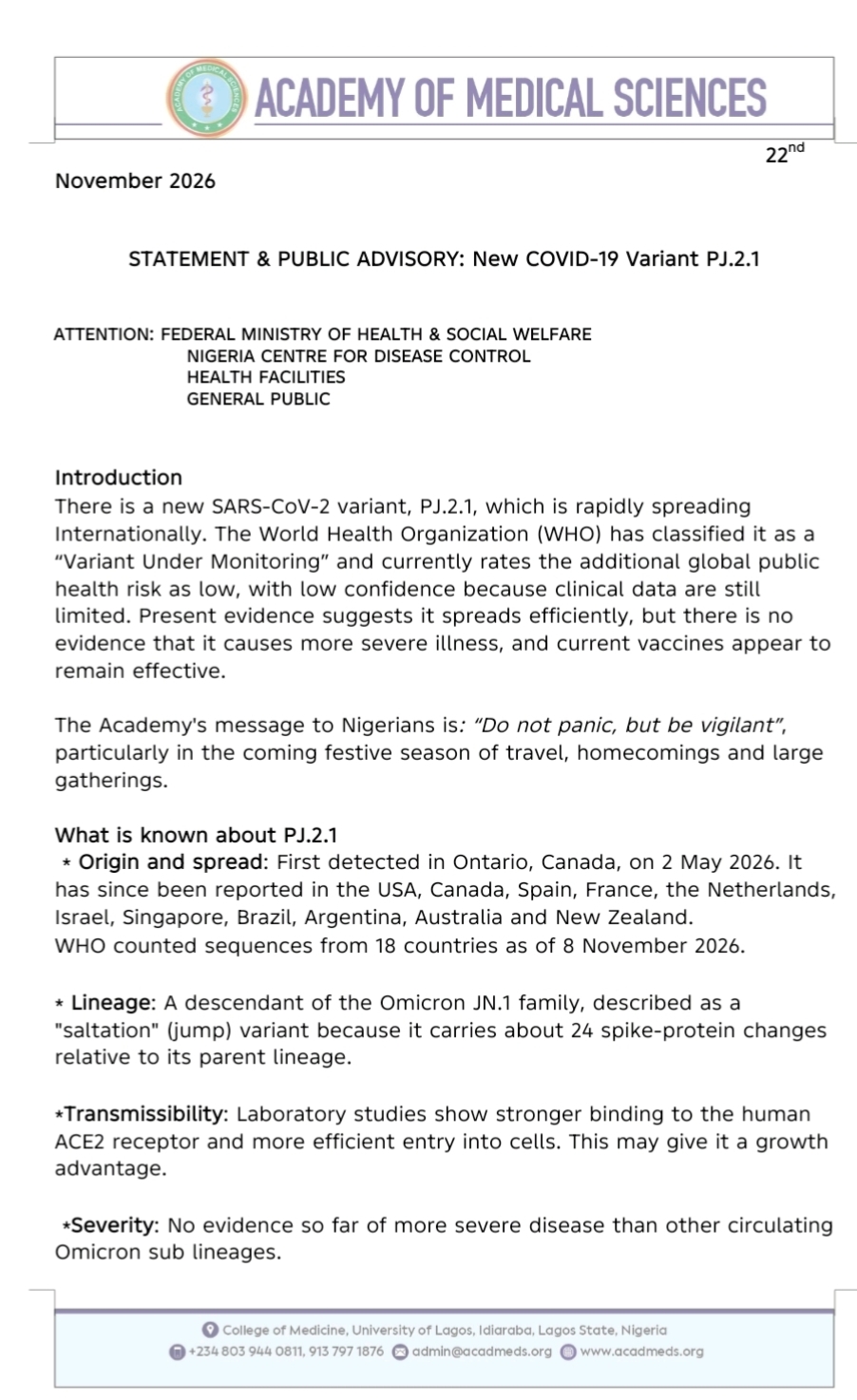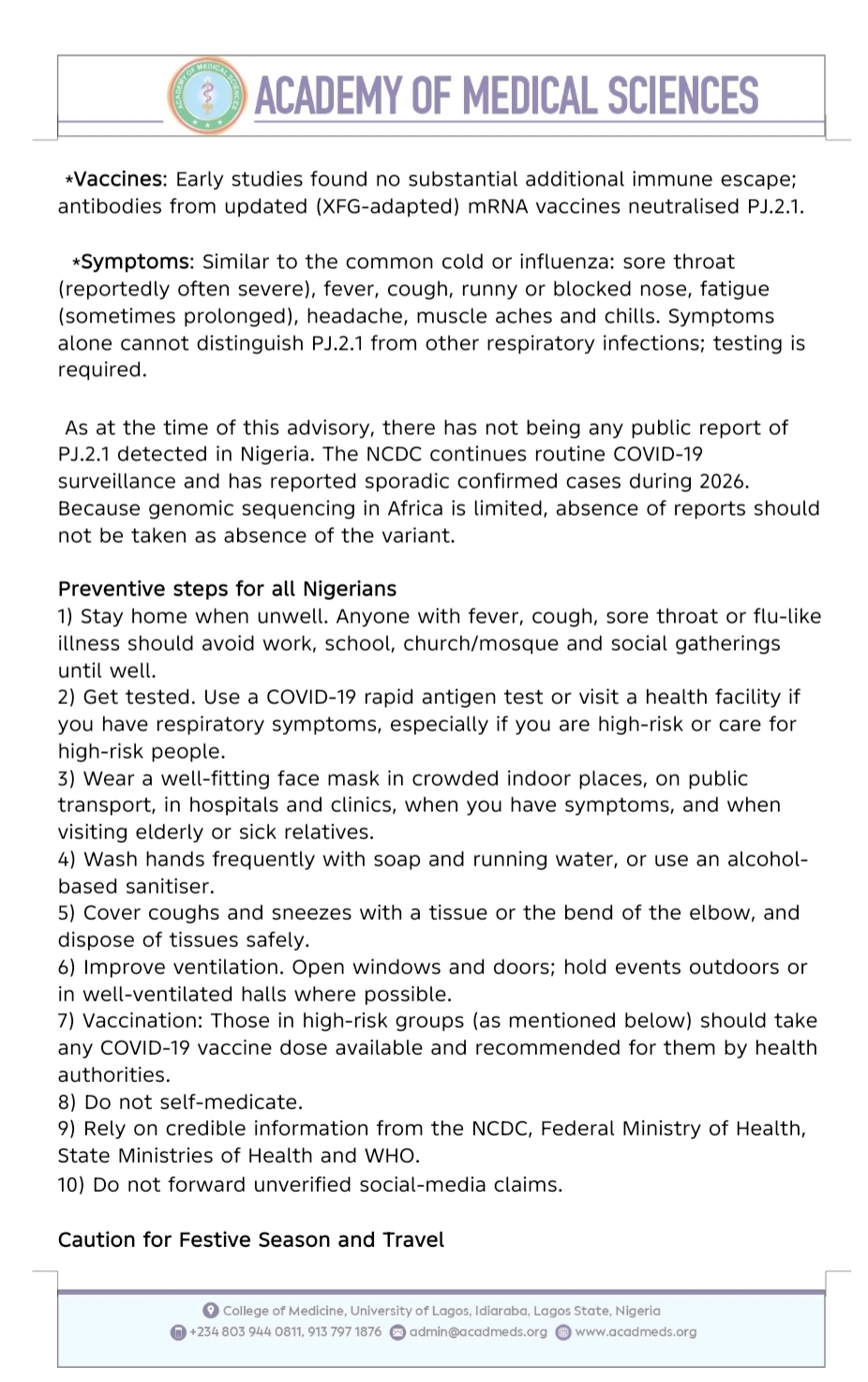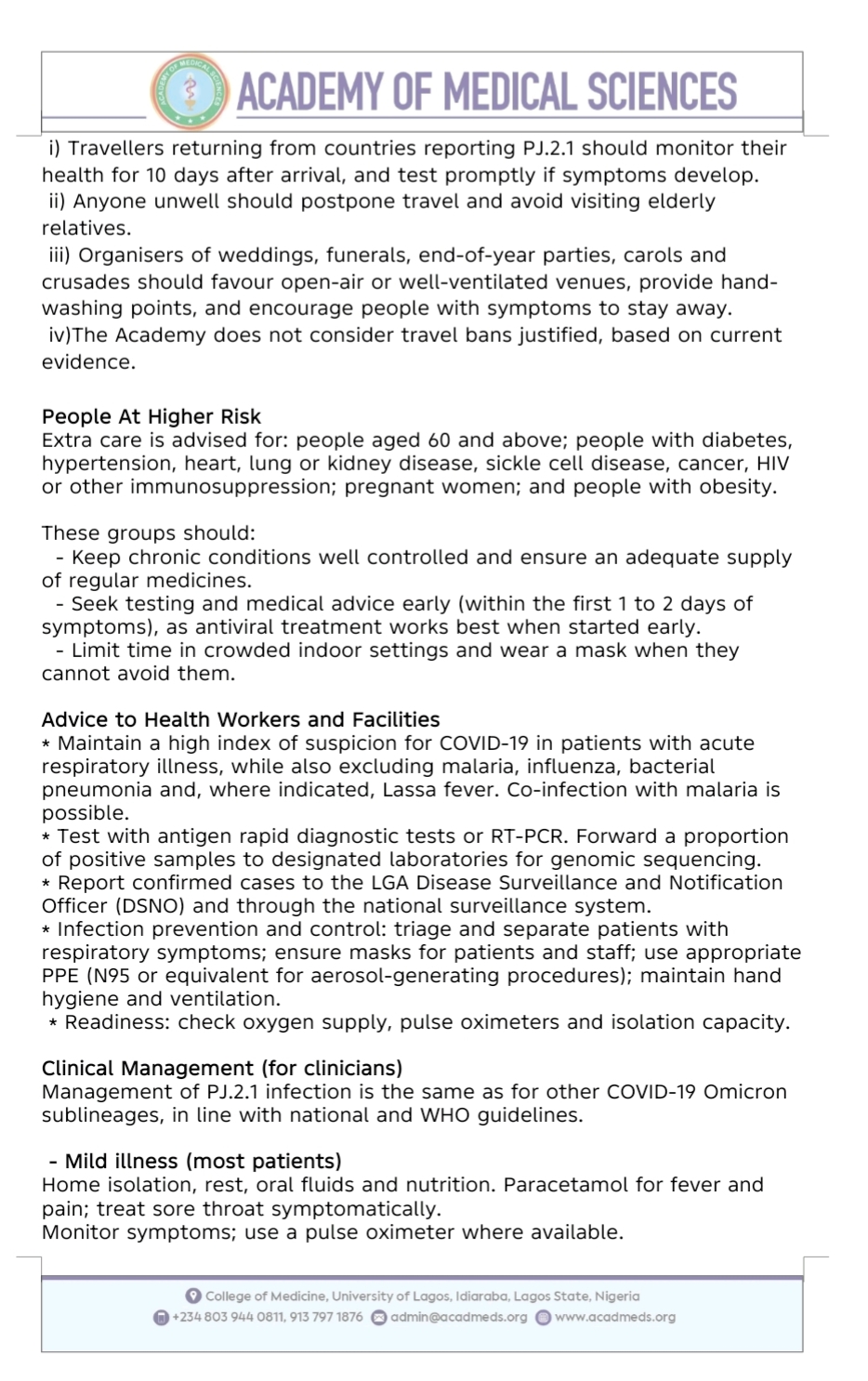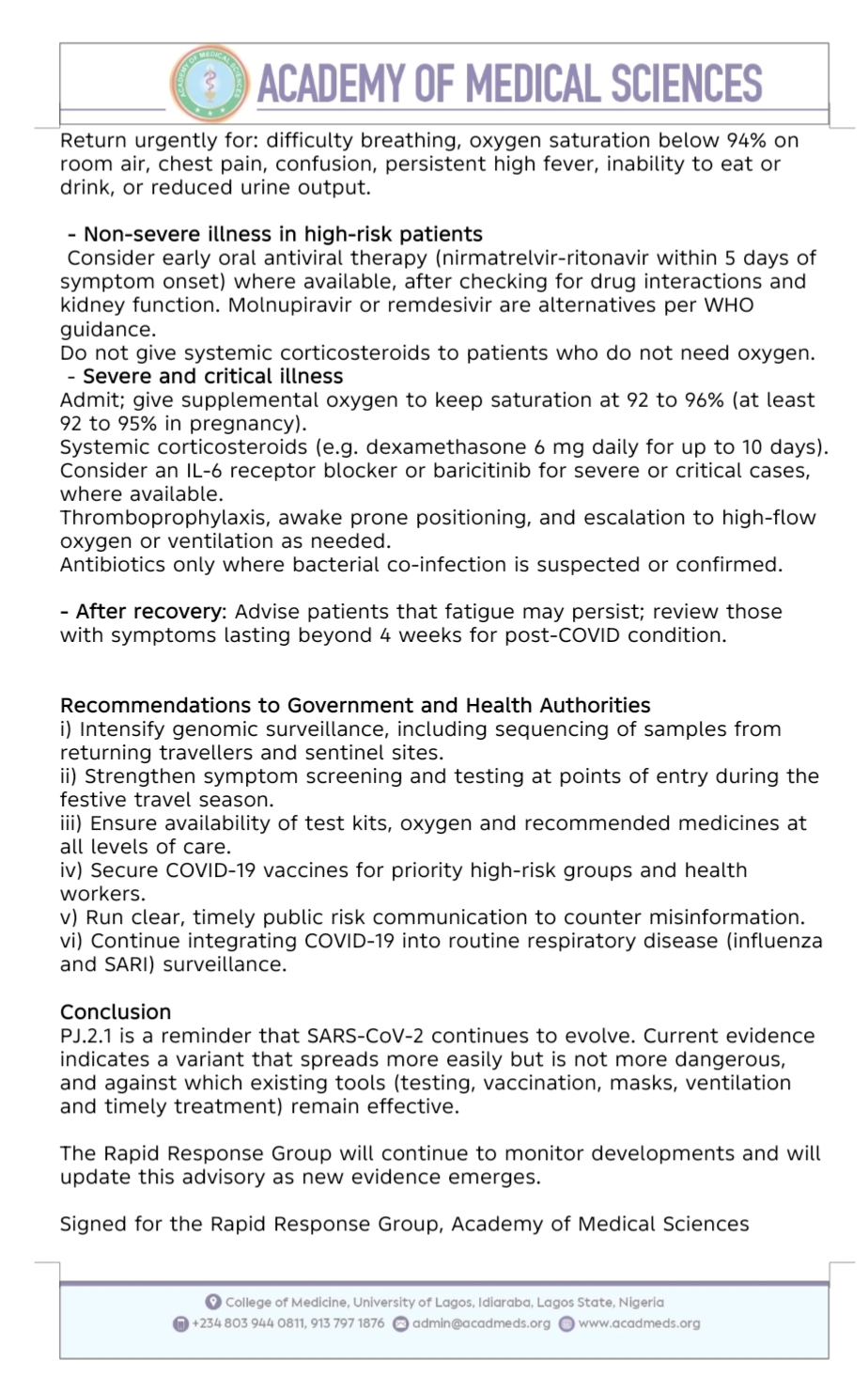


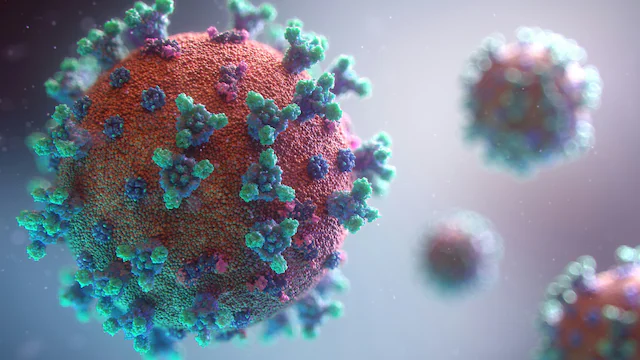
The Academy of Medical Sciences has alerted Nigerians to the international spread of a new COVID-19 variant, PJ.2.1, urging the public to remain vigilant, particularly ahead of the festive season, when increased travel and large gatherings could heighten the risk of transmission.
First identified in Ontario, Canada, on 2 May, 2026, the emerging SARS-CoV-2 lineage has subsequently been detected in the United States, Europe, Australia, New Zealand and parts of Asia.
According to research published by Markus Hoffmann and colleagues in the Journal of Infection in October 2026, PJ.2.1 originated from MC.10.1.7, a descendant of the JN.1 lineage that circulated until May 2025.
The World Health Organisation (WHO) has classified the variant as a “Variant Under Monitoring”, although it currently assesses the additional global public health risk as low, with low confidence due to limited clinical data. While preliminary evidence suggests that PJ.2.1 spreads more efficiently, there is currently no evidence that it causes more severe illness or significantly evades existing vaccines.
In a public advisory addressed to the Federal Ministry of Health and Social Welfare, the Nigeria Centre for Disease Control (NCDC), health facilities and the general public, the Academy disclosed that PJ.2.1 had been reported in 18 countries as of 8 November 2026.
Though there has been no public report of its detection in Nigeria, the Academy cautioned that limited genomic sequencing across Africa means its absence from official reports does not necessarily confirm that it is not circulating.
The Academy identified older people, pregnant women and individuals with underlying health conditions or weakened immune systems as particularly vulnerable, urging them to take extra precautions. It also advised Nigerians to observe basic preventive measures, including staying home when ill, getting tested when symptomatic, wearing face masks in crowded indoor spaces, maintaining hand hygiene and ensuring adequate ventilation.
With the festive travel season approaching, the Academy called on government and health authorities to strengthen genomic surveillance, testing, vaccine availability and public health communication. It also advised travellers returning from countries reporting the variant to monitor their health for 10 days, while maintaining that current evidence does not justify travel bans.
Full statement below: