



Proof of enrolment in the state’s social health insurance scheme, popularly known as ILER EKO, is now required to access certain government services, as the Lagos State Government intensifies enforcement of its Executive Order.
The move, according to state officials is part of a decisive push towards universal health coverage for all residents of the state.
This charge formed the central message at a strategic one-day retreat with LGA/LCDA chairmen under the aegis of Conference 57, on the implementation of the Executive Order.
At the retreat, top government officials rallied the third tier of government to deepen enrolment into the health insurance scheme.
Enforcement begins across MDAs
The State Head of Service, Bode Agoro described the Executive Order signed on 16 July 2024 as a bold reform aimed at guaranteeing Universal Health Coverage for all residents of the state.
He disclosed that compliance circulars had been issued, strategic sessions held with Permanent Secretaries and agency heads, and a 26-member Enforcement Team inaugurated to drive institutional adherence.
“Compliance is not optional, it is a statutory obligation,” Mr Agoro said, noting that enforcement had already begun in some Ministries, Departments and Agencies (MDAs), with full compliance expected by the second quarter.
He added that proof of enrolment is now required to access certain government services and urged council chairmen to mobilise political office holders, staff and residents within their jurisdictions.
Legislative backing
The Chairman, House Committee on Health, Lawal Musibau, said the Lagos State House of Assembly had laid the legal foundation for sustainable healthcare financing through the Lagos State Health Scheme Law of 2015, which established the Lagos State Health Management Agency (LASHMA) and the Lagos State Health Fund.
He reminded chairmen that enforcement had commenced, stressing that awareness alone would not guarantee results.
“Awareness alone is insufficient; deliberate action and sustained commitment are required to guarantee compliance and affordable healthcare for our people,” he said.
Mr Musibau urged Conference 57 to take ownership of the scheme, sponsor vulnerable residents where possible and work closely with the agency to resolve operational challenges, reiterating legislative support for the reform.
Reform anchored on sustainability
In his keynote address, the Commissioner for Health, Akin Abayomi, a professor, framed the reform within the broader context of health economics, explaining the interplay between supply and demand in healthcare delivery.
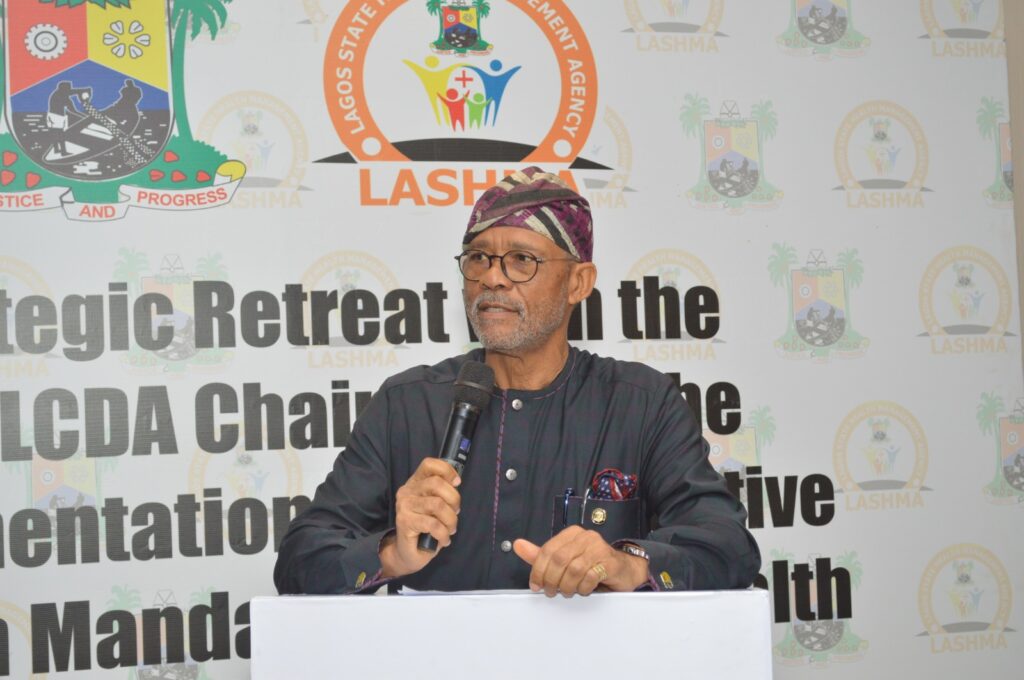
On the supply side, he cited ongoing investments in infrastructure, equipment and human resources, including the establishment of a standalone University of Medicine and Health Sciences to boost the production of doctors, nurses and allied professionals.
Addressing healthcare financing, Mr Abayomi noted that a significant proportion of healthcare expenses in Nigeria are paid out-of-pocket.
“In Nigeria today, a significant proportion of healthcare expenses are paid out-of-pocket. This is neither sustainable nor equitable,” he said, adding that mandatory insurance would replace informal, connection-based assistance with a structured and equitable system.
He maintained that laws without enforcement mechanisms often remain ineffective, and that the Executive Order strengthens the legal mandate, signalling government’s resolve to ensure every resident carries a health insurance plan, either self-funded or subsidised for the vulnerable.
Grassroots mobilisation
Earlier, the Chairman of the LASHMA Board, Adebayo Adedewe, described the retreat as a renewed phase of grassroots-driven implementation of ILERA EKO.
He commended Governor Babajide Sanwo-Olu’s leadership and reminded chairmen that LGAs and LCDAs, as the closest tier of government to residents, play a critical role in mobilisation.
“Experience has shown that when LGs take ownership, enrolment increases; and when leadership speaks clearly, communities listen,” he said, urging integration of ILERA EKO advocacy into town hall meetings, ward engagements and other community platforms.
The Permanent Secretary of LASHMA, Emmanuella Zamba, outlined areas of collaboration, including the designation of two enforcement officers per council to work with the state team.
She said enforcement would be compliance-driven rather than punitive, identifying weekly review meetings, local permit structures and market associations as strategic touchpoints for expanding coverage.
Ms Zamba also sought provision of office space within council premises, stakeholder mobilisation support, advocacy videos by chairmen, on-boarding of more Primary Health Centres for 24-hour service, and backing for door-to-door campaigns supported by the Clinton Health Access Initiative and the National Health Insurance Authority.
Councils to benefit
In her goodwill message, the Permanent Secretary, Ministry of Local Government, Chieftaincy and Rural Development, Kikelomo Bolarinwa, said full implementation of the scheme would reduce the financial burden on councils often approached by indigent residents seeking hospital bill support.
Similarly, the Permanent Secretary, Office of the Auditor General for Local Government, Obafemi Ogunlana, described access to quality healthcare as a core dividend of democracy that should transcend political affiliations.
He urged council leaders to integrate ILERA EKO advocacy into routine engagements with constituents, noting that increased enrolment would improve health outcomes and strengthen community trust.
Chairmen honoured
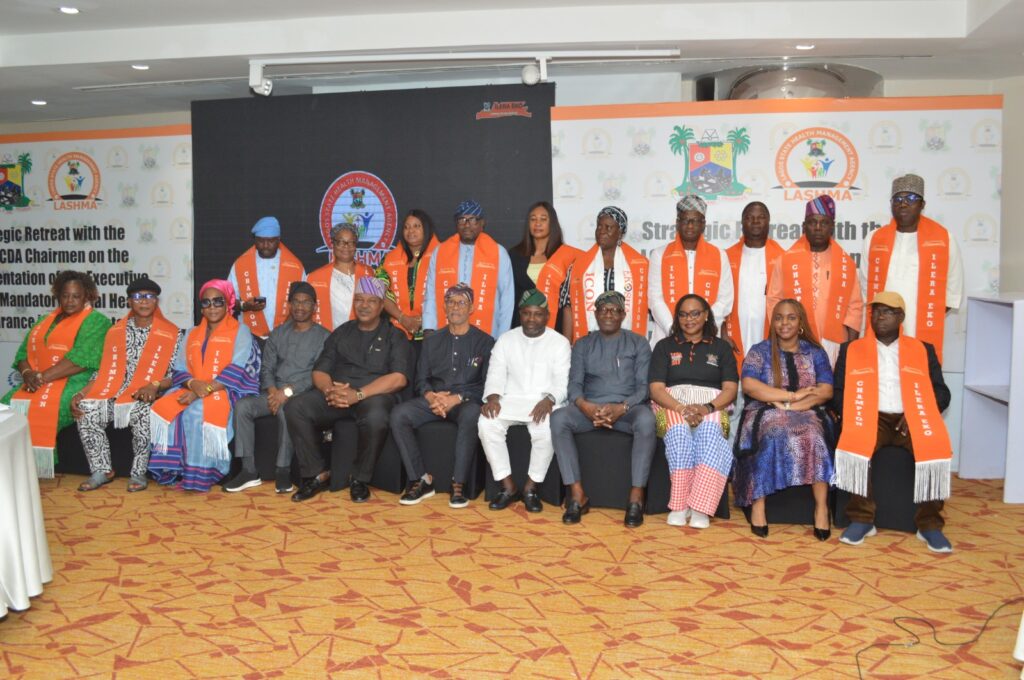
The highlight of the retreat was the decoration of all 57 council chairmen as ILERA EKO Champions, symbolising their commitment to intensifying enrolment and enforcement efforts across their jurisdictions.
Ten chairmen were further honoured as EKOSHA Icons for committing resources, office space and strategic support towards enrolling vulnerable and indigent residents under the equity fund framework.

