




Experts from academia, government agencies and the private sector have called for indigenous technological development, stronger policy enforcement and a cultural shift in energy consumption as key steps towards addressing Nigeria’s persistent energy crisis.
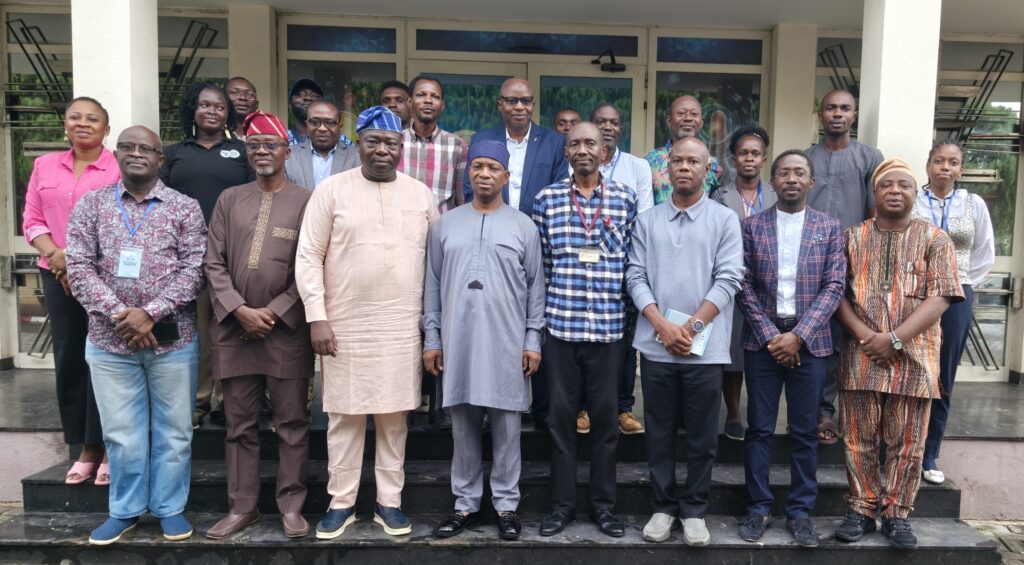
They made the call during a three-day workshop on Africa’s energy future, hosted at the University of Lagos (UNILAG) and organised by the African Engineering and Technology Network (AFRETEC).
The event, themed “Empowering Africa’s Energy Transition: Innovations, Challenges and Collaborative Pathways” brought together policymakers, academics and industry stakeholders to explore practical solutions to Africa’s energy challenges in line with the United Nations Sustainable Development Goal (SDG) 7, which seeks to ensure access to affordable and clean energy for all.
Speaking at the opening session, the Vice Chancellor of UNILAG, Folasade Ogunsola, a Professor of Medical Microbiology said universities must move beyond diagnosing problems to producing practical solutions to national challenges.
Represented by the Deputy Vice Chancellor (Academic and Research), Mathew Ilori, a professor, Mrs Ogunsola noted, “As a nation, we have focused largely on problems and challenges. But this is the time to look inward and call on academia to focus on solutions,” she said.
The workshop brought together key stakeholders, including international collaborators including Shola Oyedeji and Solomon Oyewo from the Electrical Engineering unit of the LUT School of Energy Systems in Lappeenranta, Finland. Their participation highlighted the importance of cross-border partnerships in shaping a sustainable energy future for the African continent.
Nigeria’s energy transition urged
A strategic and accelerated energy transition for Nigeria was urgently called for at the workshop.
The convener, Ipinnimo Oluwafemi, an Associate Professor, stressed that this transition is not simply a global trend but a national imperative.
According to him, Nigeria remains trapped in a recurring cycle of chronic power shortages, deep dependence on fossil fuels, soaring energy costs, and worsening environmental pressures linked to climate change.
He noted that this situation underscores the urgent need for sustainable development and climate resilience.
Mr Oluwafemi warned that without decisive action, Nigeria risks falling further behind in achieving the Sustainable Development Goals (SDGs) and meeting its commitments under the Paris Agreement.
He called on policymakers, engineers, academic institutions, and private sector leaders to collaborate in building a resilient, inclusive, and clean energy future for the country.
Nigeria’s widening energy gap
The Director of the National Centre for Energy Efficiency and Conservation, Olawale Ajibola, painted a stark picture of Nigeria’s energy deficit, noting that the country currently generates about 4,200 megawatts (MW) of electricity for a population of over 200 million people.
He said Nigeria requires between 100,000MW and 200,000MW to meet its development needs, far above current generation levels.
Mr Ajibola added that per capita energy consumption in sub-Saharan Africa stands at about 180 kilowatt-hours (kWh), compared to about 30,000 kWh in Europe and the United States.
“Any country that relies too much on the government will never perform. Why don’t we invest in ourselves?” he said, urging Nigerians to consider solar energy as a personal investment rather than waiting for government intervention.
He disclosed that Nigeria possesses abundant natural resources that could address its energy challenges, including uranium deposits in Cross River, Adamawa, Taraba, Kaduna, Bauchi and Kano states, as well as lithium deposits in Nasarawa, Osun and Cross River.
While stressing the importance of renewable energy in the long term, he argued that Nigeria must also explore non-renewable energy sources in the short term to bridge its current power gap.
“The Western world that says we should go green are not going green themselves,” he said, adding that Nigeria must first develop indigenous technology before a full transition.
Mr Ajibola also called for the revival of technical colleges and a shift in the education system away from certificate acquisition towards problem-solving.
Waste-to-energy and urban innovation
The General Manager of the Lagos State Environmental Protection Agency (LASEPA), Babatunde Ajayi, said Nigeria has about 4.5 million generators, with emissions from power generators accounting for about 70 per cent of community-level emissions in Lagos.
He noted that Lagos currently has only about 20 per cent grid coverage, warning that landfill sites in the state may reach capacity within five decades if current waste trends persist.
Mr Ajayi highlighted a biogas project at Ikosi fruit market, where organic waste is converted into electricity to power market operations, describing it as proof that waste management and energy generation are interconnected.
“The most important waste comes from organic waste. If it is organic waste that you use to generate electricity, it also improves the quality of life of the people around you,” he said.
He raised concerns about electronic waste, noting that Africa continues to receive used electronic products from the Global North, many of which quickly become unusable. He called on researchers to develop systems to address the challenge.
Mr Ajayi further disclosed that a $400 million waste-to-energy project funded by Chinese banks is underway in Epe, Lagos, structured as a design, finance and trade model with a 20-year revenue cycle.
He, however, said the high cost of renewable energy technologies remains a barrier to widespread adoption. “If the price is good, everyone will buy it,” he said.
Policy gaps and weak enforcement
Panel discussions at the workshop largely agreed that Nigeria does not lack energy policies but struggles with implementation.
Chief Researcher at the National Centre for Energy Efficiency and Conservation, Shitta Manasseh, said existing national and sub-national policies, including energy transition plans within the presidency, were not being effectively implemented.
“In Nigeria, we are not short of policies. The problem we have is the enforcement of the policies that we have,” he said.
Mr Ajayi noted that the removal of import duties on solar batteries had helped reduce prices, but argued that further incentives were needed.
He proposed tax incentives of five to 10 per cent for businesses that replace at least 10 per cent of their energy use with non-fossil fuel alternatives.
The Head of the Department of Electronics and Computer Engineering at Lagos State University (LASU), Abayomi Yussuff, a professor, called for stronger enforcement mechanisms alongside policy formulation.
“The government must recognise the fact that energy is life. Once you do that, everything falls into place,” he stated, saying researchers and engineers must be adequately rewarded to sustain innovation.
Mr Ajibola added that energy efficiency should be treated as a cultural value rather than merely a policy objective. “If it is a culture, you do not need incentives, because it becomes part of your life,” he said.
Students showcase energy innovations
Two student teams from UNILAG showcased innovations developed during the 2024 AFRETEC Energy Innovation Challenge.
God’s Praise Sukore, a member of the Green Cell team, said over 600 million people in sub-Saharan Africa live without access to electricity, while nine in 100 people across Africa have no access to medical oxygen. His team developed an electrolyser capable of producing hydrogen for energy and oxygen for medical use, placing third in the 2024 competition and securing a patent in February 2026.
The winning team, Phoenix, presented Spectratem, a dual-energy hybrid window system that generates electricity from sunlight and heat. Team leader Folarin Eribake said the innovation was inspired by the estimated 60 million Nigerians living in rural areas without electricity.
“In 2024, we used this idea to apply for the AFRETEC Innovation Competition and we emerged winners. The team also secured a patent in February 2026 and continues to develop its thermoelectric component,” he said.
AFRETEC expands across Africa
AFRETEC Network Coordinator at UNILAG, Ismail Ibraheem, a professor of Journalism and Communication Studies, said the network recently welcomed its tenth partner institution, Addis Ababa Science and Technology University in Ethiopia.
Launched in 2022 and led by Carnegie Mellon University Africa in Rwanda, the AFRETEC network now spans universities across North, South, East, West and Central Africa.
According to him, the network has awarded about $7.43 million in research funding to more than 40 projects, trained over 2,000 undergraduate students and nearly 500 faculty members.
He said the vision is to enable African universities to develop globally competitive solutions using local resources.
“We challenge our young people to look at solutions, and they come up with different kinds of solutions,” he said.

