



Nigeria’s education system must undergo urgent reform to harness its growing youth population for national development and global competitiveness, the 56th University of Lagos (UNILAG) convocation lecture has warned.
Delivering the convocation lecture themed “Maximising Nigeria’s demographic dividend through urgent education reform for global competitiveness in the 21st century”, the founder and Executive Director of Slum2School Africa, Orondaam Otto, presented an eight-pillar reform framework aimed at repositioning education as Nigeria’s most strategic national infrastructure, rather than a routine social service.
Addressing an audience of academics, policymakers and students, Mr Otto argued that incremental and piecemeal reforms were no longer sufficient in the face of Nigeria’s rapidly growing youth population.
He said education must be deliberately designed as the foundation of national productivity, social cohesion and state power if the country is to convert population growth into a demographic dividend.
According to him, without a coherent and legally grounded reform agenda, Nigeria risks turning its youthful population advantage into a long-term economic and social liability, warning that education policy must move beyond political cycles to become a sustained national project.
Eight-pillar policy reform agenda
At the centre of Mr Otto’s lecture was an eight-pillar reform agenda, backed by 21 recommendations, aimed at overhauling Nigeria’s education system from policy design to classroom practice.
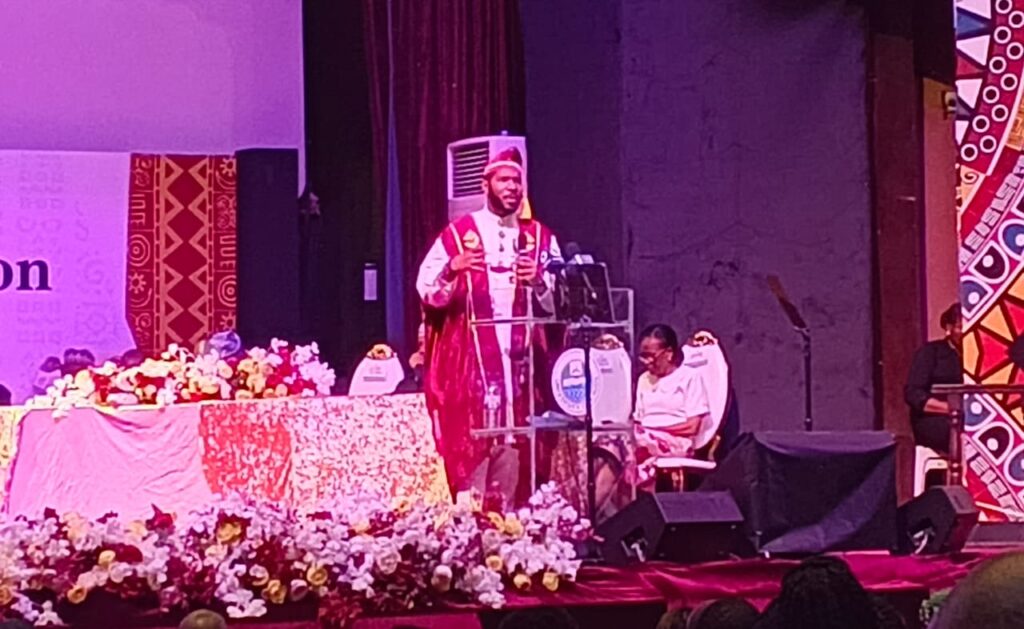
He called for the legal entrenchment of a unified National Education Vision to end decades of fragmented and inconsistent policymaking across successive governments.
Mr Otto also proposed 15 years of compulsory education under a 3–12–4 model, arguing that early and sustained schooling is essential to breaking cycles of illiteracy, poverty and low productivity.
He further urged the elevation of teaching into an elite national profession, supported by improved welfare, training and social prestige, insisting that no education system can rise above the quality of its teachers.
Other reforms outlined include the standardisation and decolonisation of the national curriculum to better reflect Nigeria’s realities, the early integration of future-ready skills such as digital literacy, problem-solving and creative thinking, the equalisation of universities, polytechnics and technical institutions as dignified degree-awarding pathways, and a data-driven governance framework anchored on a National Education Identity Number.
The agenda also proposes a restructuring of governance through the creation of a Ministry of Children and Basic Education alongside a Ministry of Higher Education and Research.
Education as a civilisational project
Beyond policy prescriptions, Mr Otto described education as a civilisational project that shapes national identity, dignity, confidence, productivity and social cohesion, rather than a narrow pathway to certification or employment.
He argued that Nigeria’s future competitiveness would depend less on natural resources or political leadership than on deliberate systems capable of converting population growth into economic and social power.
Under a reformed system, he said, public schools would function as centres of excellence, teachers would be positioned as elite professionals, and universities would serve as research-driven engines of innovation and development.
Mr Otto advocated a Nigeria where national citizenship, rather than state of origin, becomes the basis of opportunity, inclusion and mobility, stressing that such a shift is necessary to build unity and meritocracy in a diverse society.
“This is how education becomes functional governance, not fragmented policy. This is how Nigeria moves from managing schools to building human capital. And this is how a nation stops hoping for development and begins to engineer it.”
Why reform cannot wait
The chairman of the convocation lecture and former UNILAG Vice-Chancellor, Rahaman Bello, a professor. reinforced the urgency of the proposed reforms, describing the lecture as a reflection on the inputs that would shape Nigeria’s future outputs.
He criticised Nigeria’s delayed entry into formal schooling, noting that many children only begin education at the age of five or six, a gap he said weakens learning outcomes and national development.
“Why are we waiting until children are six before they commence education?” he asked. “By then, a lot has been lost, and it will take them much longer to pick up, which is quite serious for national development.”
Mr Bello supported the proposal for 15 years of compulsory education, particularly at the junior secondary level, which he described as the most critical stage for skills discovery and career guidance. He also backed the call to elevate teaching into an elite profession in Nigeria, drawing attention to global examples where primary and secondary school teachers are among the most respected and best remunerated professionals.
He further lamented the declining status of polytechnics following the introduction of a unified entrance examination system, arguing that the collapse of differentiated pathways had undermined technical and vocational education.
“We used to have different examinations for different interests,” he recalled. “Those genuinely interested in technical education went there. But now, nobody wants to go to polytechnic when they can easily go to a university. That has created a problem.”
Rethinking education in a youthful Nigeria
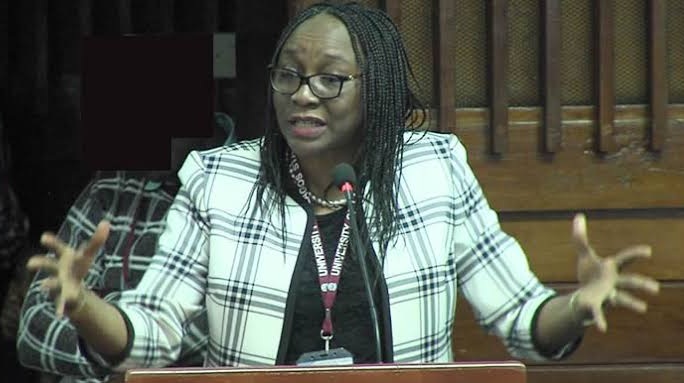
The UNILAG vice-chancellor, Folasade Ogunsola, a professor, in her remarks, described Nigeria’s youthful population as both a strategic opportunity and a potential risk, warning that demographic advantage would only translate into development if supported by bold and intentional education reforms.
She noted that nearly 70 per cent of Nigeria’s population is under the age of 30, with a median age of 18.1 years, stressing that this large youth cohort must be adequately educated to drive economic growth and social stability.
Mrs Ogunsola emphasised that universities and other tertiary institutions depend on a steady pipeline of well-prepared students from primary and secondary schools, warning that weak foundations undermine higher education outcomes.
“We need to catch them young. At the university level and other tertiary institutions, we require students who have been well taught from the early stages,” she said.
She also cited a 2023 data showing that about 86 per cent of Nigeria’s workforce did not have a post-secondary qualification, raising critical questions about upskilling, access and inclusion.
“How do we reach the unreached? How do we better prepare our youth so they can contribute to and shape the future?” she queried.
Mrs Ogunsola explained that this reality informed the choice of Mr Otto as the convocation lecturer, noting that his work in expanding access to education for disadvantaged communities reflected the direction Nigeria must take.
Quoting former United Nations Secretary-General, Kofi Annan, she concluded that “knowledge is power, information is liberating, and education is the premise of progress in every society”, expressing confidence that the lecture would help drive impactful reforms capable of turning Nigeria’s youthful population into a demographic dividend for national development.