



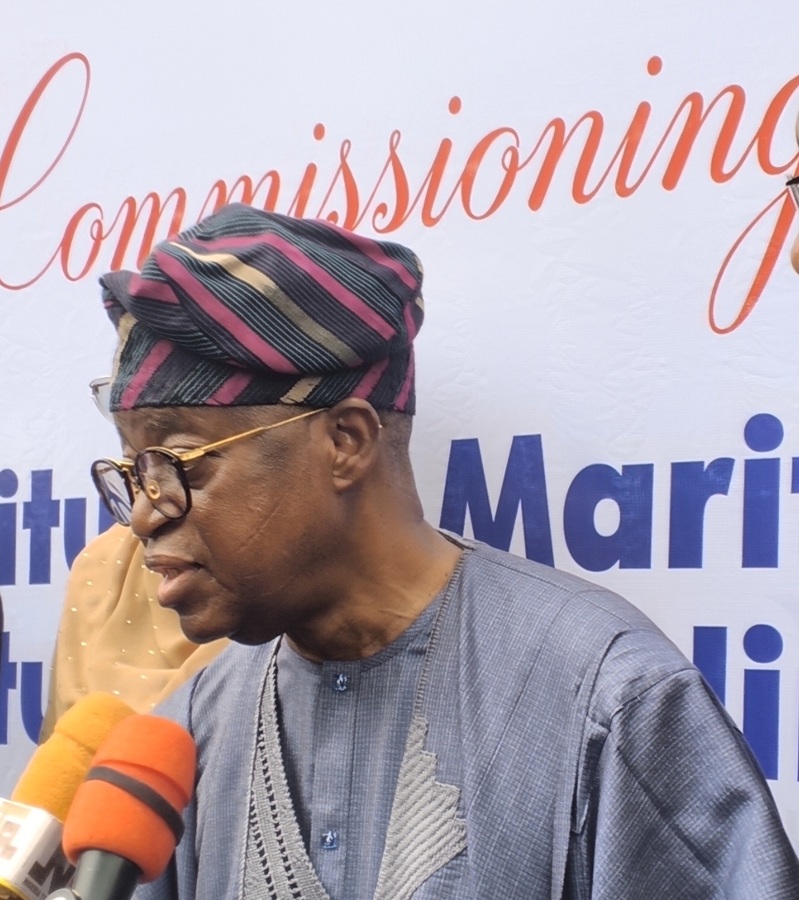
The Minister of Marine and Blue Economy, Adegboyega Oyetola, on Thursday said Nigeria’s ambition to unlock the vast potential of its maritime sector will depend largely on investments in human capital, declaring that the future of the blue economy “will be built in classrooms, laboratories and research centres”.
Mr Oyetola spoke at the commissioning of the Institute of Maritime Studies multi-purpose building donated to the University of Lagos (UNILAG) by the Nigerian Maritime Administration and Safety Agency (NIMASA).
Describing the project as a “defining milestone”, the minister said the facility underscores the federal government’s shift towards knowledge-driven development in the marine and blue economy.
“This reflects our belief that the future of the blue economy will be shaped not just by natural endowments, but by the quality of minds we nurture. In a university setting such as this, the future of the blue economy will be built in classrooms, laboratories, and research centres. It will be driven by the intellect, skills, and innovation of young Nigerians who are prepared to lead in a rapidly evolving global maritime landscape,” he said.
He described the blue economy as a national economic lifeline, noting that over 90 per cent of Nigeria’s trade is conducted via maritime channels.
“The blue economy is no longer just another sector; it is a national economic lifeline. Its strategic importance to our economy, our trade architecture, and our global competitiveness cannot be overstated,” he stated, noting that the realisation of the vision rests squarely on the strength of Nigeria’s human capital.
In recognition of this, the minister said the government has prioritised manpower development under the National Policy on Marine and Blue Economy, with 2,459 Nigerians already sponsored for training across the globe under the Nigerian Seafarers Development Programme of NIMASA. Of this number, 1,088 have obtained Certificates of Competency, contributing to the pool of skilled professionals required to drive the sector forward.
Fisheries gap and research challenge
Mr Oyetola also drew attention to opportunities in fisheries and aquaculture, citing a national demand of about 3.6 million metric tonnes of fish annually.
He challenged the institute to lead research and capacity development efforts in the subsector to help bridge the gap, while contributing to food security and job creation.
“We are equally intensifying efforts to unlock the immense potential within our fisheries and aquaculture subsector. With a national demand estimated at 3.6 million metric tonnes of fish annually, there exists a significant opportunity for growth, food security, and job creation.”
He therefore challenged the Institute of Maritime Studies to rise to the occasion by advancing research, innovation, and capacity development in fisheries and aquaculture, thereby contributing meaningfully to bridging this gap.
The minister described the partnership between NIMASA and UNILAG as both commendable and exemplary, saying, it represents a model of “town and gown” collaboration where academia and industry work hand in hand to address real-world challenges and create practical solutions.
“This is the template we must continue to replicate across the country, and I must emphasise that institutions such as this must not operate in silos. Collaboration is the currency of progress,” Mr Oyetola stressed, urging the institute to actively engage and build strong linkages with institutions under the Ministry.
He encouraged the institutions to form a cohesive ecosystem for manpower development, research, and innovation.
Beyond seafarers
In his address, the Director-General of NIMASA, Dayo Mobereola, said the commissioned building reflects the agency’s statutory mandate to drive maritime capacity development.
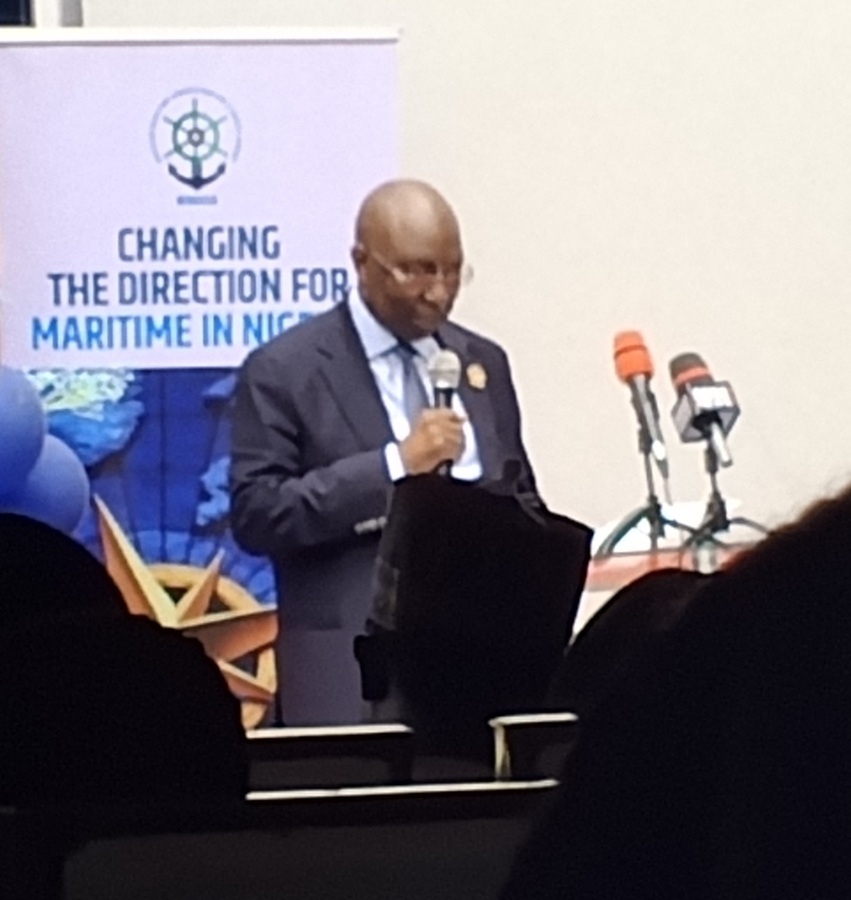
He argued that while seafaring often dominates public perception of the industry, the sector is largely sustained by onshore professionals who, according to him, play a pivotal role in policy formation and regulatory oversight through the development and implementation of robust legal and institutional frameworks, maritime administration and governance, from vessel registration and certification to port state control and licensing, as well as port management, logistics systems, cargo handling, and seamless supply chain integration.
“Much attention is often given to seafarers who operate at sea, but it is important to also recognise that the maritime industry is, in fact, anchored on land, as the frameworks that guide its operations, the institutions that regulate them, and the systems that sustain them are all products of dedicated onshore professionals whose expertise and commitment form the backbone of the maritime sector.
“It is intended that the curriculum will build capacity in areas such as shipping logistics, shipping agency, freight forwarding, cargo logistics, marine insurance, maritime law, ship brokerage management, finance, stevedoring, terminal operations, and port management,” Mr Mobereola noted.
He maintained that without a strong base of skilled professionals operating within these domains, even the most advanced seafaring capacity will struggle to deliver optimal value.
While the NIMASA boss commended the management of UNILAG for its commitment and partnership in bringing the vision to life, he assured that the newly commissioned institute will strengthen research, support policy development, and ensure a steady pipeline of skilled professionals for the sector.
UNILAG’s ‘engine room’ ambition

The Vice Chancellor of UNILAG, Folasade Ogunsola, a professor, said the four-storey facility donated by NIMASA marks the first phase of a broader maritime studies complex. The building according to her, features modern lecture rooms, state-of-the-art laboratories, and other equipment to support practical training, research, and innovation.
Established in 2013, the institute, she said, has graduated about 2,000 students and currently has over 400 enrolled, offering postgraduate programmes in areas including maritime administration and management, hydrographic surveying, maritime communications and navigation, maritime environmental studies, and logistics and supply chain management.
Mrs Ogunsola said the university is positioning the institute as the “engine room” of Nigeria’s blue economy through research, innovation and industry collaboration.
“We are beginning a journey with immense potential to produce knowledge, skilled people and practical solutions. UNILAG is poised to be the “engine room” of the blue economy in Nigeria, producing knowledge, skilled people, and practical solutions. Together, we can grow creditable ocean-based industries sustainably, and we are uniquely positioned to do this, being sited beside the Lagos lagoon, the doorway to the Atlantic ocean.
“I was in São Paulo in Brazil at their maritime school with simulation rooms and deep-wave simulation tanks; it was impressive. We can do the same here and position the country to harness the full potential of the blue economy.
“We are confident that with the Memorandum of Agreement (MOA) between UNILAG and NIMASA, with objectives to develop academic and research capacity for the maritime industry, we can achieve this,” she assured.
She further highlighted emerging areas such as marine biotechnology, renewable ocean energy, and sustainable fisheries, noting that the university’s location by the Lagos Lagoon provides a strategic advantage for maritime research.
The VC appreciated the NIMASA DG and his team for their continued support in the establishment and development of the institute, noting that the university looks forward to the commencement and completion of the remaining two phases.