


The Oyo State chapter of the Civil Society Action Coalition on Education for All (CSACEFA), in collaboration with Educare Trust, has expressed concern over the delay in the enrolment of out-of-school children (OOSC) in the state, following a nationwide mop-up exercise conducted by the National Commission on Almajiri and Out-of-School Children Education (NCAOOSCE).
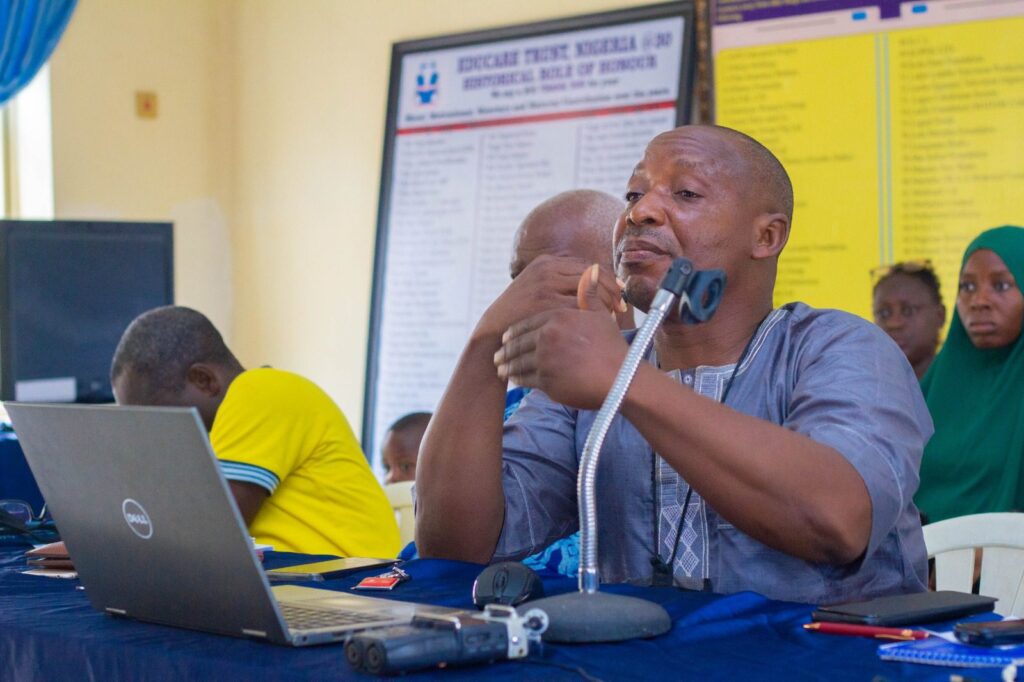
Addressing newsmen in Ibadan, the Programme Director of Educare Trust and Coordinator of the Civil Society Action Coalition on Education for All (CSACEFA) caretaker committee, Folorunsho Moshood, explained that the NCAOOSCE carried out a mop-up exercise nationwide, including Oyo State, between 22 June and 17 July 2025.
The exercise, he said, was aimed at mopping Almajiris and out-of-school children off the streets for the purpose of enrolling them into formal schools or learning centres.
Mr Moshood explained that the exercise was divided into two phases: data capturing and enrolment, with the Oyo State chapter of CSACEFA playing a key role, representing the national body of CSACEFA that, he said, signed a memorandum of understanding (MoU) with NCAOOSCE for the execution of the exercise.
During the first phase, according to him, selected members of the coalition in Oyo State provided logistics, ideas, community entry, and field support, and faced challenges in engaging the lords of street boys at motor parks and under bridges.
“Parents of OOSC, who were initially sceptical about the project, eventually allowed the data of their children to be captured based on trust and hope of educational inclusion from our members. Through the exercise, it was expected that 27,000 OOSC would be mopped up in Oyo State by the field officers.
However, as of 15 July 2025, Mr Moshood said only 7,768 children had their data captured in Oyo State, representing 29 per cent of the 27,000 OOSC targeted.
CSACEFA lamented that the second phase, which involves the actual enrolment of children whose data have been captured into schools or learning centres, and was meant to start in September 2025, has yet to commence.
It warned that the delay risks eroding parental trust and community goodwill, as well as jeopardising the safety of field officers who previously navigated challenging community spaces to capture data.
Ahead of the second phase, the state steering committee on the project was inaugurated by the NCAOOSCE on 23 June 2025, with critical stakeholders in education as members of the committee.
“Until the end of the first phase, we did not see the impact of this committee. Members of the committee kept saying it’s a national project, and up till now, the second phase (enrolment) has not started. We did not get any concrete reason why it has not started as proposed.
“This must have killed the enthusiasm of parents and community members who had hoped that their children would be in school soon. This has also destroyed the fragile trust that existed between the field officers and the parents of OOSC whose data had been captured. Our members can no longer walk freely in the communities where they carried out the first phase of the exercise,” Mr Moshood stated.
He called for urgent intervention to fast-track the enrolment phase and restore confidence in the project, emphasising the importance of immediate action to ensure that out-of-school children in Oyo State gain access to education as intended.
Commission responds as Benue leads enrolment efforts
When contacted, the spokesperson of NCAOOSCE, Nura Mohammad, confirmed that the mopping-up exercise was done last year all over the country. The plan, according to him, was to collaborate with states to ensure that the children captured during the mop-up exercise are enrolled in schools.
According to him, so far, the Benue State Government has accepted the data. “We were in Benue State a couple of weeks ago for the handover of the data, and the governor enrolled 500 children into school immediately, and he said he would be doing that in phases on a monthly basis.
“We are still awaiting other states of the federation to follow in the footsteps of Benue State. So that’s the situation. We are in talks with different states, and we are awaiting responses from them. You know it’s a process, and soon, all the children whose data were captured last year will be enrolled in school, and we will begin the second phase,” he said.
While he confirmed that CSACEFA took part in the mop-up exercise, he noted that he was not aware that an MoU was signed on the project.
“But that is the situation with regard to the enrolment. We are committed to ensuring that these children are enrolled in schools. We have written to different states of the federation, and they have started responding. Since we did the mapping in the different states, we have the data, so, we will collaborate with states to ensure that the children are enrolled.”
Out-of-school crisis persists amid education sector improvements
Earlier, Mr Moshood described the current state of basic education in Oyo State as reflecting both significant progress and persistent challenges, noting that despite having one of the largest student populations in the Southwest, second to Lagos state; it records the highest number of out-of-school children in the region.
Citing a 2022 report referenced by the United Nations Children’s Fund (UNICEF) in 2024, he said over 674,000 children, representing about 20.1 per cent, are out of school, attributing this to poverty, distance to schools, hidden costs, and low interest in education, while also highlighting concerns over dropout rates among adolescents.
He noted that although teacher numbers have improved across schools, gaps remain, particularly in rural areas where qualified teachers are often unwilling to serve. Special needs education, he added, is also inadequate, with limited schools and trained personnel.
Mr Moshood also observed that infrastructure challenges continue to undermine learning, with many schools lacking adequate classrooms, toilets, and digital facilities. He said most schools do not have functional libraries, while sporting facilities remain inadequate, particularly in newer schools.
A member of the CSACEFA caretaker committee, Iskil Yusuf, highlighted the impact of the digital gap on students’ academic performance, noting that many have never used a computer before, yet are expected to sit for the Unified Tertiary Matriculation Examination (UTME) via computer-based testing (CBT).
Mr Yusuf, who is also the Executive Director of the Child Development and Concern Foundation, lamented the effect on rural education, saying: “The shortage of teachers in rural areas worsens the situation, as many are unwilling to be posted to these communities, leaving children without access to quality education.”
Call for functional guidance counselling units in schools
Members of the CSACEFA caretaker committee stressed the need for a functional guidance and counselling unit in schools.
Mr Yusuf emphasised that, given the state’s large student population, there is an urgent need to deploy guidance counsellors to support pupils facing societal pressures.
“A child who has been subjected to abuse, whether at home or on the way to school, may exhibit the effects of that trauma in class. Functional guidance counsellors should be vigilant in observing changes in pupils’ moods and provide the necessary support to help them remain in school.”
Corroborating his point, Mr Moshood noted that most guidance counsellors are still assigned teaching duties in classrooms, limiting their ability to focus on counselling pupils.