



By Aminat Misikilu
As Nigeria enters the new year, the Joint Health Sector Union (JOHESU) strike has stretched beyond six weeks, paralysing routine services across federal teaching hospitals, and general hospitals, leaving patients stranded in facilities operating without the workforce that keeps them functional.
From delayed diagnostic tests to stalled emergency care, patients are paying the price for a dispute that remains unresolved between the union and the Federal Government.
At the Lagos University Teaching Hospital (LUTH), a 34-year-old patient battling systemic lupus erythematosus, Veronica Ikusika, whose autoimmune condition has severely affected her liver, kidney, and heart, said her routine critical health monitoring tests have been repeatedly postponed.
Ms Ikusika explained that the tests are essential for tracking the disease progression and adjusting her treatment, describing the delays as dire.
Her experience reflects a quiet but dangerous reality unfolding inside Nigeria’s public hospitals as federal teaching hospitals, federal medical centres (FMCs), and general hospitals, continue to operate without the full workforce required to sustain routine services.
A hospital without its backbone
Inside LUTH, the impact of the strike is visible in the hospital’s support systems. Corridors stretch longer than usual under dim lighting. Elevators stand idle, and critical hospital units operate in semi-darkness as staff and patients move cautiously through a system running without many of the workers who keep it functional.
DevReporting visited the hospital to observe how the over-one-month industrial action has altered daily operations. Hospital workers who spoke requested anonymity, citing their participation in the strike and lack of authorisation to speak publicly.
According to staff in the hospital’s Corporate Services Division, power supply has been unavailable in key areas of the hospital. This has rendered elevators non-functional, disrupted lighting and crippled essential support services required for day-to-day operations.
“The health system works like a chain,” said a staff at the Corporate Services Division. “Every unit depends on the other. Once one part is missing, the whole system is affected.”
Although doctors returned to work following the suspension of the strike by the National Association of Resident Doctors (NARD), their ability to provide care has been severely constrained without radiographers, laboratory scientists, pharmacists, porters, records officers and other allied health workers.
Emergency units stretched thin
The withdrawal of JOHESU members has been particularly visible at the Emergency and Accident Operating Theatre at LUTH, where services are running far below capacity. Patient flow is minimal, not because emergencies have ceased, but because the hospital lacks the manpower and systems to respond effectively. Bodies cannot be moved efficiently. Diagnostic services are limited. Routine coordination between units has broken down.
DevReporting observed that some nurses were on duty. The Corporate Services Division clarified that nurses are no longer part of JOHESU, as they belong to the National Association of Nigerian Nurses and Midwives (NANNM), which operates as a separate professional union.
Beyond LUTH: Waiting for care across Lagos
Beyond LUTH, patients across Lagos are bearing the human cost of the impasse between the Federal Government and JOHESU. At Gbagada General Hospital, another patient, 86, Taibat Rasheed, lamented that she had been unable to access an eye examination or receive care for a persistent, severe cough.
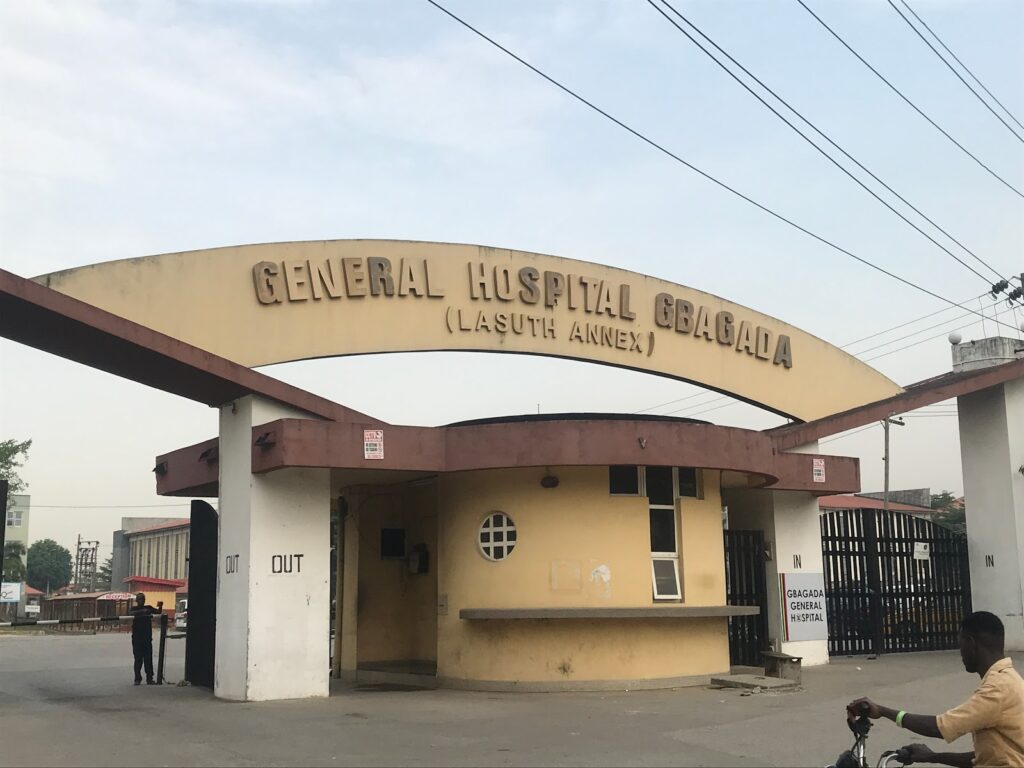
Her appointment date keeps going forward. For vulnerable patients, the strike has transformed routine care into prolonged waiting, forcing many to endure deteriorating health without basic clinical support.
Why JOHESU is on strike
The National Chairman of JOHESU, Kabiru Minjibir, in an interview with DevReporting, said the strike, now about 40 days old, is driven by a single unresolved demand: the adjustment of the Consolidated Health Salary Structure (CONHESS), which applies to all health workers apart from doctors.

He explained that Nigeria operates two main salary structures in the health sector. Doctors are paid under the Consolidated Medical Salary Structure (CONMESS), while other health professionals fall under CONHESS. Both structures were introduced in 2009, alongside a collective bargaining agreement stipulating that any adjustment to one should trigger a corresponding adjustment to the other.
According to Mr Minjibir, that agreement has not been honoured. “In 2014, CONMESS was adjusted, leaving CONHESS untouched,” he said. “Since then, CONMESS has been adjusted two more times, making three adjustments in total, while CONHESS has not been adjusted even once.”
He said that after years of failed engagements, JOHESU issued a 15-day ultimatum to the Federal Ministry of Health, as required by law. The strike officially commenced on 15 November, following unresolved negotiations. A reconciliation meeting was held a day before the strike began, but it occurred only once and ended without agreement.
“Unfortunately, neither the Ministry of Health nor the Ministry of Labour engaged us meaningfully before the ultimatum expired, and even the few meetings held afterwards ended in deadlock.” Mr Minjibir said.
He explained that the impasse stems from the government’s inability to meet three core conditions: the issuance of an official adjustment circular by the National Salaries, Wages and Income Commission, the release of an implementation table, and a clear payment plan for outstanding arrears.
Mr Minjibir added that a high-level committee had already determined the cost implications of adjusting CONHESS and that the figures were captured in the 2025 federal budget, yet no firm commitment has been made toward implementation.
Closed-door talks continue amid mounting pressure
In a Whatsapp call, the Director of Public Affairs, Lagos Ministry of Health, Olatunbosun Ogunbanwo, confirmed that federal and state authorities are engaged in ongoing, closed-door reconciliation efforts with JOHESU leadership, but that union leaders have insisted they lack the mandate to suspend the strike without consulting their affiliates.
According to previous reports, the strike action has also attracted concern from professional bodies such as the Guild of Medical Laboratory Directors (GMLD), which has appealed to state government authorities to intervene, warning of worsening service delivery.
In its 2025 year-end review, the Nigerian Medical Association (NMA), Lagos State branch, accused the Federal Government of poor management of strike actions of health sector associations, noting that repeated strikes significantly disrupted access to healthcare for citizens.
JOHESU defends strike, says action inevitable
The prolonged JOHESU strike has inflicted tangible harm on patients and deepened strains on Nigeria’s public health infrastructure at a time when many citizens already face barriers to access care.
While acknowledging the hardship faced by patients nationwide, the JOHESU chairman insisted that the strike was unavoidable.
“We sympathise deeply with the consumers of healthcare, but JOHESU members provide over 85 per cent of healthcare services in federal health institutions. If we do not demand our rights, nobody will do it for us,” he stressed.
About JOHESU
JOHESU represents a broad coalition of both clinical and non-clinical health workers. Its affiliates include the Medical and Health Workers Union of Nigeria (MHWUN), the Senior Staff Association of Teaching Hospitals, Research Institutions and Associated Institutions (SSAUTHRIAI), the Non-Academic Staff Union of Educational and Associated Institutions (NASU), and the National Union of Allied Health Professionals (NUAHP).
Together, these unions cover health assistants, radiographers, laboratory scientists, pharmacists, porters, technicians, records officers, and administrative staff who collectively form the backbone of hospital operations.

